
Types of Vodka: What They Are and What to Use Each One For
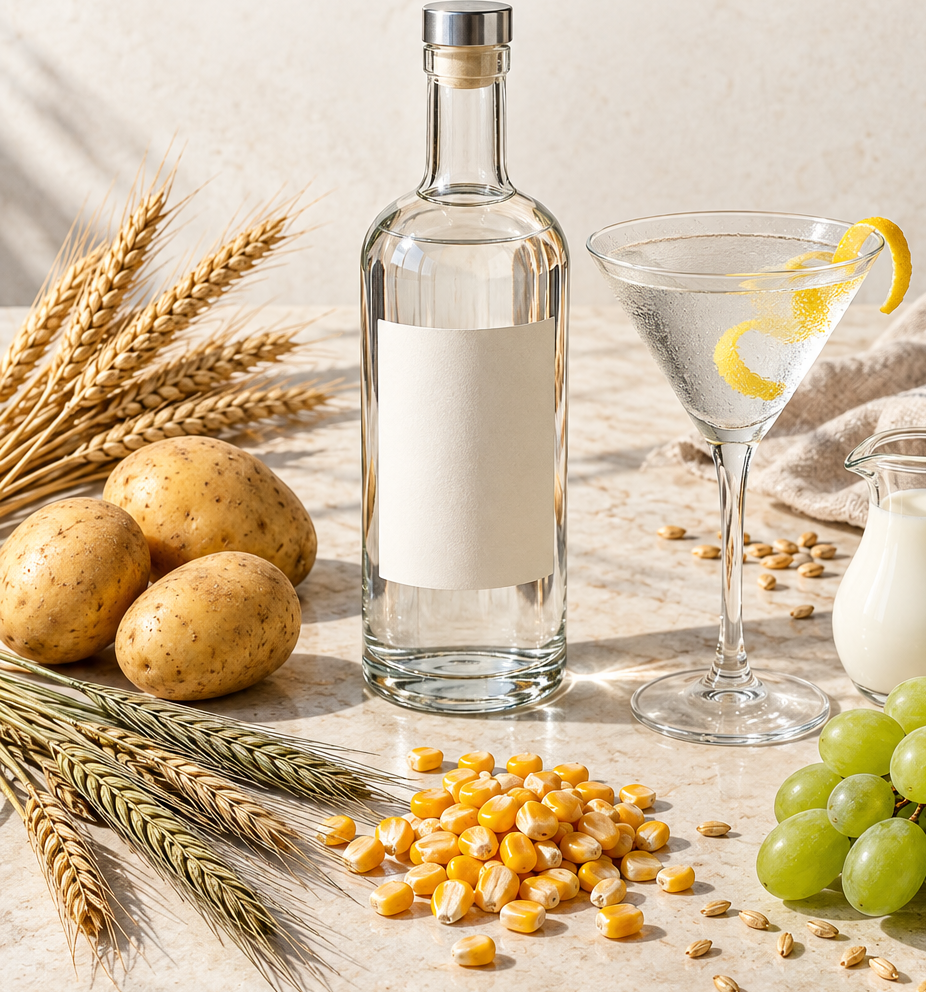
There are four main types of vodka: grain vodka, potato vodka, vodka made from other bases such as grapes or milk whey, and flavoured vodka. Grain vodkas split further into wheat, rye, corn and blended-grain bottles, and each base nudges the taste and texture a little. That difference shows most in a chilled martini and least in a vodka and tonic.
As an Amazon Associate I earn from qualifying purchases and sometimes recommend products from other sellers at no extra cost you. For more details see my disclosure policy and privacy policy.
This guide covers the different kinds of vodka with UK example bottles, typical prices and the drinks each one suits. If you want the basics first, the Vodka entry in our cocktail database explains what vodka is, how it is made and how to store it.
Types of Vodka at a Glance
Prices are typical for a 70cl bottle at UK retailers and supermarkets in October 2026, so expect some movement.
| Type | Made from | Taste and texture | Best for | Example bottle |
|---|---|---|---|---|
| Grain blend | Mixed grains | Clean, neutral, light | Everyday mixing, long drinks | Smirnoff Red Label (£14.50 to £16) |
| Wheat | Wheat | Smooth, light, faintly sweet | Martinis, vodka and soda | Absolut (about £19 to £25), Grey Goose (£39 to £40) |
| Rye | Rye | Drier, with a little spice | Bloody Marys, dry martinis | Belvedere (about £30 to £38) |
| Corn | Corn | Soft, slightly sweet | Moscow Mules, juice mixers | Tito’s (about £28 to £35) |
| Potato | Potatoes | Fuller, creamier, sometimes earthy | Chilled sipping, martinis | Chase Original (£35.95), Karlsson’s Gold (about £27 to £34) |
| Grape | Grapes | Soft, lightly fruity | Sipping over ice, fruit-led drinks | Cîroc (about £35 to £40) |
| Milk whey | Whey from cheesemaking | Silky smooth | Sipping, martinis | Black Cow (about £25 to £29) |
| Flavoured | Vodka plus fruit, herb, spice or sweet flavourings | Depends on the flavour | Spritzes, dessert drinks, traditional serves | Żubrówka Bison Grass (about £20 to £22) |
Grain Vodkas
Grain is the most common base for vodka, and most everyday bottles are grain-based. Wheat, rye and corn can each be used on their own, and many brands blend grains to keep the flavour consistent.
Wheat Vodka
Wheat vodka is the smooth, light end of the range. Absolut from Sweden and Grey Goose from France are both made from wheat, and both have a faint sweetness that makes them a safe choice for a vodka martini or anything with soda.
Grey Goose costs about £39 to £40 at UK supermarkets, while Absolut costs considerably less.
Rye Vodka
Rye vodka is drier, with a little spice. Belvedere from Poland is the best-known example, and that spice stands up well to tomato juice in a Bloody Mary.
Corn Vodka
Corn vodka is soft and slightly sweet. Tito’s is made from 100% corn and usually costs less than premium wheat or rye bottles. That gentle sweetness suits a Moscow Mule, where the ginger beer does most of the talking.
Blended Grain and Everyday Vodka
Standard blended-grain vodkas such as Smirnoff Red Label are the workhorses of the home bar, at around £14.50 to £16 for 70cl. They are clean and neutral by design, which is what you want in juice-led drinks like a Screwdriver or a Cosmopolitan.
Potato Vodka vs Grain Vodka
Potato vodka vs grain vodka is the comparison people ask about most, so here is how the two differ. Potato vodka usually has a fuller, slightly sweeter taste and a thicker, silkier texture. Grain vodka tends to be lighter and cleaner.
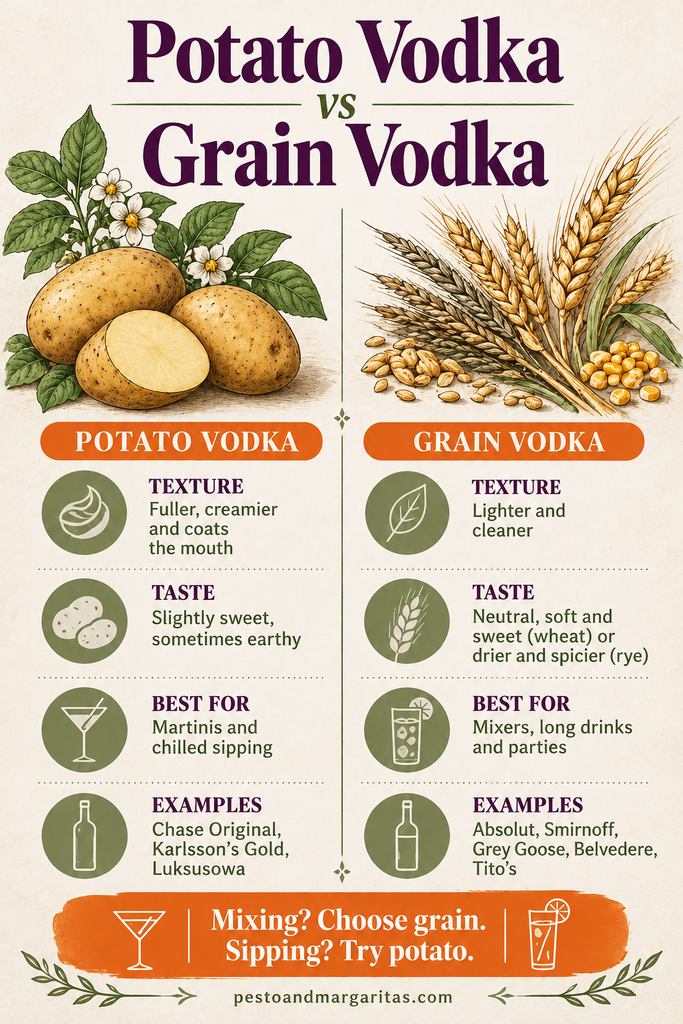
You will notice the difference most when vodka is served neat or chilled, and much less once tonic, juice or ginger beer goes in.
| Potato vodka | Grain vodka | |
|---|---|---|
| Texture | Fuller, creamier, coats the mouth | Lighter and cleaner |
| Taste | Slightly sweet, sometimes earthy | Neutral, soft and sweet (wheat), drier and spicier (rye) |
| Price | Often higher, though not always | Wide range, from budget to premium |
| Best for | Martinis, chilled sipping | Mixers, long drinks, parties |
| Example bottles | Chase Original, Karlsson’s Gold, Luksusowa | Absolut, Smirnoff, Grey Goose, Belvedere, Tito’s |
Potatoes give less alcohol per kilo than grain, so potato vodka often costs more to make. Karlsson’s Gold, for example, uses around 8kg of potatoes for every bottle.
Price is not a reliable shortcut, though. Belvedere is a rye vodka that costs about the same as many premium potato bottles, while Luksusowa, made from Polish-grown potatoes, is around £21.
Chase Original is a British potato vodka made in Herefordshire from potatoes grown on the Chase family farm. Karlsson’s Gold, from Sweden, is blended from seven varieties of new potato grown in the Cape Bjäre region. It is distilled once and left unfiltered to keep more of the potato flavour.
If you mostly make long drinks, buy grain and save the money. If you drink martinis or chilled vodka neat, a potato bottle is where the extra spend shows.
Vodkas Made From Other Ingredients
Almost anything fermentable can be turned into vodka, and a few brands build their identity on an unusual base.
Grape Vodka
Cîroc is the best-known grape vodka. It is made from Mauzac Blanc and Ugni Blanc grapes grown in the Gaillac and Cognac regions of France, and it is distilled five times. The result is soft with a light fruitiness, which suits sipping over ice and fruit-led cocktails.
Milk Whey Vodka
Black Cow, made in Dorset, uses the whey left over from cheesemaking as its base. It is silky and smooth, and at about £25 to £29 it costs less than most premium bottles. Sugar beet, apple, honey, rice and even quinoa are used as bases too, but those vodkas are niche.
UK rules say a vodka not made only from potatoes or cereals has to state what it is made from, with wording such as “produced from grapes”. That is why you will see the base named on grape and whey vodkas.
Flavoured and Infused Vodka
Flavoured vodka is vodka with fruit, herb, spice or sweet flavourings added. Grey Goose and Absolut both sell fruit ranges, and Żubrówka Bison Grass is infused with a grass that adds a faint herbal, vanilla note. The traditional Polish serve is Żubrówka with apple juice.
To be sold as flavoured vodka in the UK, a bottle still has to be at least 37.5% ABV. Lower-strength bottles are often labelled as a “vodka spirit drink” instead, so check the label if a price looks very low.
It is also worth checking whether the flavour comes from real fruit or spice or from added flavourings. Both are sold as flavoured vodka, but natural infusions tend to taste more like the thing they are named after.
Reading a Vodka Label
Most bottles are 40% ABV, and 37.5% is the legal minimum in the UK. Overproof vodkas go to 50% or above and are usually used for infusing at home or in very small measures.
Many labels advertise how many times the vodka has been distilled. Cîroc is distilled five times and Tito’s six, while Karlsson’s Gold is distilled only once. Treat the number as a detail about the brand’s method, not a quality ranking.
Which Type of Vodka for Which Drink
Choosing by drink is simpler than choosing by base. Here is a quick guide to the classics.
| Drink | Vodka to choose | Why |
|---|---|---|
| Vodka and tonic or soda | Budget grain, such as Smirnoff Red Label | The mixer covers small differences, so save your money |
| Moscow Mule | Corn or mid-price grain, such as Tito’s | Soft sweetness balances the ginger beer |
| Screwdriver or Cosmopolitan | Everyday wheat or grain vodka | Juice-led drinks do not need an expensive bottle |
| Bloody Mary | Rye or a drier grain vodka | The spice stands up to tomato juice |
| Espresso Martini | Clean, mid-price grain vodka | The coffee dominates, so the vodka should stay neutral |
| Vodka martini | Potato, rye or a good wheat vodka | There is little to hide behind, so texture shows |
| Sipping neat or chilled | Potato, rye or milk whey vodka | Fuller textures hold up when cold |
Budget bottles under about £20 are fine for mixing. Above roughly £30, the extra cost shows mainly in martinis and neat drinks, so put the difference into good mixers and ice for everything else. For more drinks to make, see our roundup of vodka cocktails.

Serving Vodka Well
Keep a bottle in the freezer if you plan to drink it neat or in a martini. The alcohol content stops it freezing solid at home freezer temperatures, and the cold thickens the texture slightly.
Chilled martini glasses keep a vodka martini cold for longer, and tall highball glasses suit vodka and tonic or soda. Small sipping glasses are traditional for neat vodka, and a copper mug is the classic way to serve a Moscow Mule. If you are shaking drinks at home, our guide to choosing the best cocktail shaker covers what to look for.
Types of Vodka FAQs
What are the main types of vodka?
The main types of vodka are grain vodka (wheat, rye, corn or blended), potato vodka, vodka made from other bases such as grapes or milk whey, and flavoured vodka. Grain vodkas are the most common, and potato vodkas tend to be fuller and creamier.
What is the difference between potato vodka and grain vodka?
Potato vodka is usually fuller, creamier and slightly sweeter, while grain vodka is lighter and cleaner. The difference shows most when vodka is served chilled or in a martini, and it is much harder to taste in a mixed drink. Potato vodkas often cost more because potatoes give less alcohol per kilo than grain.
Is all vodka made from potatoes?
No. Most vodka is made from grain, and potato is only one possible base: Grey Goose and Absolut are wheat, Belvedere is rye and Tito’s is corn. Vodka made from anything other than potatoes or cereals, such as grapes, has to say so on the label.
Is vodka gluten free?
Coeliac UK says spirits are gluten free, including those made from wheat, barley or rye, because distillation removes the gluten. The exception to check is flavoured vodka, where any gluten-containing ingredients added after distillation must be shown on the label.
How strong is vodka?
In the UK, vodka must be at least 37.5% ABV. Most bottles are 40%, and overproof vodkas can reach 50% or more.
Which type of vodka is best for cocktails?
A mid-priced grain vodka such as Tito’s or Absolut suits most cocktails. Save potato or rye vodkas for martinis and other drinks where the vodka is easy to taste.
The Short Version
Vodka comes in four main types: grain, potato, other bases such as grapes or whey, and flavoured. For mixed drinks, a mid-priced grain vodka is all you need. Choose potato, rye or a good wheat vodka when the vodka is the main event, as in a martini or served chilled.
