Amaro vs Amaretto: What’s the Difference?
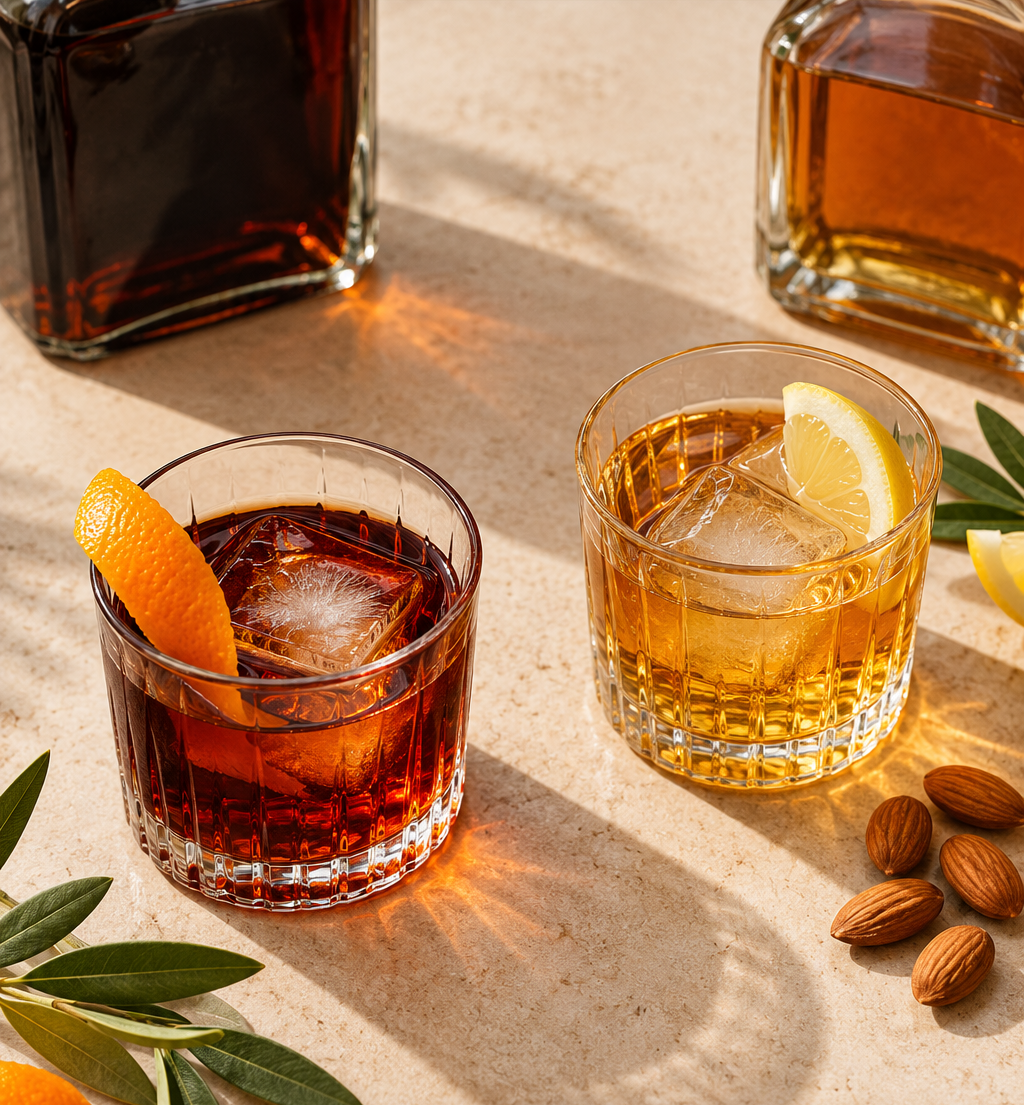
Amaro and amaretto sound almost the same, but they sit at opposite ends of the flavour scale. Amaro is a bitter, herbal Italian liqueur usually sipped after dinner, while amaretto is a sweet, almond-flavoured liqueur that turns up in dessert drinks and sours.
As an Amazon Associate I earn from qualifying purchases and sometimes recommend products from other sellers at no extra cost you. For more details see my disclosure policy and privacy policy.
If you are standing in front of a shelf trying to decide which bottle you need, this guide covers how they taste, how strong they are, where they came from and what to use when you run out.
Amaro vs amaretto at a glance
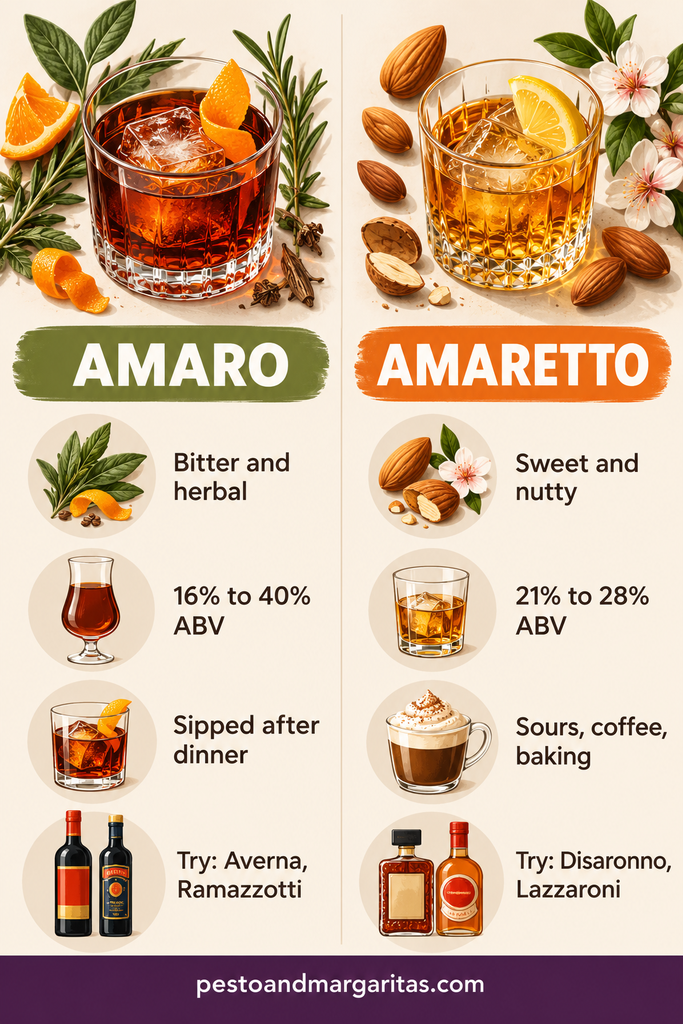
Amaro is the bitter one and amaretto is the sweet one. Both are Italian, both are lower in alcohol than most spirits, and both share a root word, which is why they get mixed up so often.
| Amaro | Amaretto | |
|---|---|---|
| Flavour | Bittersweet, herbal, often with orange peel, spice or gentian | Sweet, nutty, marzipan-like |
| Main flavouring | Herbs, roots, bark, citrus peel and spices | Apricot kernels, almonds or both |
| Typical ABV | 16% to 40% | 21% to 28% |
| Usually served | Neat or on the rocks after a meal, or in a spritz or stirred cocktail | Over ice, in coffee or in sours |
| Classic drink | Spritzes and stirred drinks such as the Negroni, which uses the amaro-style Campari | Amaretto Sour |
What is amaro?
Amaro is an Italian herbal liqueur made by infusing a base spirit or wine with botanicals such as herbs, roots, bark and citrus peel, then sweetening it. The word is Italian for “bitter”, and the plural is amari.
There is no official legal definition of amaro, so the category is wide. Bottles range from light and sweet to dark, syrupy and fiercely bitter, with strengths running from about 16% to 40% ABV.
Most amari are served as a digestivo, a drink taken after a meal, either neat or over ice. Many people also use them in spritzes and stirred drinks, where a splash adds depth and a pleasant bitter edge.
Amaro history
Amaro grew out of herbal remedies made in monasteries and pharmacies, and it became a commercial product in the 19th century. Ramazzotti dates to 1815 in Milan, Averna to 1868 in Sicily and Meletti to 1870 in the Marche region.
Today there are dozens of styles. Averna is sweet and gently bitter, Cynar is made mainly from artichoke, and Montenegro is lighter and more orange-led.
What is Amaro Meletti?
Amaro Meletti is a mid-sweet amaro from Ascoli Piceno in the Marche region of Italy, bottled at 32% ABV. Silvio Meletti started the business in 1870, and the family still runs it.
Its flavour comes from botanicals including saffron, gentian, orange peel, clove and anise. The result is sweeter and silkier than many amari, with a caramel note and a bitter finish. It works neat, on the rocks, over coffee or ice cream, and in cocktails.
What is amaretto?
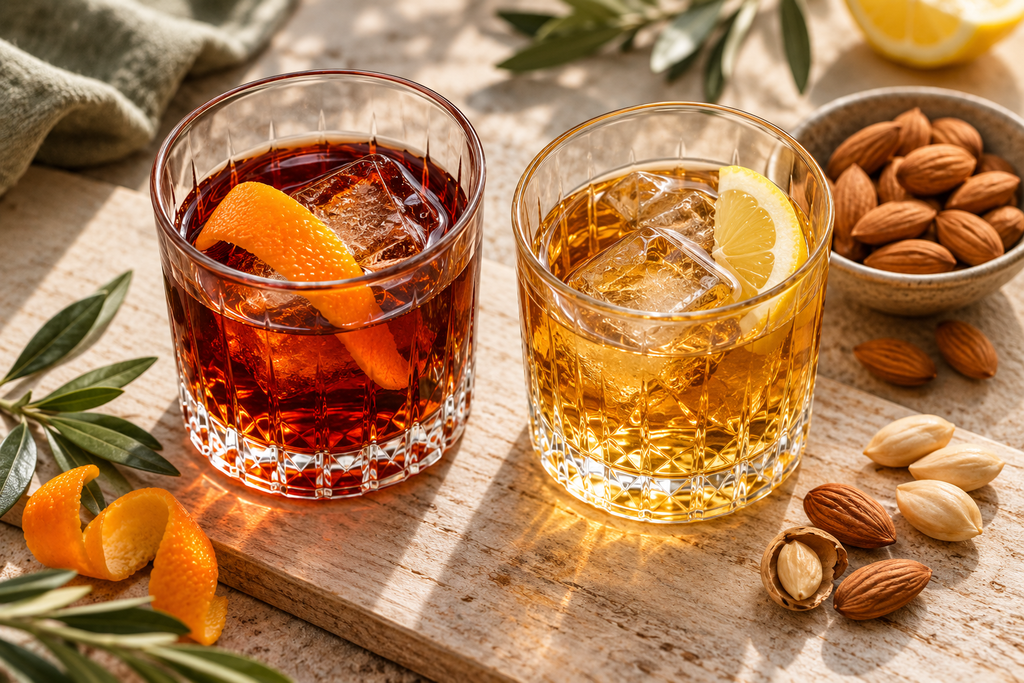
Amaretto is a sweet Italian liqueur with an almond-like flavour, usually bottled between 21% and 28% ABV. Despite the name, many amaretti get that taste from apricot kernels rather than almonds, and some use a mix of both.
The marzipan note comes from benzaldehyde, a compound found in both almonds and apricot kernels. Disaronno, the best-known brand, is made from apricot kernel oil, burnt sugar and a blend of herbs and fruits, and it is bottled at 28%. If you have a nut allergy, check the label of any bottle you buy.
Amaretto is sweet enough to drink on its own, but it can taste a little like cough syrup when served neat. Most people prefer it over ice, with coffee, or mixed with lemon juice or bourbon.
Amaretto history
The origin of amaretto is a mix of fact and legend. Disaronno traces its recipe to 1525, when a woman in Saronno is said to have made an almond-flavoured gift for the painter Bernardino Luini, a pupil of Leonardo da Vinci. That story comes from the company, so treat it as folklore.
The firmer date is 1851, when the Lazzaroni family in Saronno began making an amaretto liqueur from their amaretti biscuits. Lazzaroni is bottled at 24% and is lighter than Disaronno. Amaretto reached a wide audience outside Italy in the second half of the 20th century.
For a deeper look at the liqueur itself, see our amaretto guide.
What does amaretto taste like?
Amaretto tastes sweet, nutty and a little bitter. Its name means “a little bitter” in Italian, a diminutive of amaro, and that faint bitter edge keeps it from being pure sugar.
Expect marzipan, toasted almond, caramel and sometimes a hint of dark cherry or vanilla. Cheaper bottles lean sweeter, while premium ones tend to be less sugary and more complex.
What does amaro taste like?
Amaro is bittersweet and herbal, and the exact flavour depends on the bottle. Some lean towards orange peel and cola, others towards mint, menthol, liquorice or vegetal notes.
That range is why the category can be confusing. If you like Campari or Aperol, you have already tasted a lighter, brighter cousin of amaro.
Is amaretto a type of amaro?
No. Amaretto is not an amaro, even though the names are related. Amaretto is a sweet nut-flavoured liqueur, while amaro is a bitter herbal one, and the two are made, served and used in different ways.
Is Campari an amaro?
Often, yes. Campari is widely described as an amaro, and Campari’s own team has called it one, although many Italians file it under bitter aperitivo instead. It is bottled at about 24% and is the classic ingredient in a Negroni, alongside gin and sweet vermouth. You can read more in our Campari guide.
If you prefer whiskey, a Boulevardier swaps the gin for bourbon or rye.
Is Aperol an amaro?
Not in the strict sense. Aperol was created in Padua in 1919 and is much lighter than most amari, at about 11% ABV, with a bright orange flavour and a gentle bitterness. It makes a good first step towards bitter liqueurs.
It is best known in the Aperol Spritz, and you can learn more in our Aperol guide. If you like that bubbly style, our round-up of prosecco cocktails has plenty more ideas.
How to use amaro and amaretto
Use amaro when you want bitterness and depth, and use amaretto when you want sweetness and an almond note. The two rarely replace each other.
Amaro suits after-dinner sipping, spritzes, stirred drinks and even a splash in coffee. Amaretto suits sours, dessert cocktails, hot drinks and baking.
The classic amaretto drink is the Amaretto Sour, where lemon juice cuts the sweetness. Amaretto also pairs well with bourbon, so it is worth browsing our best whiskey cocktails for more ideas.
How strong are amaro and amaretto?
Both are milder than a standard 40% spirit, but they still count towards your weekly units. The NHS gives a simple formula: multiply the strength (ABV) by the volume in millilitres, then divide by 1,000, with one unit equal to 10ml of pure alcohol. By that maths, a 50ml measure of 28% amaretto is 1.4 units, and a 50ml measure of 32% Amaro Meletti is 1.6 units. You can check the method on the NHS alcohol units page.
Home pours are often bigger than bar measures, so a jigger helps keep drinks consistent.
Best amaro substitutes
The best amaro substitute is another amaro with a similar sweetness. Averna, Ramazzotti and Montenegro are the easiest to find and all work 1:1 in most drinks.
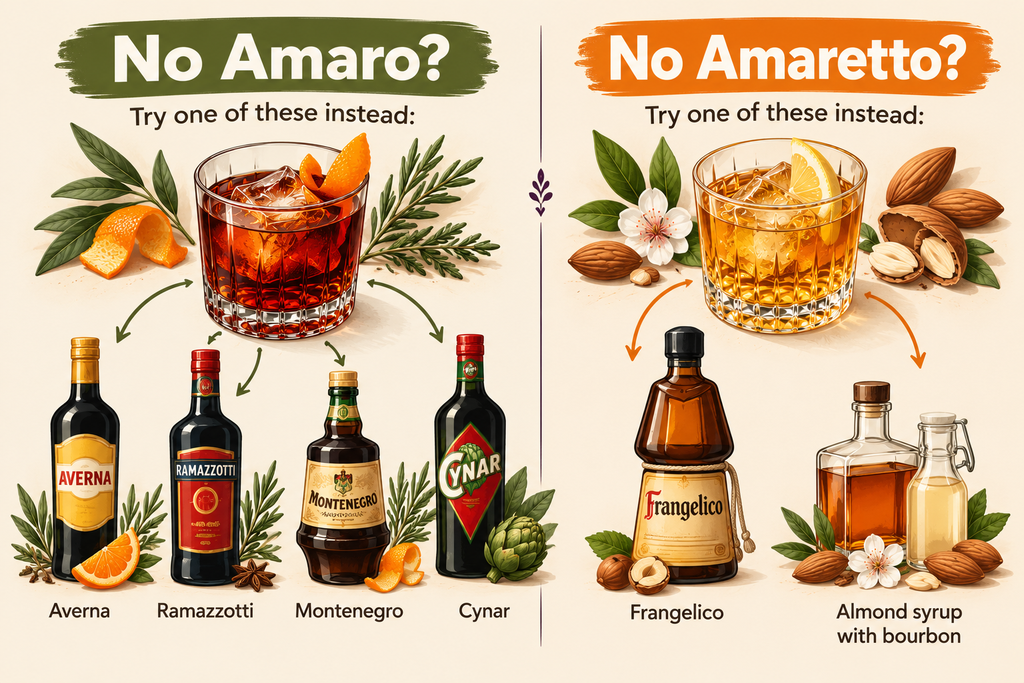
- Averna: sweet, thick and gently herbal, at 29% ABV.
- Ramazzotti: orange and cola notes, at 30% ABV, and a close all-round swap.
- Montenegro: lighter and more orange-led, at 23% ABV.
- Cynar: made from artichoke and more bitter, at 16.5% ABV, so it suits savoury or spritz-style drinks.
If you only have sweet vermouth, add a dash of aromatic bitters to bring back some bitterness. For a no-alcohol option, a bittersweet Italian orange soda such as chinotto gives a rough match over ice.
Amaro Meletti substitute
The closest swaps for Amaro Meletti are Averna and Ramazzotti, because they are similarly sweet and rounded. Montenegro works if you want something lighter, and Cynar gives a more bitter, vegetal result.
Each bottle has its own flavour, so pick by taste. If your recipe leans on Meletti’s saffron and anise notes, start with a smaller pour and adjust.
Best amaretto substitutes
The best amaretto substitute is another amaretto, such as Disaronno or Lazzaroni, used 1:1. If you do not have one, Frangelico is the nearest liqueur swap, at about 20% ABV, although it tastes of hazelnut rather than almond.
For a drink without a liqueur, mix almond syrup (orgeat) with a splash of brandy or bourbon. For baking, a few drops of almond extract usually does the job in place of a spoonful of amaretto.
Amaro vs amaretto FAQs
Are amaro and amaretto the same thing?
No. Amaro is a bitter herbal liqueur, while amaretto is a sweet almond-flavoured one. They share a root word, but they taste and behave very differently in drinks.
Which is sweeter, amaro or amaretto?
Amaretto is sweeter. Amaro can be sweet, but it always has a bitter backbone, while amaretto is dessert-sweet with only a faint bitter edge.
Can I use amaro instead of amaretto in a cocktail?
Not as a direct swap. Amaro will make the drink more bitter and herbal, and you may need to add syrup or sugar to rebalance it. For an Amaretto Sour, a better stand-in is Frangelico or an almond syrup mixed with a little bourbon.
Is amaro served before or after dinner?
Traditionally after dinner, as a digestivo. Lighter styles, and spritz-style drinks made with Aperol or Campari, are more often served before a meal.
The short answer
Amaro is bitter, herbal and sipped after dinner, while amaretto is sweet, nutty and made for sours and desserts. Buy amaro for depth and amaretto for sweetness, and if you run out, swap like for like.