White Rum vs Spiced Rum: What’s the Difference and When to Use Each
Stand in front of a rum shelf and the choice looks simple until you pick up the bottles. One is clear and one is amber, and both say rum on the front. So what actually separates white rum from spiced rum, and does it matter which one goes in your glass?
As an Amazon Associate I earn from qualifying purchases and sometimes recommend products from other sellers at no extra cost you. For more details see my disclosure policy and privacy policy.
It does, especially if you are making a cocktail that depends on a clean, citrusy base. This guide covers how each rum is made, how they taste, what the label really tells you and when you can swap one for the other.
What Is the Difference Between White Rum and Spiced Rum?
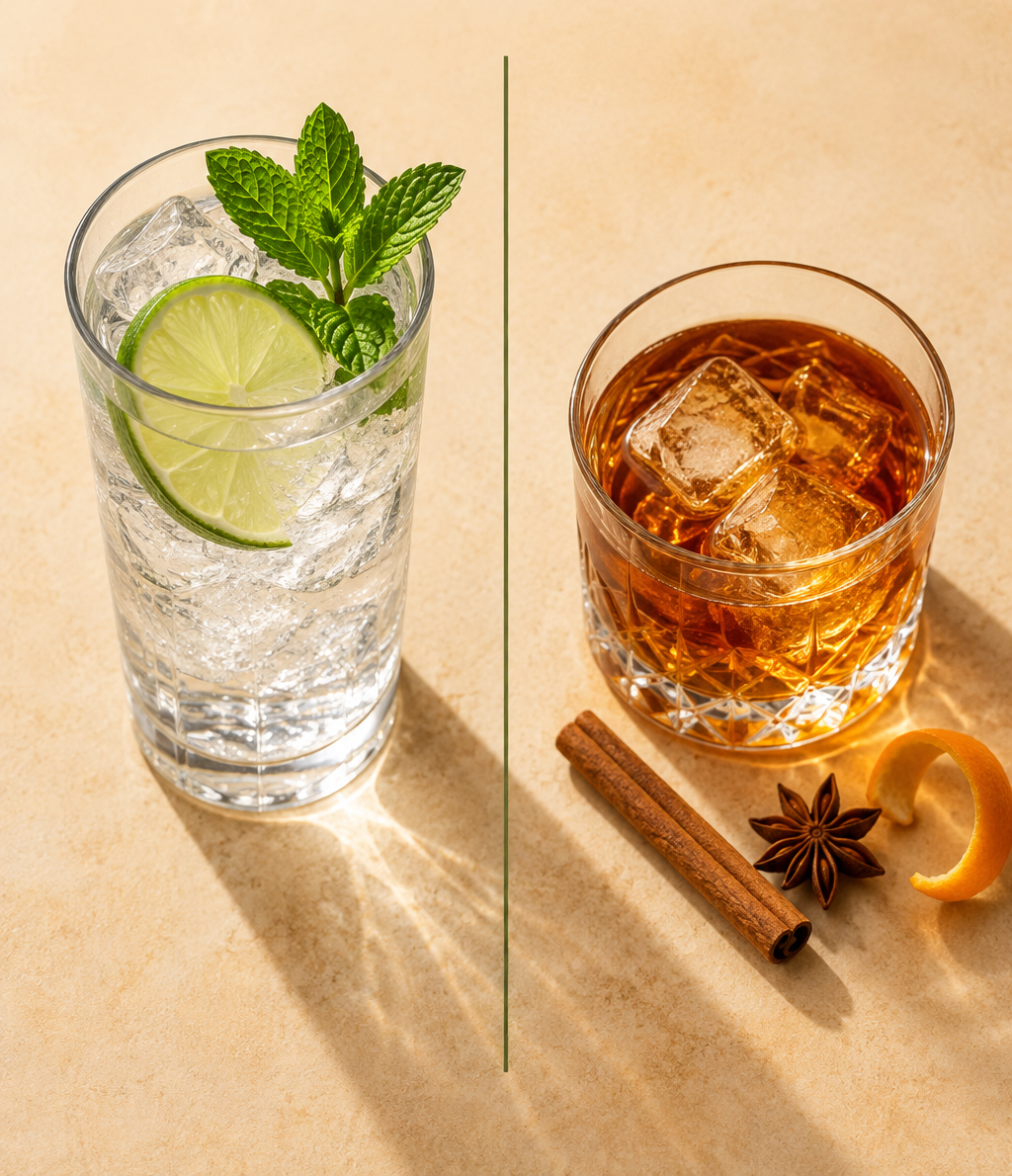
White rum is a clear, light rum with a mild, slightly sweet flavour that lets other ingredients lead. Spiced rum is rum that has had spices, and often sugar and caramel colouring, added after distillation, which makes it warmer, sweeter and darker. That is the short answer, and everything else in this guide builds on it.
The two start in the same place. Rum is a spirit distilled from sugarcane juice, syrup or molasses, and most of the world’s rum is made from molasses. Where they part ways is what happens after the still: white rum is filtered and bottled to stay clean, while spiced rum is blended with flavourings to taste like a completely different drink.
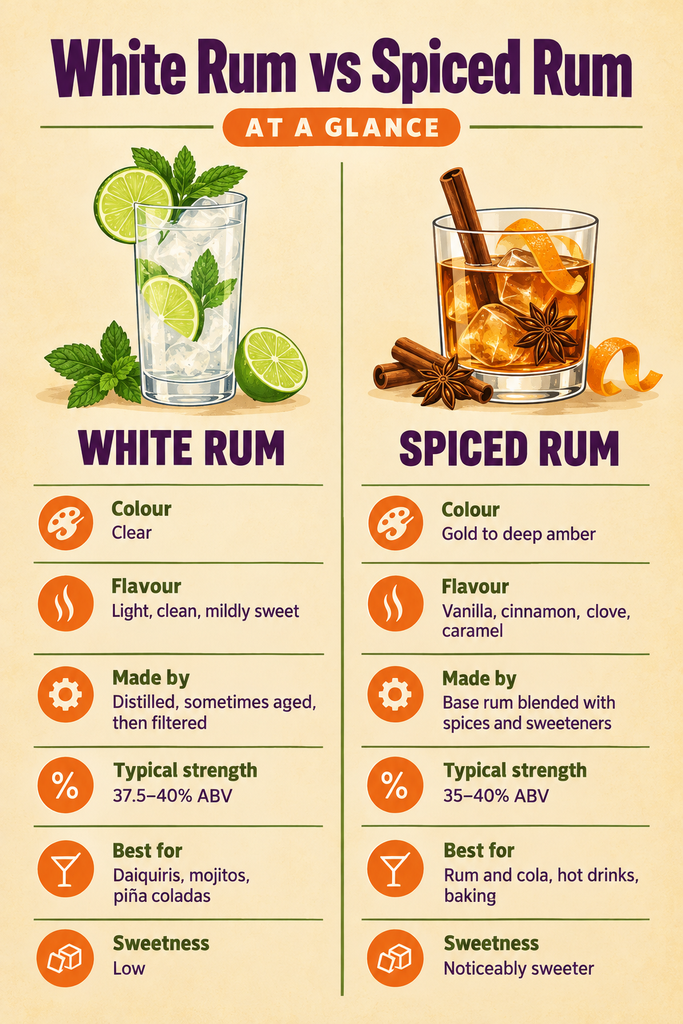
White Rum vs Spiced Rum at a Glance
| White rum | Spiced rum | |
|---|---|---|
| Colour | Clear | Gold to deep amber |
| Flavour | Light, clean, mildly sweet | Vanilla, cinnamon, clove, nutmeg, caramel |
| Made by | Distilling, then bottling, sometimes with short ageing and charcoal filtering | Blending a base rum with spices, sweeteners and colouring |
| Typical strength | 37.5% to 40% ABV | Often 35% to 40% ABV |
| Best for | Daiquiris, mojitos, piña coladas | Rum and cola, hot drinks, baking, autumn cocktails |
| Sweetness | Low | Noticeably sweeter |
How Is White Rum Made?
White rum is made by fermenting sugarcane juice or molasses, distilling the result and then bottling it clear. Some white rums go straight from the still to the bottle. Others rest in barrels or steel tanks for a year or so, then pass through charcoal to strip the colour back out.
That second route surprises a lot of people. A crystal-clear rum can still have been aged, which is why colour tells you very little about age or quality. The charcoal filtering leaves a light body and a crisp finish, which is exactly why bartenders reach for it.
Not every white rum is bland, either. Unfiltered styles from places like Martinique and Jamaica keep a lot of grassy or fruity character. If your only experience of white rum is a cheap, heavily filtered bottle, try a more characterful one before you decide you dislike the style.
How Is Spiced Rum Made?
Spiced rum starts with a base rum, often a gold or dark one, though white rum is used too. Spices such as cinnamon, vanilla, clove, nutmeg, allspice or ginger are added after distillation, and many brands also add sugar and caramel colouring for a consistent amber shade. Each producer guards its own blend.
The spices are added to the finished rum rather than during distilling, so this is closer to infusing and blending than to a different distillation. It also explains why two spiced rums from the same island can taste nothing alike. One might lean towards vanilla and toffee, another towards pepper and clove.
If you like the idea of controlling the flavour yourself, you can steep whole spices in a bottle of ordinary rum at home. Our guide to what to use when a spice runs out helps if your cupboard is missing one of the classics, and the benefits of cinnamon in your kitchen show why it is the backbone of most blends.
What Does the Label Actually Tell You?
Rum has a legal definition, and spiced rum often sits just outside it. Under the retained EU rules that still apply in the UK, rum must be at least 37.5% ABV, cannot be flavoured, and may only contain added caramel to adjust the colour. You can read the wording in the legal categories of spirit drinks.
In the US the standard is a little higher, with rum bottled at no less than 40% ABV. Because spiced rums are flavoured and sometimes bottled at around 35%, many are sold under labels such as spiced rum or spirit drink rather than plain rum. A quick look at the strength and the ingredients list is the fastest way to spot the difference.
Colour is the least reliable clue on the shelf. Terms like gold, amber and dark have no consistent legal meaning, and caramel colouring is permitted, so a deep mahogany bottle can be younger than a pale one. Always check the label rather than trusting the shade.
Is Spiced Rum the Same as Dark Rum?
No. Dark rum gets its colour and depth from longer ageing in charred barrels, from added caramel, or from both, and its flavours run to molasses, toffee, dried fruit and oak. Spiced rum gets most of its character from added spices and sweetness, whatever its base.
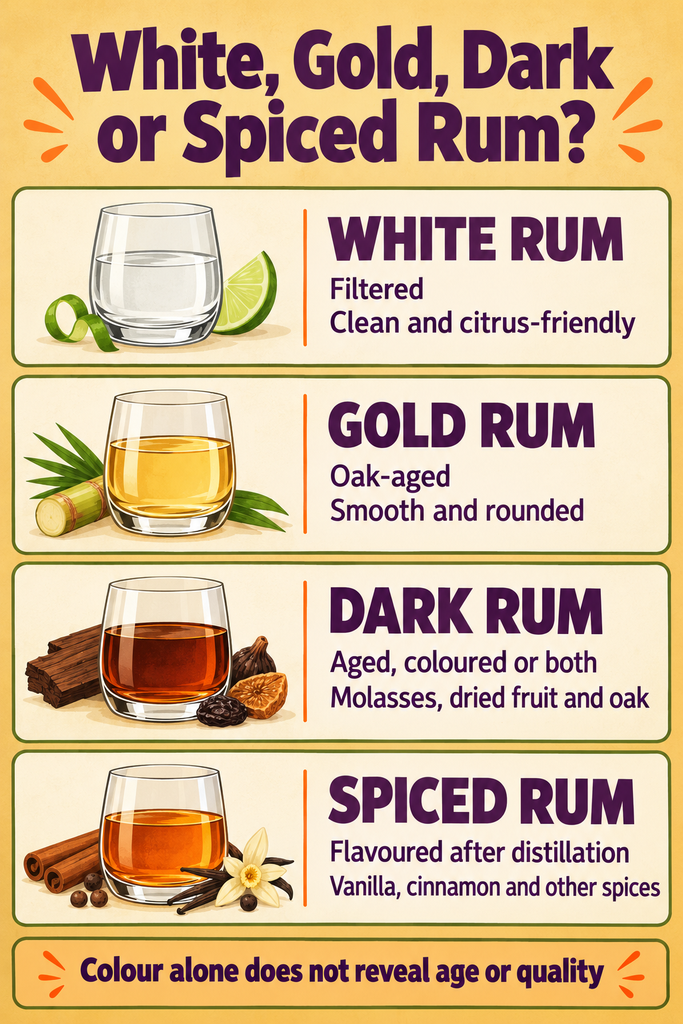
The confusion is easy to understand because both can be brown and both can taste rich. The difference is where the flavour comes from. Dark rum tastes of the rum and its ageing, while spiced rum tastes of what was added to it.
Is Spiced Rum the Same as Gold Rum?
Also no. Gold or amber rum has usually spent time in oak barrels, typically a few years, which gives it a smooth, rounded flavour with hints of vanilla and caramel. Some gold rums borrow part of their colour from caramel, as the term has no formal definition.
Spiced rum can look identical in the glass, but its flavour comes from the added spices. Put a gold rum and a spiced rum side by side and the spiced one will smell of vanilla and cinnamon straight away, while the gold rum smells of wood and toffee.
Which Cocktails Suit White Rum?
White rum belongs in drinks where lime, mint, pineapple or coconut should take the lead. The classic daiquiri is just white rum, lime juice and sugar, so there is nowhere for a weak base to hide. A mojito works the same way, and if you need a hand with the technique, our guide to how to muddle cocktails covers it, while 8 things to do with mint will use up the rest of the bunch.
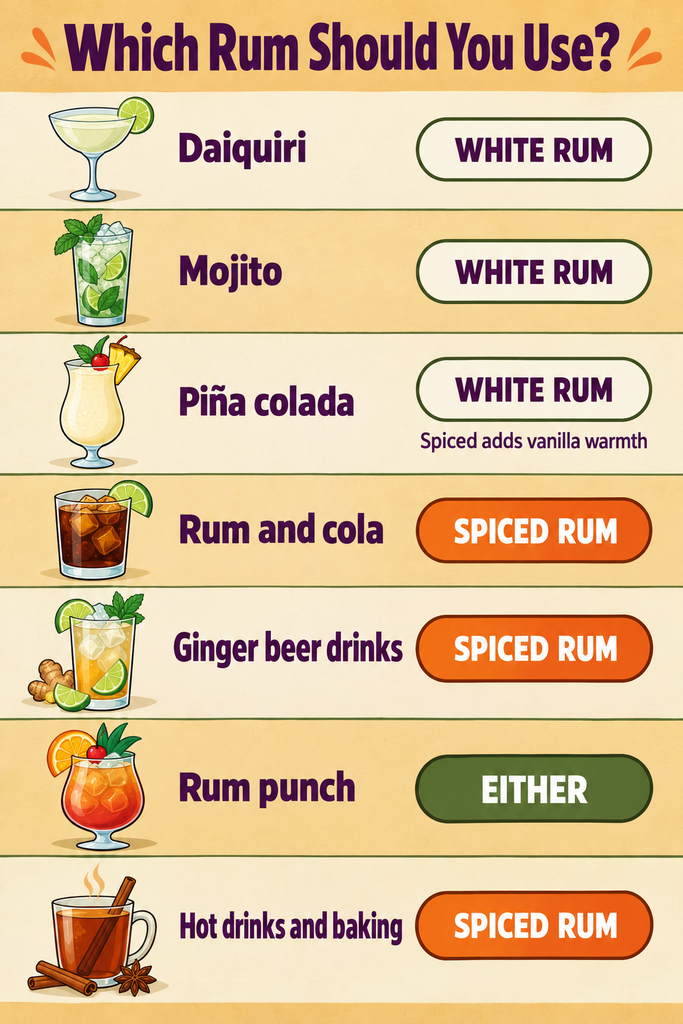
The piña colada is the other big one. It needs white rum to keep the coconut and pineapple bright, and it works beautifully as a blended drink, so have a look at our frozen cocktail ideas if you want the texture right. For more inspiration, the full list of rum cocktails shows how far a bottle of white rum can go, and strawberry cocktails make a good summer twist on a daiquiri.
Which Cocktails Suit Spiced Rum?
Spiced rum is the better choice when you want warmth and sweetness rather than freshness. Rum and cola is the everyday favourite, and adding a squeeze of lime turns it into a Cuba Libre. It also works well with ginger beer and lime, where the spice and the heat of the ginger complement each other, and ginger has plenty of other uses around the kitchen if you buy a whole root.
Cooler months are where spiced rum comes into its own. It suits hot toddies, mulled ciders and spiced punches, and it adds a lovely depth to apple-based drinks, so our best fall drinks are a good place to start. If you fancy something festive, Christmas cocktails is another natural home for a bottle of the spiced stuff.
Spiced rum is a useful baking ingredient too. Its vanilla and spice notes sit comfortably in rum cake, bread pudding and cakes that already lean on cinnamon and nutmeg.
Can You Use Spiced Rum in Place of White Rum?
You can, but the drink will change. Spiced rum adds sweetness, spice and colour, so a daiquiri made with it tastes more like a dessert than a citrus sour, and a mojito loses its clean mint and lime character. If a recipe specifically calls for white rum, stick with it unless you want an experiment.
Going the other way is easier. White rum in place of spiced rum gives a lighter, less sweet drink, and you can add a pinch of cinnamon, a drop of vanilla or a splash of ginger syrup to bring some of the missing warmth back. Here is a quick guide to the most common swaps.
Swap Chart for Popular Rum Drinks
| Drink | White rum | Spiced rum |
|---|---|---|
| Daiquiri | Best choice | Works, but tastes sweeter and spicier |
| Mojito | Best choice | Not recommended, hides the mint |
| Piña colada | Best choice | Works, adds a warm vanilla note |
| Rum and cola | Fine, cleaner taste | Best choice, extra spice |
| Dark ‘n’ stormy style | Lighter, less rich | Good match with ginger beer |
| Rum punch | Good, lets fruit shine | Good, richer and sweeter |
| Hot or baked drinks | Little flavour impact | Best choice |
Which Rum Should You Buy First?
If you only want one bottle for cocktails, buy a decent white rum. It covers the classics such as the daiquiri, mojito and piña colada, and it works in fruit punches and sangria too, including our summer sangria recipes. A spiced rum is the better second bottle if you like rum and cola, winter drinks or baking.
Spend a little more than the cheapest option on whichever you choose. In white rum, a better bottle tastes cleaner and less harsh, and in spiced rum it tastes of real spice rather than sugary vanilla. Check the strength and the ingredients list, and drink responsibly.
Frequently Asked Questions
Is spiced rum stronger than white rum?
Usually not. Many spiced rums are bottled at 35% to 40% ABV, while white rums are commonly 37.5% to 40%. Both vary by brand, so check the label rather than assuming.
Is white rum better than spiced rum for cocktails?
It depends on the drink. White rum is better for citrus-led classics like the daiquiri and mojito, while spiced rum is better for warm, sweet or spicy drinks such as rum and cola and hot toddies.
Is spiced rum just flavoured rum?
Broadly, yes. Spiced rum is rum that has had spices, and often sweeteners and caramel colouring, added after distillation. In the UK and EU, rum itself cannot be flavoured, which is why spiced versions are usually labelled differently.
Can you drink white rum neat?
You can, especially a well-made or lightly aged one. Many people prefer to sip aged gold or dark rum instead, and to keep white rum for mixing.
Conclusion: Choosing the Right Rum
White rum is the clean, flexible base for fresh, citrusy drinks, and spiced rum is the sweeter, warmer option for cola mixes, cold-weather serves and baking. The label tells you more than the colour, so look at the strength and ingredients before you buy. Pick white rum for a daiquiri, spiced rum for a rum and cola, and keep both once you know which drinks you make most.
Continue Reading
- Rum cocktails to make you love rum
- Frozen cocktails for summer
- How to muddle cocktails
- Best fall drinks
- Simple Christmas cocktails
What is your go-to rum for cocktails, and do you keep a bottle of both in the cupboard? Tell us in the comments below.