
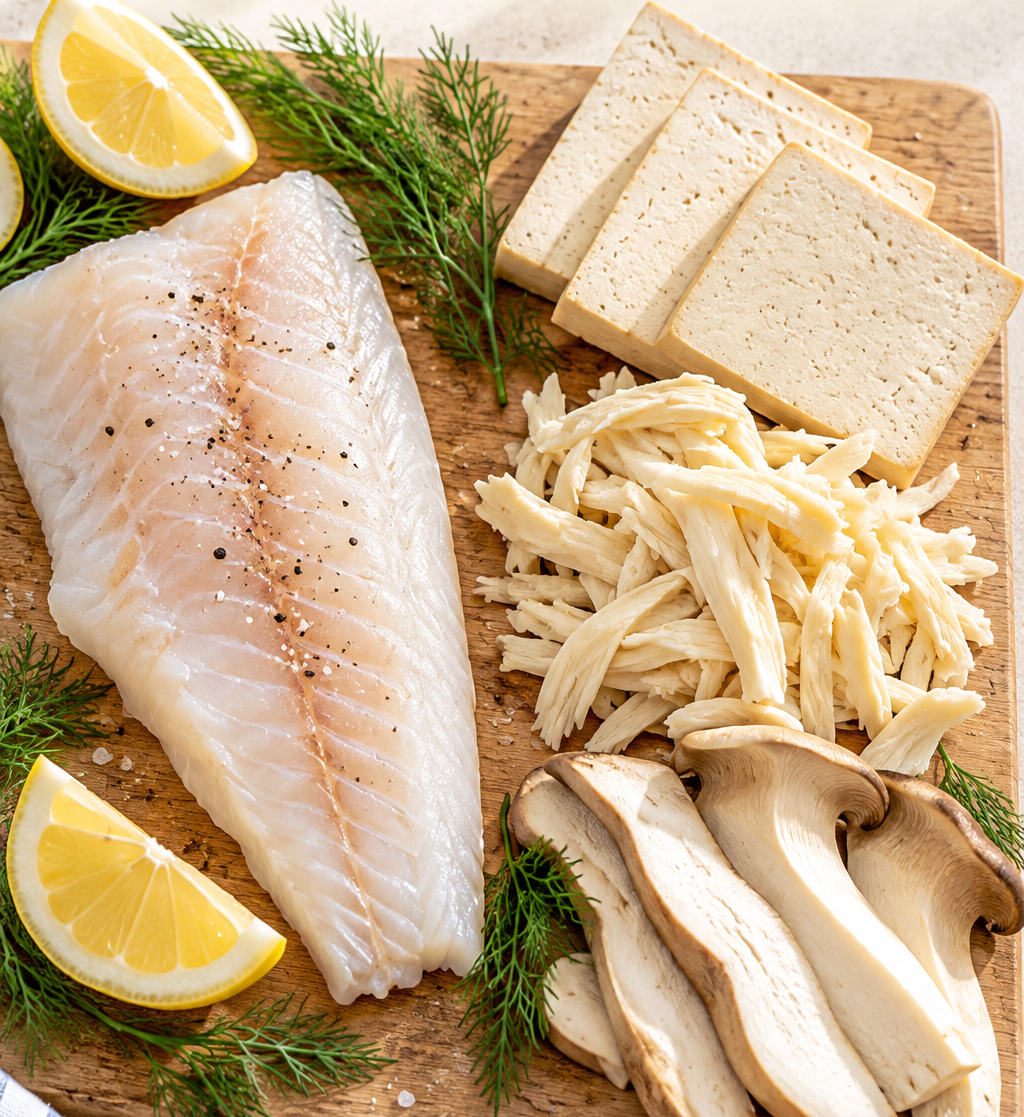
Fish Substitutes: What to Use Instead of White Fish
You have a recipe that calls for cod, and the fish counter is empty, the price has jumped, or someone at the table cannot eat fish at all. The right swap depends entirely on which of those problems you are solving, and most guides to fish substitutes only answer one of them.
As an Amazon Associate I earn from qualifying purchases and sometimes recommend products from other sellers at no extra cost you. For more details see my disclosure policy and privacy policy.
This guide splits the question into two clear paths. The first is swapping one white fish for another, for budget or availability. The second is genuinely fish-free swaps, for mixed groups, plant-based cooking or anyone avoiding fish. Pick your path, then match the substitute to the dish.
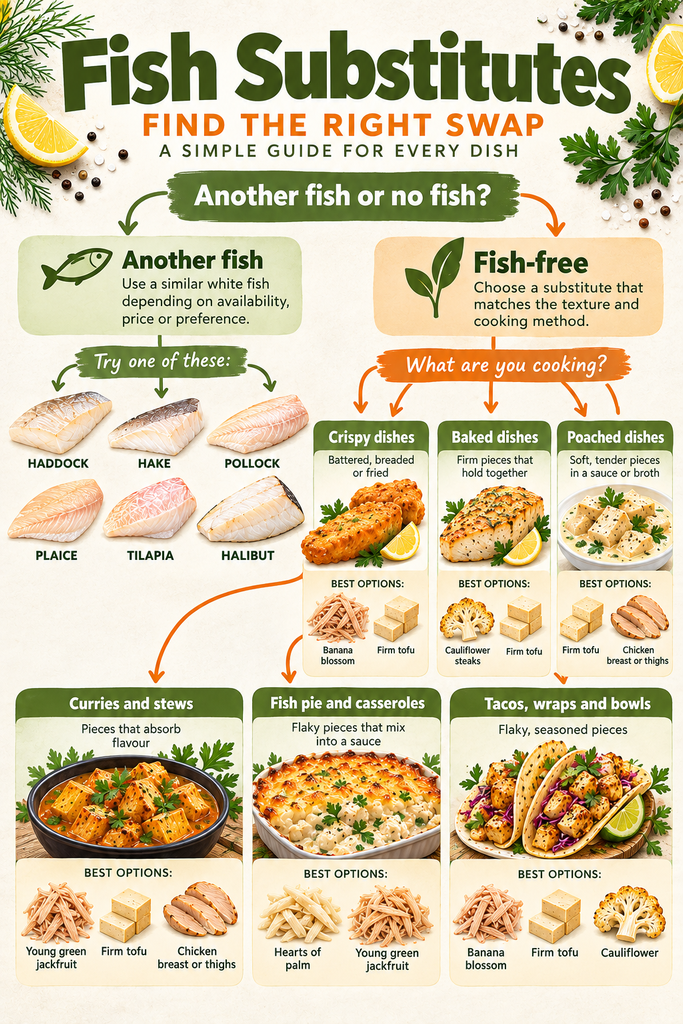
🐟 Two Paths: Another Fish, or No Fish at All
Before you shop, work out which situation you are in. They need completely different answers.
Path one: another fish. Your recipe says cod or haddock, but you cannot find it or it is too expensive. Almost any firm, mild white fish will do, with a few small adjustments to cooking time.
Path two: no fish. Somebody is avoiding fish, or you are cooking for a mixed group. Here you need a different ingredient altogether, and the right one depends on how the dish is cooked: battered, baked, poached, in a curry or in a pie.
Throughout this guide I use both UK and US terms (hob/stovetop, baking tray/sheet pan, grill/broiler), plus metric and US measures, so you can follow along wherever you cook.
📊 Quick-Swap Chart: White Fish for White Fish
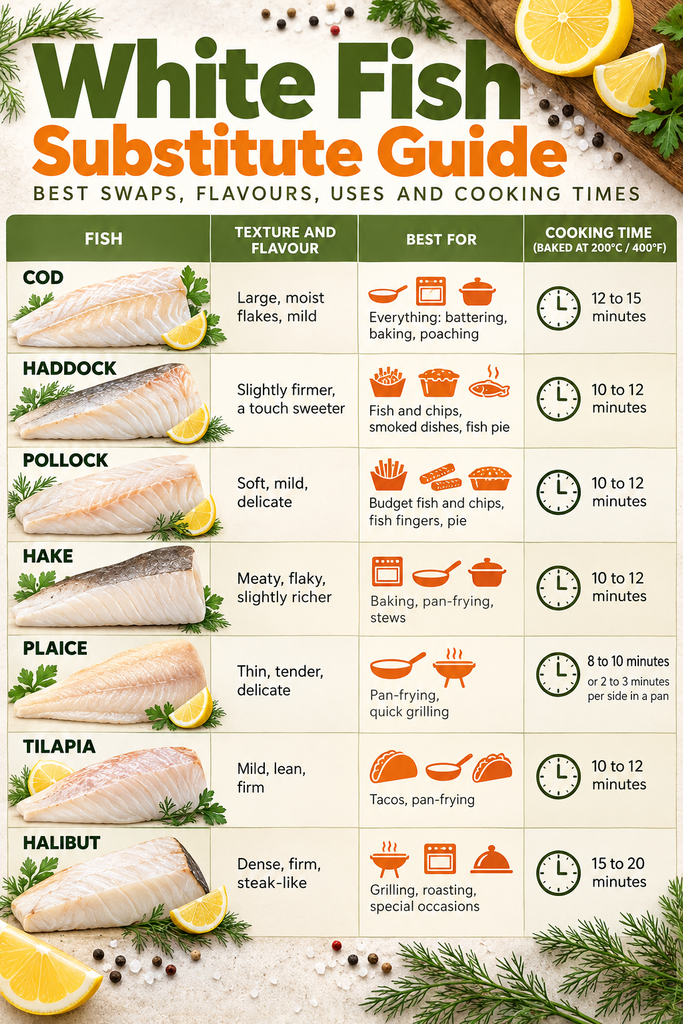
If you are staying with fish, this chart covers the most common swaps. Times are approximate for fillets about 2.5 cm (1 inch) thick, baked at 200°C (400°F), so always check for doneness.
| Fish | Texture and flavour | Best for | Cooking note |
|---|---|---|---|
| Cod | Large, moist flakes, mild | Everything: battering, baking, poaching | 12 to 15 minutes baked |
| Haddock | Slightly firmer, a touch sweeter | Fish and chips, smoked dishes, fish pie | 10 to 12 minutes baked |
| Pollock (Alaska pollock) | Soft, mild, delicate | Budget fish and chips, fish fingers, pie | 10 to 12 minutes baked |
| Hake | Meaty, flaky, slightly richer | Baking, pan-frying, stews | 10 to 12 minutes baked |
| Plaice | Thin, tender, delicate | Pan-frying, quick grilling | 8 to 10 minutes baked, or 2 to 3 minutes per side in a pan |
| Tilapia | Mild, lean, firm | Tacos, pan-frying | 10 to 12 minutes baked |
| Halibut | Dense, firm, steak-like | Grilling, roasting, special occasions | 15 to 20 minutes baked |
🔄 How to Swap One White Fish for Another
For most dishes you can swap weight for weight. A 150 g (5 oz) portion of cod can become a 150 g portion of haddock, hake or pollock with no other changes.
The thing that really matters is thickness, not species. A thin plaice fillet will overcook in the time a chunky piece of halibut needs, so adjust your timings to the cut in front of you.
Here are the swaps I reach for most often:
- Cod to haddock or hake: The easiest swap there is. Hake has a slightly meatier bite.
- Cod to pollock: A good budget option, though the flesh is softer, so handle it gently.
- Haddock to plaice: Fine for pan-frying, but it is thinner, so cut the time right down.
- Cod to halibut: A luxury swap that works beautifully, but expect a firmer, denser result.
- Cod to tilapia: Mild and widely available, and it holds together well for tacos.
If you care about sustainability, UK guides such as the Marine Conservation Society’s seafood swaps are worth a look. They suggest options like hake and plaice in place of some of the more pressured stocks, though recommendations change, so check the current Good Fish Guide before you buy.
Frozen fish is a perfectly good choice too, and often cheaper. Defrost it fully in the fridge and pat it very dry before cooking.
A meat thermometer takes the guesswork out of cooking fish. Aim for 63°C (145°F) at the thickest part and the flesh will be opaque and flake easily.
🌱 Fish-Free Swaps by Cooking Method
If you are cooking without fish, think about the job the fish is doing in the dish. Is it flaky, meaty, or just a vehicle for sauce? Then choose the substitute that does the same job.
Chicken breast or thighs. The simplest option for a mixed group. Cut breast into strips for goujons, or use thighs in curries and stews where they stay juicy. My chicken substitute guide covers this in more detail.
Firm or extra-firm tofu. Press it for 20 to 30 minutes, then slice into thick fillets. It takes on marinades brilliantly and crisps up well in a coating.
Hearts of palm. Tinned (canned) hearts of palm shred into tender, flaky pieces that look surprisingly like crab or white fish. Drain and rinse well. They are best in fish pie, fishcakes and tacos.
Banana blossom. Sold in tins or jars in brine, banana blossom pulls apart into flaky layers. Rinse it thoroughly and squeeze it dry, then batter it for a plant-based fish and chips.
Young green jackfruit. Buy it in brine or water, never syrup. It shreds into tender strands, so it suits curries, tacos and pies better than whole fillets.
King oyster mushrooms. Thick stems sliced into rounds, or scored lengthwise, give a meaty, chewy bite. See my mushroom substitutes guide if you cannot find them.
Cauliflower steaks. Cut thick slices through the head, about 2 cm (¾ inch), and roast or pan-sear. Good for baked and pan-fried dishes where you want a solid piece on the plate.
🎯 Matching Texture, Not Just Flavor
When you swap fish for something else, texture matters more than taste, because you can always season your way to the right flavor. Ask yourself what the fish is doing in the dish.
If it is meant to be flaky, as in a pie or taco, reach for hearts of palm, banana blossom or jackfruit. If it is meant to be firm and meaty, as in a fillet on a plate, use tofu, cauliflower steaks or king oyster mushrooms. If it is simply tender protein in a sauce, chicken is the easiest answer.
Cooking style matters as well. Wet methods like poaching and stewing suit sturdy swaps such as tofu and chicken. Crisp methods like frying and air frying suit anything that dries well, such as banana blossom and tofu.
🍽️ Dish-by-Dish: Matching the Swap to the Meal
This is where most substitute guides stop short. Here is what to use in the six dishes people ask about most.
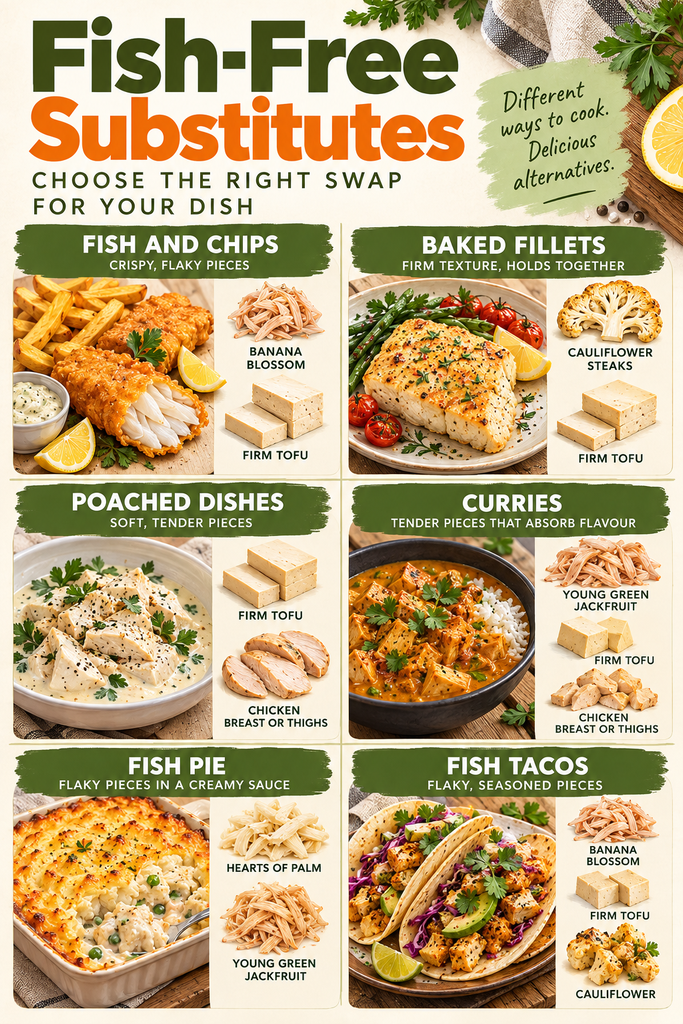
Battered fish and chips (fries)
For white fish, haddock, cod and pollock are classic. For a fish-free version, banana blossom or thick slices of firm tofu both take a batter well.
Pat whatever you are using completely dry before it goes into the batter, or the coating will slide off. Fry in a neutral oil at around 180°C (350°F), and see my cooking oils guide for the best choices.
Baked or pan-fried fillets
White fish: hake, haddock or pollock. Fish-free: cauliflower steaks, thick tofu slabs or king oyster mushroom rounds.
For a crisp crumb, press the surface into panko breadcrumbs. A pack of panko crumbs gives tofu and cauliflower a lovely crunch.
Poached or steamed fish
White fish: cod, hake or halibut. Fish-free: a thick piece of tofu or a chicken breast.
Poaching is gentle, so the substitute needs to hold together in liquid. Firm tofu and chicken both do. If you want a recipe for the fish version, my steamed cod and vegetables is a good place to begin.
Fish curry and stews
White fish: hake or haddock, added at the end so it does not break up. Fish-free: chicken thighs, chunky tofu, jackfruit or hearts of palm.
Add delicate substitutes in the last 5 minutes. If you would like a fish version to compare, take a look at my coconut fish curry.
Fish pie
White fish: haddock and pollock, often with a smoked element. Fish-free: hearts of palm, jackfruit or a mix of mushrooms and cooked chicken in a creamy sauce.
The sauce does a lot of the work in a pie, so season it well and keep the filling chunky.
Fish tacos
White fish: tilapia, cod or pollock. Fish-free: battered banana blossom, crisp tofu or roasted cauliflower.
Pile on a crunchy slaw and a squeeze of lime. The toppings carry the flavour, so any of these swaps works.
🌊 Getting a Sea Flavour Without Fish
Even without fish, you can add a hint of the sea. A few ingredients do the work.
- Nori or seaweed: Crumble a sheet into batter, sauces or a pie filling for a mild briny flavour.
- Capers: Their salty tang suits tartare sauce and fish pie.
- Lemon: Always. Squeeze it over at the end.
- White miso: A spoonful of white miso paste adds savoury depth to sauces and marinades.
- Vegan fish sauce: Simmer soy sauce, a strip of seaweed, a little miso and a splash of rice vinegar, then strain. It is a handy stand-in for fish sauce in curries and stir-fries.
If you need a soy swap for any of this, see my soy sauce substitutes guide.
🔪 How to Prepare Fish-Free Substitutes
Fish-free swaps do not behave like fish, so a little prep makes all the difference.
Tofu. Wrap a block in a clean tea towel (kitchen towel) and press it under a heavy pan for 20 to 30 minutes. Slice it into fillet shapes about 1.5 cm (½ inch) thick. Pressed tofu fries and bakes with a firmer, chewier bite.
Hearts of palm. Drain, rinse and pat dry, then pull apart with your fingers or a fork. Season them well, because on their own they are mild.
Banana blossom. Drain it, rinse it under cold running water and squeeze out as much liquid as you can. Pat dry and separate into flaky pieces. If you skip the squeezing, it turns soggy under a batter.
Jackfruit. Check the tin says “young” or “green” and that it is packed in brine or water. Drain, rinse, cut away the tough core and shred the rest.
King oyster mushrooms. Trim the base, then slice the thick stems into rounds or score them in a crisscross pattern. They need a hot pan and a generous amount of oil to brown.
Cauliflower. Trim the head and slice straight down through the stem into thick steaks. The outer edges will crumble, so save them for another dish.
🧂 A Simple Marinade for Fish-Free Fillets
Plain tofu, hearts of palm or cauliflower will taste of very little unless you season them. This quick marinade suits all of them, and gives a bright, savoury, slightly salty flavour.
- 2 tablespoons soy sauce or tamari
- 1 tablespoon lemon juice
- 1 tablespoon olive oil
- 1 teaspoon white miso paste
- ½ teaspoon crushed nori or seaweed flakes
- ½ teaspoon garlic powder
Whisk everything together and marinate for 20 to 30 minutes before cooking. For a battered dish, marinate first, pat dry, then coat.
Do not leave delicate hearts of palm in the marinade for hours, as they can go mushy. Tofu and cauliflower can take longer.
🧭 Quick Decision Guide
Short on time? Use this to choose a substitute fast.
- I just need another white fish: Haddock, hake or pollock for cod. Plaice for something thinner.
- I need something crispy and battered: Banana blossom or pressed tofu.
- I need something flaky for a pie or tacos: Hearts of palm or young jackfruit.
- I need the easiest option for a mixed table: Chicken breast or thighs.
- I need a solid piece for baking or pan-frying: Cauliflower steaks or thick tofu.
- I need something chewy and meaty: King oyster mushrooms.
🚫 Common Substitute Mistakes
A few easy slips can spoil an otherwise good dish.
- Skipping the drying step. Wet fish, tofu or banana blossom will steam rather than crisp, and batter will slide off.
- Cooking by time alone. Thickness varies, so check for doneness with a thermometer or by flaking the fish with a fork.
- Under-seasoning plant-based swaps. They are mild, so season generously and add acid, like lemon, at the end.
- Overcrowding the pan. Too much in one go lowers the temperature and makes everything pale and soft.
- Adding delicate swaps too early. Hearts of palm and jackfruit belong in the last few minutes of a stew.
⚠️ Cooking for Mixed Groups
If you are cooking fish and fish-free dishes at the same time, a little planning keeps things tidy. Please note that I am not a medical professional, and this is general kitchen advice, not allergy guidance. Anyone with an allergy should follow the advice of their doctor or allergist.
A few general habits help:
- Use separate, clean chopping boards, utensils and pans for each dish.
- Use fresh oil for fish-free frying rather than oil that has cooked fish.
- Serve fish-free portions first, using clean serving spoons.
- Read labels on every packaged ingredient.
Fish also hides in places you might not expect. Common examples include fish sauce, some Worcestershire sauce, certain stock cubes and Caesar dressing. Always check the label. If you want a swap for the sauce, my Worcestershire sauce substitutes guide has options.
It is also worth knowing that fish and shellfish are separate categories. This guide does not cover shellfish, so if shellfish is a concern, check with your allergist.
This post contains affiliate links. If you buy through them I may earn a small commission, at no extra cost to you.
❓ Fish Substitute FAQs
What is the best substitute for cod? Haddock, hake and pollock are the closest swaps. Use the same weight and adjust the time for thickness. For a fish-free option, firm tofu or chicken thighs work well.
What is the best substitute for battered fish? Banana blossom gives the flakiest plant-based result. Thick slices of pressed tofu are the easiest to find. Both need to be dry before battering.
What can I use instead of fish in a fish pie? Hearts of palm or young jackfruit give a flaky texture. A chicken and mushroom filling in a creamy sauce is a simple, hearty alternative.
What is the best substitute for fish in tacos? For white fish, tilapia or cod. Fish-free, try battered banana blossom, crisp tofu or roasted cauliflower with a punchy slaw.
Can I use frozen white fish? Yes. Defrost it fully in the fridge, drain off any liquid and pat it dry before cooking.


