Soy Sauce Substitutes: The Complete Guide to Soy-Free, Gluten-Free, and Low-Sodium Cooking
Run out of soy sauce halfway through a stir-fry and you’ve got options — plenty of them, actually. Whether you’re avoiding soy for an allergy, watching your sodium, dodging gluten, or you simply don’t have a bottle in the cupboard, there’s a swap here that’ll get you back to cooking in under a minute.
As an Amazon Associate I earn from qualifying purchases and sometimes recommend products from other sellers at no extra cost you. For more details see my disclosure policy and privacy policy.
This guide covers eight reliable substitutes, when to reach for each one, and the exact ratios to use so your dish still tastes balanced. We’ve also included notes for UK readers, since gluten-free labelling doesn’t always mean the same thing on both sides of the Atlantic, plus a few unexpected ways to bring that same umami depth to pesto and even a savoury margarita.
Why You Might Need a Soy Sauce Substitute
Soy sauce shows up everywhere — marinades, stir-fries, dressings, glazes — because it delivers salt, umami, and a rich brown colour all in one bottle. That makes it tricky to replace with a single ingredient, which is why the right substitute really depends on what you’re avoiding.
A few common reasons readers look for a swap:
- Soy allergy: you need something that contains no soy at all, which rules out tamari and most liquid aminos.
- Gluten intolerance or coeliac disease: traditional soy sauce is brewed with wheat, so you’ll want a certified gluten-free option.
- Lower sodium diets: regular soy sauce is genuinely salty, and some alternatives cut that considerably.
- Just out of the bottle: sometimes you don’t need a special substitute, just the closest flavour match in the cupboard.
Quick Reference: Soy Sauce Substitute Comparison
Here’s how the main options stack up before we get into the detail on each one.
The Best Everyday Swap: Tamari
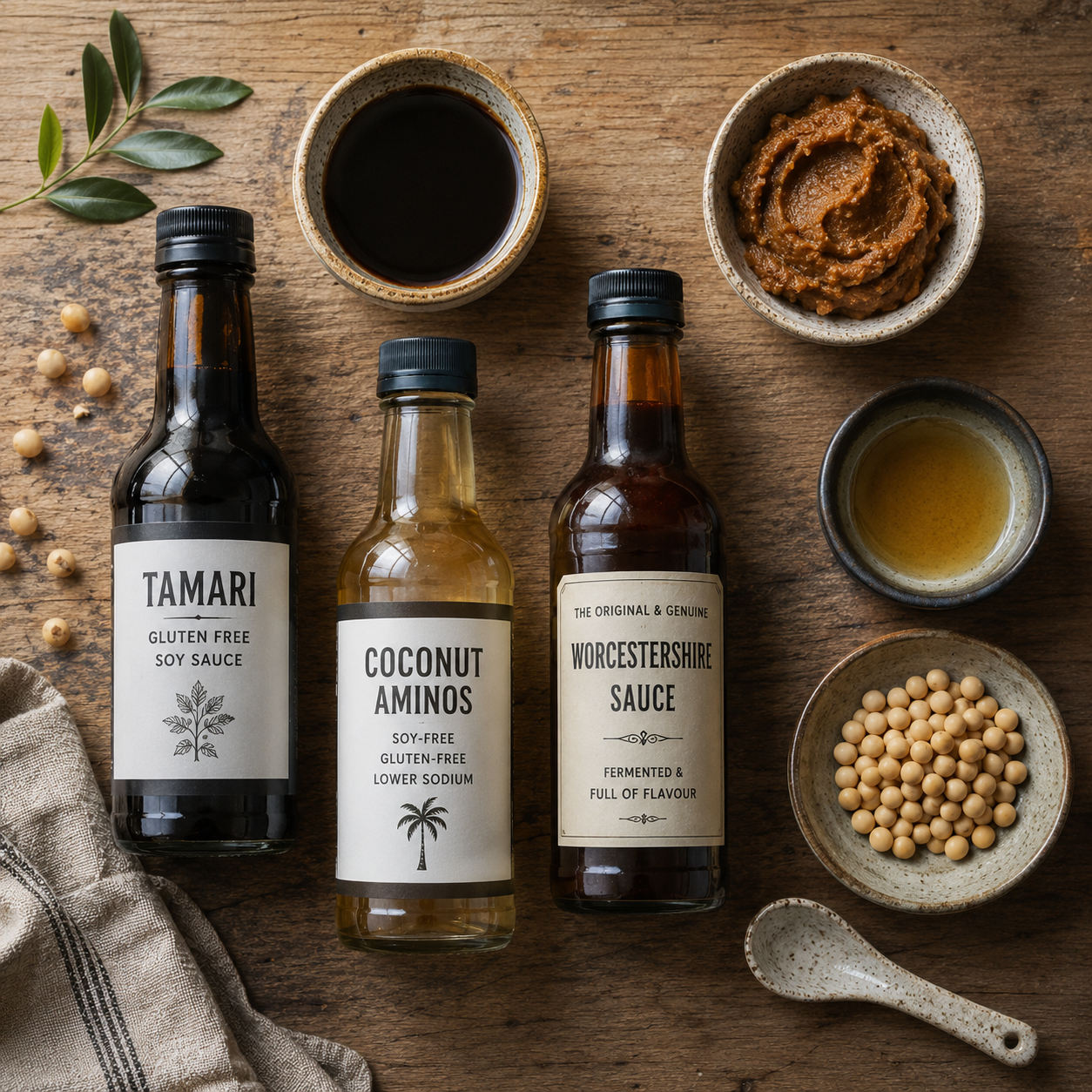
If you’re simply out of soy sauce and don’t have a dietary restriction to work around, tamari is your best bet. It’s brewed the same way as traditional soy sauce, from fermented soybeans, so the flavour is nearly identical — just slightly richer and a touch less sharp.
Use it 1:1 in place of soy sauce in marinades, dressings, and stir-fries. One thing to flag: tamari is often gluten-free because it’s traditionally made with little or no wheat, but it’s still made from soybeans, so it’s not an option if you’re avoiding soy itself.
Best for Gluten-Free Cooking: Liquid Aminos
Liquid aminos are a good middle-ground option if gluten is your main concern rather than soy. They’re made from soybeans too, so they’re not soy-free, but most brands are naturally gluten-free and the flavour is milder and slightly sweeter than regular soy sauce.
They work well in vinaigrettes and drizzled over grilled vegetables, where you want savoury depth without soy sauce’s sharper edge. Use it in a similar ratio to soy sauce, then taste and adjust — because it’s a bit softer in flavour, you may want slightly more than a straight swap.
Best Truly Soy-Free Swap: Coconut Aminos
For anyone avoiding soy and gluten at the same time, coconut aminos is the most popular choice, and for good reason. It’s made from fermented coconut palm sap, so there’s no soy or wheat involved anywhere in the process.
It’s also considerably lower in sodium — around 90mg per teaspoon compared to roughly 290mg in traditional soy sauce, so it’s genuinely useful if you’re watching salt intake too. The trade-off is that coconut aminos is sweeter and less salty than soy sauce, so most cooks add a pinch of extra salt to balance it out, especially in marinades and roasted vegetable dishes.
Best British Pantry Staple: Worcestershire Sauce
Worcestershire sauce doesn’t get mentioned as often as coconut aminos, but it’s one of the best soy-free, often gluten-free options sitting in most UK kitchens already. It’s made from malt vinegar, anchovies, tamarind, molasses, and spices, which gives it a tangy, complex umami that works brilliantly in place of soy sauce.
It’s particularly good in marinades and steak sauces, and because it’s such a familiar UK ingredient, it doesn’t feel like a compromise the way some soy-free swaps can. We’ve got a full breakdown of ratios and variations in our Worcestershire sauce substitutes guide if you ever need to go the other direction. One note for coeliac readers: check the label, since malt vinegar can be a grey area depending on how it’s processed.
Best for Bold, Small-Batch Umami: Fish Sauce
Fish sauce is intensely salty and fermented, so a little goes a long way. It works best in small amounts — think teaspoons, not tablespoons — stirred into dressings or pestos where you want a savoury backbone without the dish tasting overtly fishy.
It’s naturally soy-free and usually gluten-free, though it’s not a vegetarian option. If you’re already making a marinade for something like our grilled tuna steaks, a small dash of fish sauce in place of soy sauce adds real depth without overwhelming the citrus and herbs.
Best Vegan Option: Miso Paste and Water
Miso paste thinned with a little water makes a genuinely good soy sauce substitute for vegan and vegetarian cooking, with a deep, slightly funky savouriness that works well in marinades and pesto-style sauces. Keep in mind that miso is made from soybeans, so this one’s off the table if you’re avoiding soy specifically.
The ratio to remember: use about twice as much miso as you would soy sauce, thinned with water until it reaches a pourable consistency. If you’re experimenting with miso beyond this one substitution, our easy weeknight dinners using miso is a good next stop for ideas.
Best Low-Sodium, DIY Option: Mushroom Broth
If sodium is your main concern and you don’t mind a little extra prep, rehydrating dried shiitake mushrooms in water creates a broth that works well in place of soy sauce, especially in soups, braises, and pan sauces. It’s naturally soy-free, gluten-free, and low in sodium, since you control the salt yourself.
Use it in roughly equal volume to soy sauce, then season with salt to taste. This is also a smart move if you’re already exploring mushroom substitutes for other reasons — the two guides pair naturally if umami-rich, plant-based cooking is your focus.
When Salt Alone Is Enough
It sounds almost too simple, but straight salt can be the right call when the rest of your dish already brings plenty of umami. Think cheese-heavy pasta, nut-based sauces, or a dish built around mushrooms or tomatoes — soy sauce was only ever adding saltiness there, not a whole flavour profile.
A basic saline solution also gives you more control than a splash of liquid soy sauce would, which is handy if you’re trying to season precisely rather than guess.
A Secret Umami Boost for Pesto (No Soy Sauce Required)
Traditional pesto never called for soy sauce in the first place — Parmesan, pine nuts, garlic, and good olive oil already bring plenty of savoury depth on their own. But if you’re chasing an extra layer of umami, a small amount of miso paste, a finely chopped anchovy, or a dash of coconut aminos stirred through your basil pesto adds real complexity without anyone being able to pinpoint why it tastes so good.
If you haven’t made pesto from scratch before, our guide on how to make pesto and what to use it for is the place to start before you start experimenting with these umami add-ins.
Soy-Free Depth for Savoury Margaritas
Here’s where things get fun for a blog literally named after pesto and margaritas: several of these substitutes work just as well in a glass as they do in a pan. A tiny dash of Worcestershire sauce is the backbone of a classic Bloody Maria-style margarita, and it brings that same tangy umami without turning your cocktail into a stir-fry.
Fish sauce and miso brine can do similar work in smaller doses — think a few drops, not a splash — balanced with plenty of citrus so the savoury note stays in the background. Coconut aminos works too, in tiny amounts, though its natural sweetness means you’ll likely want extra lime or salt to keep the balance right.
US vs UK: Why “Gluten-Free” Doesn’t Always Travel
One detail worth flagging clearly, especially if you write recipes for readers on both sides of the Atlantic: a product labelled gluten-free in the US isn’t automatically gluten-free in its UK formulation. Some popular soy-sauce-style products use different recipes by region, and UK versions can contain malt vinegar or other ingredients that US versions don’t.
The same caution applies to “liquid aminos” generally — most brands still contain soy even though the name doesn’t say so, and formulations vary. If gluten or soy is a genuine allergy rather than a preference, always check the ingredients list on the specific bottle in front of you rather than relying on a product’s reputation.
How Much Substitute Should You Use?
As a quick reference for swapping into an existing recipe:
- Tamari or liquid aminos: use the same amount as the soy sauce called for.
- Coconut aminos: use the same amount, then add a small pinch of salt to compensate for the sweetness.
- Worcestershire sauce: start with slightly less than the soy sauce amount, since the flavour is more concentrated, and add a splash of water if it needs diluting.
- Fish sauce: use about half the amount, since it’s stronger and saltier than soy sauce.
- Miso paste and water: use roughly double the amount of miso to the soy sauce called for, thinned with water.
- Mushroom broth: use the same amount as the soy sauce, then season with salt separately.
Recipe FAQs
What’s the best soy-free substitute for soy sauce in everyday cooking?
Coconut aminos and Worcestershire sauce are the two most reliable everyday soy-free swaps. Coconut aminos is the better pick if you’re also avoiding gluten or watching sodium, while Worcestershire brings a punchier, more savoury flavour that suits marinades and glazes.
Can I use tamari if I have a soy allergy?
No. Tamari is brewed from soybeans, so while it’s often gluten-free, it’s not suitable for anyone with a soy allergy. For a genuinely soy-free option, reach for coconut aminos, Worcestershire sauce, fish sauce, or mushroom broth instead.
Is coconut aminos healthier than soy sauce?
It’s lower in sodium and typically both soy- and gluten-free, which makes it the better choice for those specific goals. It is higher in sugar than soy sauce though, so “healthier” really depends on which factor matters most to you.
What’s the best replacement for soy sauce in a marinade?
For a soy-free marinade, try coconut aminos with a pinch of extra salt, or Worcestershire sauce loosened with a splash of water. If you’re not avoiding soy, tamari works as a straightforward 1:1 swap with almost no adjustment needed.
Are soy sauce substitutes gluten-free in the UK?
Not always, so it’s worth checking every time rather than assuming. Some products marketed as gluten-free in the US have UK versions that contain malt vinegar or other gluten-containing ingredients, so always read the label on the specific bottle you’re buying.
Can fish sauce work if I’m cutting back on sodium?
Fish sauce itself is high in sodium, but because the flavour is so concentrated, you only need a small amount to get the effect. If low sodium is your priority, coconut aminos or a homemade mushroom broth will get you further than fish sauce will.