
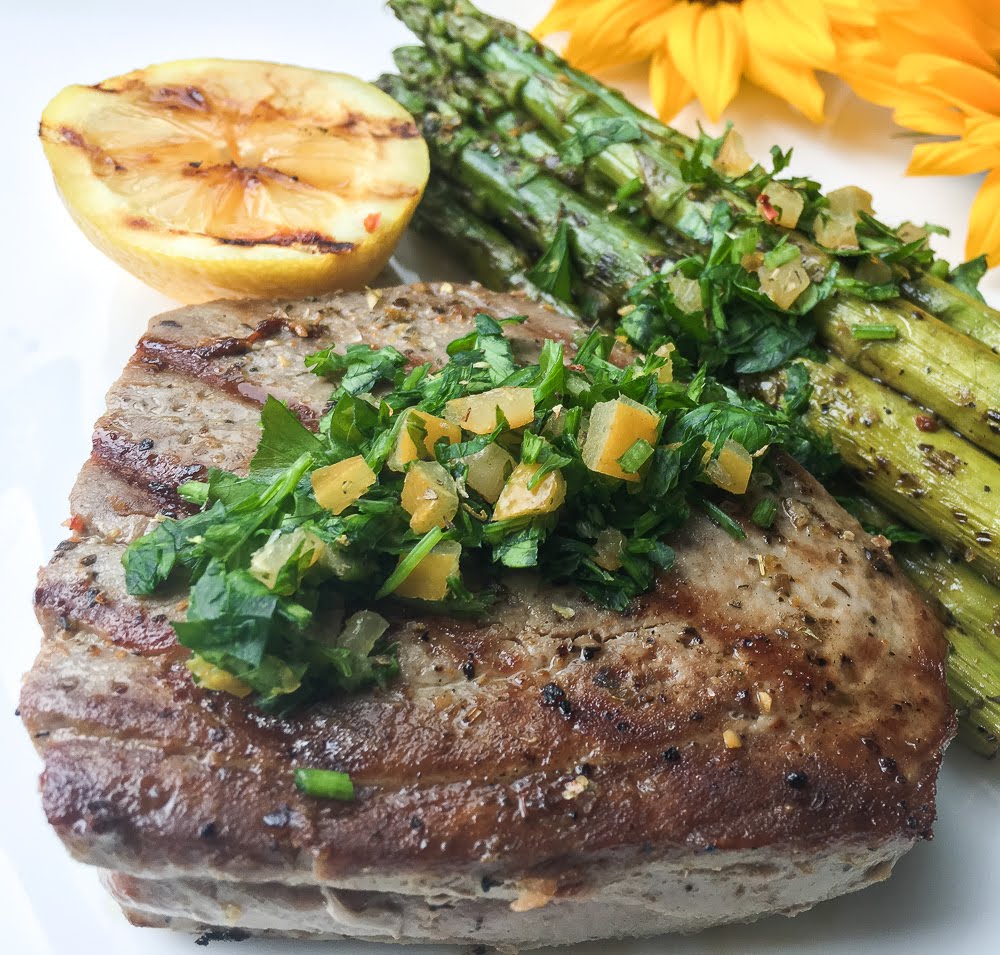
Grilled Tuna Steaks with Preserved Lemon Gremolata
There’s something about a perfectly seared tuna steak that makes a weeknight dinner feel like a genuine occasion. These grilled tuna steaks with preserved lemon gremolata hit that sweet spot between impressive and effortless — the whole dish is on the table in under 20 minutes, but it tastes like you’ve been thinking about it all day.
As an Amazon Associate I earn from qualifying purchases and sometimes recommend products from other sellers at no extra cost you. For more details see my disclosure policy and privacy policy.
The real star here is the gremolata, a simple Italian condiment traditionally made with fresh parsley, garlic, and lemon zest. This version adds a Moroccan twist with preserved lemon rind, which brings a depth of flavour you just can’t get from fresh lemon alone. It’s one of those little additions that genuinely elevates the whole dish.
⚡ A Quick Look at the Recipe
What is this recipe? Grilled tuna steaks topped with a bright preserved lemon gremolata — a Mediterranean-inspired dinner that comes together in under 20 minutes with minimal effort.
💡 Quick tip: Keep the grill lid open while cooking tuna — closing it traps steam and makes it harder to get that perfect sear. Two minutes per side is all you need for a beautifully rare result.
Why You’ll Love This Recipe
- Ready in under 20 minutes. Prep and cook time combined comes to less than 20 minutes — perfect for evenings when you want a proper meal without a long session in the kitchen.
- Light, fresh, and packed with protein. Tuna is a naturally lean fish that grills beautifully, and the herby gremolata keeps everything feeling bright and seasonal rather than heavy.
- The gremolata does all the work. You’re essentially making a three-ingredient sauce that transforms a simple piece of fish into something that tastes genuinely restaurant-worthy.
- Naturally gluten-free and dairy-free. This recipe works for a wide range of dietary needs without any substitutions needed.
What Is Gremolata?
Gremolata is a classic Italian condiment made from just three core ingredients: fresh parsley, garlic, and lemon zest. It’s traditionally served alongside braised meats like osso buco, where its bright, acidic punch cuts through rich, slow-cooked flavours. The name comes from the Milanese dialect, and the condiment has been a staple of northern Italian cooking for centuries.
What makes it so useful is how versatile it is. A spoonful over grilled fish, roasted vegetables, or even a simple pasta is enough to completely change the character of a dish. This recipe builds on the classic by adding preserved lemon rind — a North African ingredient with an intense, concentrated citrus flavour that adds complexity without any extra effort.
Ingredients
Here’s what you’ll need to make this dish.
For the tuna:
- 4 sushi-grade tuna steaks (approx. 170g / 6oz each, about ¾” thick): Sushi-grade matters here — tuna cooked to rare or medium-rare should be of the highest quality. Look for steaks with a deep red colour and no grey patches. If your fishmonger doesn’t stock sushi-grade, ask specifically — it’s usually available to order.
- 2 tablespoons extra virgin olive oil: Used to brush the steaks before grilling. It helps prevent sticking and encourages a good sear. Use a good-quality oil since you can taste it here.
- Mediterranean-spiced sea salt, to taste: A spiced salt blend adds a subtle warmth that works beautifully with tuna. If you can’t find one, a pinch of smoked paprika mixed into regular flaky sea salt makes a fine substitute.
- Black pepper, to taste: Freshly ground is always worth it.
- 2 large lemons, halved: These get grilled alongside the tuna. The heat caramelises the cut surface and mellows the acidity slightly, giving you a smoky, sweeter juice to squeeze over at the table.
For the preserved lemon gremolata:
- ¼ cup (approx. 15g) fresh parsley, finely chopped: Flat-leaf parsley has more flavour than curly, though either will work. Make sure the leaves are completely dry before chopping — wet parsley turns the gremolata soggy.
- 1 teaspoon lemon zest: Use a microplane or fine grater and avoid getting into the white pith, which is bitter.
- 2 teaspoons preserved lemon rind, rinsed and finely chopped: Preserved lemon is sold in jars and found in most larger supermarkets, Middle Eastern grocers, or online. Always rinse it before using to remove excess salt. You want just the rind — scoop out and discard the flesh.
- 1 large garlic clove, grated: Grating rather than mincing gives you a finer, more evenly distributed garlic flavour throughout the gremolata. A microplane works perfectly here too.
- Sea salt and black pepper, to taste: Season the gremolata gently — the preserved lemon is already salty, so go carefully.
Grab the full ingredient amounts and step-by-step instructions in the recipe card below!
Substitutions and Additions
Substitutions:
- No preserved lemon? You can use an extra teaspoon of fresh lemon zest plus a small pinch of salt to replicate the intensity. It won’t be identical, but it will still make a delicious gremolata. If you enjoy using preserved lemon in other dishes, it’s well worth stocking in your fridge — it keeps for months and works beautifully in dressings, tagines, and roasted vegetable dishes.
- Fresh tuna alternatives: If sushi-grade tuna isn’t available, swordfish makes an excellent swap — it’s similarly firm and holds up well on the grill. Our grilled marinated asparagus pairs just as well alongside swordfish if you’re going that route.
- Mediterranean-spiced salt: As mentioned above, a blend of regular flaky salt with a pinch of smoked paprika and dried oregano does the job nicely.
Additions:
- A handful of capers: Stir a teaspoon of drained capers into the gremolata for an extra salty, briny kick. They work particularly well if you’re serving this alongside a simple salad.
- Crushed red pepper flakes: If you like a bit of heat, a pinch stirred into the gremolata adds warmth without overwhelming the fresh herb flavour.
How to Make Grilled Tuna with Preserved Lemon Gremolata
Step 1: Make the Gremolata First
This is the smart move — the gremolata takes about five minutes and can sit while you prep and cook the tuna. Combine the finely chopped parsley, lemon zest, rinsed and finely chopped preserved lemon rind, and grated garlic in a small bowl. Season lightly with sea salt and black pepper, then set aside.
Taste the gremolata before you season it. Preserved lemon varies in saltiness, so you may find it needs very little added salt at all.
Step 2: Prepare the Grill
Spray a clean gas grill grate with non-stick cooking spray, then preheat on high with the lid closed until it reaches temperature. A hot grill is essential for tuna — you want an immediate, aggressive sear to form a crust while the inside stays rare. If your grill isn’t hot enough, the fish steams rather than sears, and you lose that lovely caramelised exterior.
Step 3: Season the Tuna
Brush each tuna steak on both sides with olive oil and season generously with the Mediterranean-spiced sea salt and black pepper. Don’t skip the oil — it’s what creates the sear and stops the fish from sticking to the grate.
Step 4: Grill the Tuna and Lemons
Open the grill lid and place the tuna steaks and lemon halves cut-side down directly over high heat. Do not close the lid — this is one of the most important tips for grilling tuna. Leaving the lid open means you’re grilling rather than steaming, which makes all the difference to the texture and crust.
Cook for 2 minutes per side for rare, or slightly longer for medium. Tuna goes from perfect to overcooked quickly, so err on the side of less time rather than more. Remove everything from the heat and serve immediately.
Step 5: Serve
Plate the tuna steaks, spoon a generous amount of gremolata over each one, and serve with the grilled lemon halves on the side for squeezing. The warm, slightly caramelised lemon juice over the fish is worth the extra step of grilling them — it’s noticeably softer and sweeter than cold lemon squeezed straight from the fridge.
Recipe Tips
- Keep the lid open. This is worth repeating because it’s the most common mistake with grilled tuna. Closing the lid creates an oven-like environment that overcooks the fish and prevents proper crust formation.
- Let the grill get properly hot before you cook. A lukewarm grill means the tuna will stick, steam, and cook unevenly. Give it a full 10 minutes on high to reach temperature.
- Pat the tuna dry before brushing with oil. Any surface moisture creates steam on contact with the grill, which is the enemy of a good sear. A few seconds with a paper towel makes a real difference.
- Make the gremolata ahead. It actually improves after 15–20 minutes as the flavours have time to meld. You could make it a few hours in advance and keep it covered in the fridge — just bring it to room temperature before serving.
- Don’t overcook. Tuna is best served rare to medium-rare. Overcooked tuna becomes dry and loses its beautiful flavour. Trust the two-minute rule on each side — it’s enough.
- Rinse your preserved lemon. The lemon is packed in brine and can be very salty straight from the jar. A quick rinse under cold water brings the salinity down to a level where it adds flavour rather than just salt.
Serving Suggestions
This dish is light enough that it pairs well with quite a few different sides. For a full spring or summer dinner, our Grilled Corn and Cherry Tomato Salad makes a fantastic companion — the sweetness of the corn is a lovely contrast to the bright, herby gremolata. You could serve both on the grill at the same time, which keeps things efficient.
If you want something a little more substantial alongside, our Grilled Marinated Asparagus is a natural fit — asparagus and tuna are a classic spring pairing, and the marinated asparagus recipe has enough of its own flavour that it doesn’t get lost next to the gremolata.
For something starchier, a bowl of simply cooked couscous or a warm lentil salad underneath the tuna works well and soaks up any juices beautifully. A glass of chilled white wine — a Vermentino or a light Burgundy — rounds everything out perfectly.
Storage and Reheating
- Fridge: Store leftover tuna in an airtight container in the fridge for up to 2 days. It’s worth noting that tuna doesn’t reheat particularly well — the texture becomes drier and the flavour slightly less bright. If you have leftovers, using them cold (sliced into a salad, for example) is generally the better option.
- Gremolata: Store any leftover gremolata separately in a small airtight container in the fridge. It will keep for up to 3 days, though the parsley will darken slightly. The flavour remains good.
- Freezer: Cooked tuna doesn’t freeze well and isn’t recommended. The texture suffers significantly on defrosting. Buy only what you’ll eat.
- Reheating: If you do need to reheat leftover tuna, do so very gently in a non-stick pan over low heat for no more than a minute per side. Alternatively, it works well at room temperature or served cold over a salad — don’t microwave it.
Recipe FAQs
What does sushi-grade tuna mean? Sushi-grade is a designation used by fishmongers to indicate fish that has been handled and frozen to a standard considered safe for raw consumption. Because this recipe cooks tuna to rare, you want the freshest, highest-quality fish available. Ask your fishmonger specifically — it’s not always labelled, but it’s usually available.
Can I make the gremolata ahead of time? Yes, and it’s actually a good idea. The flavours meld and intensify as it sits. Make it up to a few hours in advance and keep it covered in the fridge. Bring it back to room temperature before spooning over the tuna.
What can I substitute for preserved lemon? If you can’t find preserved lemon, use an extra teaspoon of fresh lemon zest and a small pinch of flaky salt to mimic the concentrated, slightly fermented flavour. It won’t be quite the same, but the gremolata will still be delicious. Preserved lemon is widely available online and worth buying for the jar — it keeps for months and is useful in a wide range of dishes.
How do I know when the tuna is done? For rare tuna, two minutes per side on a very hot grill is the benchmark. The fish will feel firm on the outside but still give slightly in the centre when pressed. A pale, cooked band around the edge with a darker, raw-looking centre is exactly what you’re looking for.
Can I cook this on a griddle pan instead of an outdoor grill? Absolutely. A cast iron griddle pan works well — get it very hot over high heat before adding the tuna. You won’t get the same smoky char, but you’ll still get a good sear. Grill the lemons cut-side down in the same pan before or after the tuna.
Grilled Tuna Steaks with Preserved Lemon Gremolata

A Mediterranean-inspired grilled tuna steak recipe topped with a bright, herby preserved lemon gremolata — ready in under 20 minutes and perfect for spring and summer grilling.
Ingredients
Tuna:
- 4 sushi-grade tuna steaks (approx. 170g / 6oz each, ¾" thick)
- 2 tbsp extra virgin olive oil
- Mediterranean-spiced sea salt, to taste
- Black pepper, to taste
- 2 large lemons, halved
Preserved Lemon Gremolata:
- ¼ cup (15g) fresh flat-leaf parsley, washed, dried, and finely chopped
- 1 tsp organic lemon zest
- 2 tsp preserved lemon rind, rinsed and finely chopped
- 1 large garlic clove, grated
- Sea salt and black pepper, to taste
Instructions
- Make the gremolata: combine parsley, lemon zest, preserved lemon rind, and grated garlic in a small bowl. Season lightly with salt and pepper and set aside.
- Spray grill grates with non-stick cooking spray and preheat on high with the lid closed until the grill reaches temperature (about 10 minutes).
- Brush tuna steaks with olive oil and season on both sides with Mediterranean-spiced sea salt and black pepper.
- Open the grill lid. Place tuna steaks and lemon halves cut-side down over direct high heat. Do not close the lid.
- Cook tuna for 2 minutes per side for rare. Add a little extra time for medium, but do not overcook.
- Remove from the grill and serve immediately, topped with gremolata and with grilled lemon halves alongside for squeezing.
Notes
Nutrition Information:
Yield:
4Serving Size:
1Amount Per Serving: Calories: 272Total Fat: 8gSaturated Fat: 1gUnsaturated Fat: 7gCholesterol: 68mgSodium: 120mgCarbohydrates: 6gFiber: 2gSugar: 1gProtein: 43g


