Spinach Substitutes: What to Use in Pasta, Salads & Smoothies
Run out of spinach halfway through a recipe and you’ll find no shortage of advice telling you to just grab “any leafy green.” That’s how you end up with a wilted mess in your smoothie or a salad that tastes like a lawn clipping. The truth is a good spinach substitute depends entirely on what you’re making. A swap that works beautifully in a sauté can turn your smoothie gritty, and a substitute that’s perfect blended up cold can go bitter and tough the second it hits a hot pan.
As an Amazon Associate I earn from qualifying purchases and sometimes recommend products from other sellers at no extra cost you. For more details see my disclosure policy and privacy policy.
This guide splits spinach substitutes by how you’re actually using them: cooked dishes, raw salads, and smoothies. Match your substitute to the job, not just to the colour of the leaf, and you’ll get a result you’re happy with every time.
Which Spinach Substitute Should You Use?
1. What are you making?
2. How much prep time do you have?
3. Do you mind a stronger flavour than spinach?
🍝 Best Spinach Substitutes for Cooked Dishes (Pasta, Sautés & More)
Cooking changes everything about a leafy green. Heat wilts it down, softens tough fibres, and mellows bitterness, so this is where sturdier greens genuinely shine.
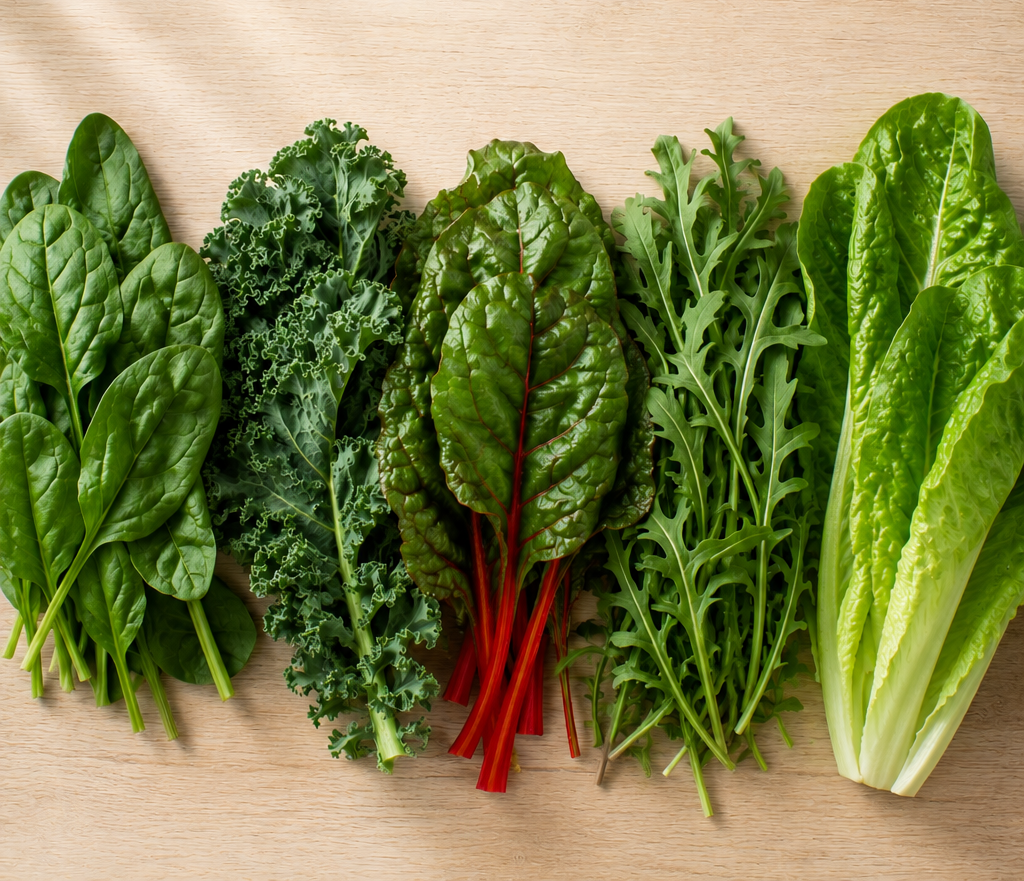
Kale is the most reliable all-rounder here. It holds its shape better than spinach in a sauté or a baked pasta dish, so strip the leaves from the tough centre rib and give it a rough chop first. Because kale is heartier, it needs a few extra minutes in the pan than spinach does, so add it earlier if you’re following a spinach-based method.
Swiss chard cooks down in a similar way to spinach and brings a mild, slightly earthy flavour that works well in Italian-style dishes. The stems take longer to soften than the leaves, so chop them separately and give them a head start in the pan.
Arugula (rocket) wilts almost as fast as spinach and brings a peppery kick that’s genuinely lovely stirred through pasta at the last minute, off the heat. It’s a good pick when you want something quick with a bit more personality than a neutral green.
Escarole is sturdier and slightly bitter raw, but a quick sauté with garlic mellows it out nicely. It holds up well in soups and braised dishes where spinach might disappear entirely.
One thing all of these have in common: like spinach, they release water as they cook. If a recipe calls for spinach to be squeezed dry after wilting, do the same with your substitute, especially chard and kale, which can hold onto more moisture than spinach does.
If you want to see how a sturdier green behaves in a baked pasta bake, our cheesy spinach and ricotta lasagna roll ups is a good one to practise a chard or kale swap on.
🥗 Best Spinach Substitutes for Raw Salads
Raw is a different game entirely. You want something tender enough to eat without cooking, so the tough, fibrous greens that work so well sautéed are the wrong choice here.
Baby kale is the closest match in a salad bowl. It’s much more tender than mature kale and holds dressing well without going slimy.
Arugula brings a peppery bite that pairs nicely with the kind of vinaigrettes you’d normally put on a spinach salad.
Romaine is milder and crunchier, a good pick if you want something closer to a neutral base that lets other salad ingredients do the talking.
Watercress has a sharper, almost mustardy flavour. It’s a bold substitute rather than a like-for-like one, so use it if you’re happy for the salad to taste a bit different, not just look similar.
Whichever one you choose, give it a proper wash and dry before dressing. Excess water on the leaves is the single biggest reason a raw salad substitute ends up soggy, and a decent salad spinner makes that step painless. If you want more ideas for building the rest of the bowl around your greens, these simple green salads are a good starting point.
🥤 Best Spinach Substitutes for Smoothies
Smoothies are the one place where flavour matters less than texture, because everything gets blitzed and masked by fruit anyway.
Kale is the standard swap, and baby kale in particular blends smoother than mature leaves. It’s slightly more bitter than spinach, so pair it with a naturally sweet fruit like banana or mango to balance it out.
Frozen peas sound unusual in a smoothie, but they add a similar thickness and a mild, sweet flavour that disappears completely once blended with fruit. This one is a texture match only, not a flavour match, and it’s worth knowing that going in.
Avocado works the same way. It won’t give you the green colour on its own (pair it with a bit of matcha or spirulina if that matters to you), but it adds the same creamy body that a handful of spinach would.
A decent high-speed blender makes a real difference with any of these, particularly kale, which can leave stringy bits behind in a weaker machine. For more on how kale stacks up nutritionally if you’re choosing between it and spinach, see our full breakdown of kale’s health benefits.
📏 Simple Swap Ratios
As a starting point, swap spinach for your chosen substitute 1:1 by volume, then adjust from there. Kale is denser and tougher than spinach, so if you’re using mature kale rather than baby kale, start with slightly less than the recipe calls for and add more to taste once it’s cooked or blended down. Chard and escarole behave closer to a true 1:1 swap, especially once cooked.
🧊 Storing Prepped Greens
If you’re washing and prepping substitute greens in advance, whether that’s baby kale for salads or chard for a weeknight sauté, a set of airtight glass containers keeps them crisp in the fridge for a few extra days compared to leaving them in their original bag.
❓ Spinach Substitute FAQs
Can I use frozen spinach substitutes instead of fresh? Yes, for cooked dishes. Frozen kale and chard both work well once thawed and squeezed of excess water, the same way you’d treat frozen spinach.
Is one substitute healthier than spinach? Spinach and its substitutes each bring their own strengths. Spinach is a strong source of folate and iron, while kale is notably higher in vitamin C, so the “healthier” choice depends on what you’re after rather than one green being straightforwardly better than another.
Can I mix two substitutes in one recipe? Yes. Combining, say, chard and arugula in a sauté, or baby kale and romaine in a salad, is a good way to balance texture and flavour if you don’t have enough of one substitute on hand.
Do these substitutes taste like spinach? Not exactly. Kale and chard are earthier, arugula and watercress are peppery, and romaine is milder. They’re substitutes for spinach’s role in a dish, not flavour clones of it.