10 Best Beetroot Substitutes (& Beet Alternatives) for Recipes
Looking for a substitute for beet in your recipes? You’re not alone! Beet is a popular ingredient, but it can be difficult to find a good substitute if you’re not able to eat them. In this blog post, we will explore ten different substitutes that you can use in your recipes. From sweet potatoes to carrots, there is sure to be a substitution that fits your needs!
As an Amazon Associate I earn from qualifying purchases and sometimes recommend products from other sellers at no extra cost you. For more details see my disclosure policy and privacy policy.
What are the Best Substitutes for Beet?
1. Carrots
Carrots are a wonderful and versatile alternative to beetroot in many recipes. Their sweet flavor can be used to great effect in savory dishes just as it can in desserts. Many different methods can be used to prepare carrots depending on the recipe – roasting is a great way to bring out their natural sweetness, while they also work nicely when pureed or added raw to salads and soups.
Calorie-conscious eaters will also appreciate that carrots tend to have fewer calories than other vegetables like beets, making them an ideal substitute for health-conscious meal plans.
2. Butternut squash
Butternut squash is a great substitution for beets because it has a naturally sweet flavor and can be cooked in multiple ways. Roasting brings out its natural sweetness and the cubes that are created make it perfect for salads or as an appealing side dish.
Pureeing butternut squash makes an excellent base for soups and provides a much milder flavor than beets, yet still gives you the sweetness you’re looking for.
Additionally, butternut squash can also be added to stews to lend its unique flavor combination of sweetness and savory flavors – making it more interesting than plain beets while still providing a balance of sweet and savory in the dish.
3. Sweet potatoes
Sweet potatoes can be an easy substitute for beets in many recipes. They have a subtle but distinct flavor that is slightly different than that of beets, so you can experiment with your dish to accommodate the difference. Sweet potatoes are versatile enough to roast, mash, or add to soups and stews.
Mashed sweet potatoes make a great accompaniment to dinner dishes like poultry and fish because they have an incredibly buttery texture and taste fantastic when topped with herbs or a bit of butter. Roasting them is just as easy; simply slice them thinly and lay flat onto a baking sheet lined with parchment paper. Sprinkle with your favorite seasoning blend, bake in the oven for about 12 minutes.
4. Parsnips
Parsnips are a unique root vegetable with a sweet and nutty flavor that can be used as an alternative to beetroot. They are perfect for adding natural sweetness to your dishes without the use of sugar.
Parsnips can easily be incorporated into many recipes: try roasting them for healthier alternative to French fries, whipping up a puree for added flavor in mashed potatoes, or adding them to soups and stews for an extra boost of flavor and nutrition. Parsnips offer all the advantages of beets without the same intense color, making them an ideal ingredient for cooking with ease.
5. Turnips
Turnips are a great alternative root vegetable to beets, with a different flavor but still many of the same uses. Roasting them is a delicious and simple way to enjoy the turnip’s hearty texture, while puréeing it allows you to add its slightly sweet flavor to all manner of dishes.
Turnips can also be diced and added to soups or stews – they lend themselves excellently as an ingredient in hot and hearty meals that are warming during colder months. For those looking for new ways to use these versatile vegetables, try swapping out the usual beets for some turnips and see what flavor combinations you can create.
6. Rutabaga
Rutabaga is a root vegetable that deserves more attention! It has a naturally sweet, but slightly earthy, flavor that can be brought out with some roasting or grilling. It also has numerous culinary uses- from soups and stews to creamy purees and savory dishes.
With the addition of other herbs and spices like thyme, garlic, or oregano, its flavor can truly shine. Its mild sweetness adds depth to soups and stews in place of beets and can be incorporated into countless recipes for breakfast, lunch, and dinner. If you’re looking for something new to spice up your meals, rutabaga might just be the answer you’re looking for.
7. Celery root
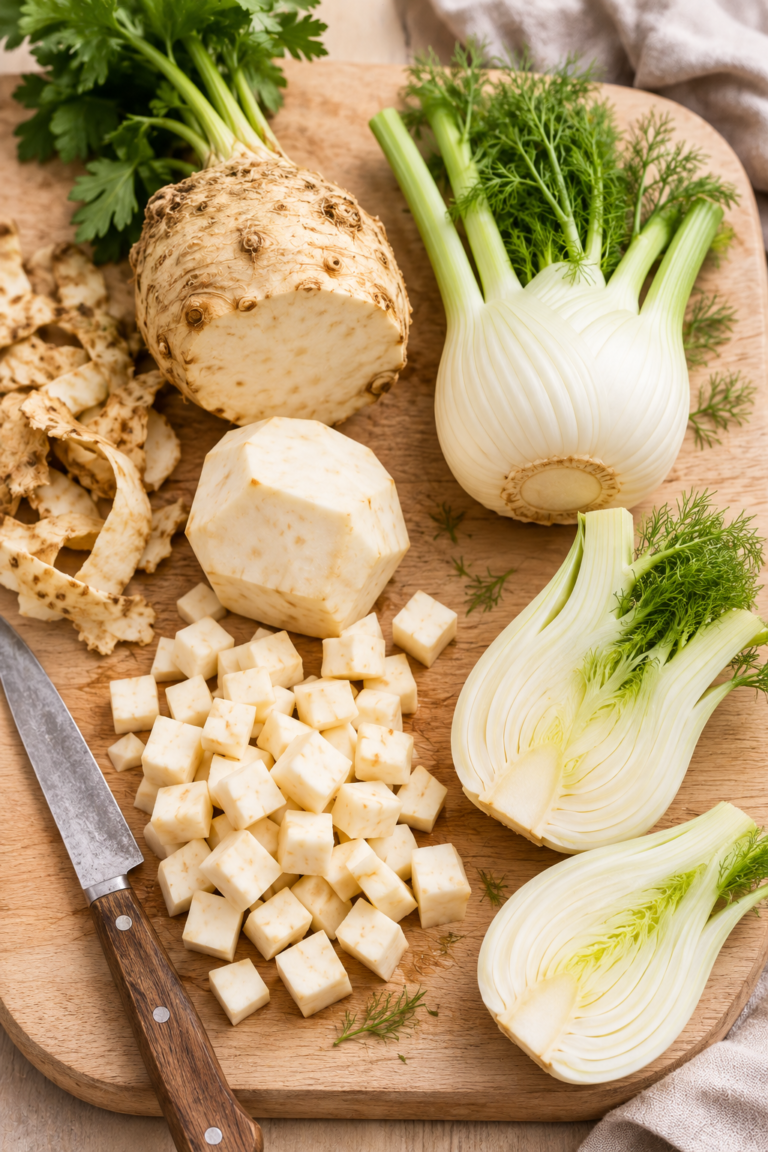
Celery root, also known as celeriac, is a versatile and delicious vegetable option. It has an earthy flavor that resembles that of beets and holds up better during cooking processes than regular celery does.
Celery root can be enjoyed in a number of ways: Roast it for a flavorful side dish, or puree it for dips, sauces, or dressings. You can even add it to soups or salads for added texture and flavor. Best of all, because of its mild taste it can easily substitute for beets in your favorite dishes without overwhelming the other flavors. Using celery root in your cooking will not only add variety to your menu but will let you explore new flavors while still enjoying the familiar aspects of traditional meals.
8. Kohlrabi
Kohlrabi is a unique-looking vegetable that closely resembles beets and can act as a substitute in dishes. It has a mild, crunchy texture and subtle flavor, with sweet and nutty notes.
While most often used cooked in dishes like soup, stew, stir-fry, gratin or casseroles, kohlrabi can also be enjoyed raw for a refreshing snack. Simply grate some up for salads for added nutrition and crunch or slice it into thin strips and dip them in your favorite sauce – either way you won’t be disappointed.
Whether it’s incorporated in savory recipes or raw as a snack substitute for beets, you’ll find kohlrabi to be an interesting addition to your kitchen repertoire.
9. Jicama
Jicama is an underutilized tuber that can be a great addition to your meals. It’s got a subtle hint of sweetness and its crunchy texture lends it to both salads and snacks. Jicama can be used as a great substitute for beetroot, and because it doesn’t require much preparation – being able to be eaten raw – it’s super convenient!
You can get creative with what you combine it with, just make sure you season it appropriately. So next time you’re looking for an interesting ingredient or something different for the same old dishes, give jicama blend in and see how much flavor it brings to the table!
10. Daikon radish
Daikon radish is a flavor-packed vegetable that makes a great alternative to beets. It has a milder taste than regular red radishes, with a subtle hint of sweetness that work perfectly in salads as well as cooked dishes.
It can be eaten raw or pickled for an extra kick of flavor and crunch or cooked into soups and stir fries for delicious warmth on cooler days. This type of radish is the perfect way to add variety to any meal and enjoy the nutritional benefits of extra vegetables.
Turnip vs beetroot – what’s the difference?
If you stand in the produce aisle, you may wonder what the difference is between a turnip and a beet. While they may appear similar on their outer layer, there are actually quite a few differences when it comes to nutrition, taste, and texture.
Turnips are an often-overlooked root vegetable that provide quite a few health benefits. They are high in vitamins and minerals such as folate and Vitamin C.
Their flavor is slightly bitter, with a hint of sweetness. Beets have a unique earthy sweetness along with some nuttiness while also providing many essential nutrients like potassium, vitamin A, iron and fiber. Texture wise, beets tend to be more tender than turnips but both vegetables can be delicious when cooked right!
Keep these differences in mind next time you choose between a turnip or beet – your taste buds will thank you for your careful selection.
Radish vs beet – what’s the difference?
Radishes and beets are both root vegetables with many similarities, but there are also a few distinctive differences between them. The most notable difference is in the shape – while radishes tend to be more round or oval shaped, beets tend to be tapered at the end and somewhat cylindrical in shape. Radish flesh is crisp and white, while beet flesh has a darker hue that can range from light pink to deep red.
When it comes to flavor, radishes tend to have a mild peppery taste, whereas beets offer up an earthier flavor reminiscent of sweet potatoes. Finally, radishes generally require much less time to grow than beets – only about 4 weeks in contrast to the 7-8 week growing period for beets. Understanding the variations between radish and beet is essential for any home gardener looking to add these nutritious produce items into their next meal.
FAQs
Q: What is the best substitute for beetroot? A: Carrots are the closest all-purpose swap for colour and sweetness, while butternut squash works better in soups and purées where a milder flavour is wanted.
Q: Can I use sweet potato instead of beetroot? A: Yes — sweet potato brings similar natural sweetness and a comparable texture once roasted, making it a reliable substitute in salads, soups, and roasted side dishes.
Q: What vegetable looks like beetroot but isn’t? A: Radishes and small purple-skinned turnips are the closest visual matches, though both have a milder, less earthy flavour than beetroot once cooked.