
What Is Tahini? How to Use It in 5 Different Ways at Home
You’ve spotted a jar of tahini at the back of someone’s cupboard, or maybe you’ve been buying it for hummus and wondering what else it can actually do. Tahini is one of those ingredients that looks simple — a jar of pale, creamy paste — but has an almost embarrassing number of uses once you know what you’re working with.
As an Amazon Associate I earn from qualifying purchases and sometimes recommend products from other sellers at no extra cost you. For more details see my disclosure policy and privacy policy.
It’s been turning up everywhere in UK home cooking lately, from salad dressings and grain bowls to brownies and smoothies, and there’s a good reason for that. Tahini is genuinely one of the most versatile things you can keep in your kitchen, right up there with miso and gochujang in terms of its ability to transform a simple meal into something that tastes restaurant-level.
If you’ve been curious but not quite sure where to start, this guide covers everything you need to know — what tahini actually is, how it behaves in cooking, and five real ways to use it at home today.
What Is Tahini, Exactly?
Tahini is a paste made by grinding sesame seeds until they release their natural oils and turn smooth and pourable. Think of it like peanut butter or almond butter, but made entirely from sesame seeds rather than nuts. The result is a creamy, drippy paste with a nutty, toasty flavour and just a gentle hint of bitterness — which is part of what makes it so interesting to cook with.
Most of the tahini you’ll find in UK supermarkets is made from hulled white sesame seeds, which gives a pale, mild-flavoured paste that’s easy to work with. You’ll also come across darker versions made from unhulled or heavily toasted seeds, which have a stronger, more bitter flavour — great if you like that depth, but worth knowing about if you find a particular brand too sharp. A good tahini should be glossy and runny when stirred properly, not thick and chalky. If yours looks dull or stiff, it usually just needs a thorough mix.
Where Does Tahini Come From?
Tahini has deep roots in Middle Eastern and Mediterranean cuisines, where it’s been used for centuries across mezze spreads, grilled meat dishes, and desserts. The word itself comes from an Arabic root meaning “to grind” — which pretty much describes the whole process. It’s a staple ingredient across Lebanon, Israel, Turkey, Egypt, and much of the surrounding region, used both as a component in dishes and as a sauce or dip in its own right.
In its traditional home, you’ll find tahini blended with chickpeas in hummus, stirred through roasted aubergine in baba ganoush, and drizzled warm over falafel. It also shows up in halva and other sesame-based sweets, where it provides both richness and that distinctive toasty flavour. What’s happening now in UK home cooking is that these uses are spreading well beyond their traditional context — and tahini is proving itself just as capable in a midweek pasta sauce as it is in a classic mezze platter.
Why Tahini Is Having a Moment Right Now
Tahini fits neatly into pretty much every major UK food trend happening at once. It’s plant-based, naturally vegan, gluten-free, dairy-free, and — crucially — nut-free, which makes it a useful alternative for households where peanuts or tree nuts are off the table. (Sesame allergies do exist and are increasingly recognised, so worth noting, but for most people it’s a welcome swap.)
It also sits in that sweet spot of ingredients that feel slightly chef-y without actually being difficult to use. Much like miso and harissa have gone from “specialist ingredient” to everyday fridge staple over the past few years, tahini is following a similar path — especially as more people discover that one jar genuinely covers savoury and sweet, weeknight and weekend, simple and impressive. If you’ve been following along with the miso weeknight dinners and gochujang weeknight dinners series here on Pesto & Margaritas, tahini is very much in the same family of “one new pantry ingredient, endless possibilities.”
How Tahini Tastes and Behaves in Cooking
The flavour of tahini is nutty, earthy, and toasty, with a mild bitterness that varies depending on how the sesame seeds were processed. Lighter tahini made from hulled seeds is more delicate; darker varieties made from unhulled or heavily toasted seeds have a more pronounced, almost coffee-like edge. That bitterness isn’t a flaw — it’s what gives tahini its complexity, and it plays extremely well against sweetness, acidity, and salt.
The most useful thing to understand about how tahini behaves is what happens when you mix it with liquid. Add lemon juice or water to tahini and it will initially seize up and go thick — which can be alarming the first time it happens. Keep whisking and adding liquid a little at a time, and it will loosen back into a smooth, silky sauce. This is what makes tahini so brilliant for dressings and dips: it creates the creaminess of a dairy-based sauce without any dairy at all. Garlic, lemon, a touch of honey or maple syrup, and a pinch of salt are the classic supporting cast.
Buying and Storing Tahini
When you’re shopping, look for a jar that lists sesame seeds as the only (or main) ingredient. Some brands add a small amount of oil or salt, which is fine, but anything with a long list of additives is worth skipping. Single-origin sesame and “lightly toasted” labels are often a good sign that the flavour will be balanced rather than harsh.
Tahini separates naturally in the jar — you’ll find the oil sitting on top and a denser paste at the bottom — so give it a really good stir before using each time. Once opened, it keeps well for weeks in a cool cupboard or longer in the fridge. Refrigeration will thicken it slightly, so you may want to let it come to room temperature before using in dressings or sauces where you need it pourable.
5 Ways to Use Tahini at Home
Way 1: Creamy Salad Dressings and Bowl Sauces
This is probably the easiest entry point into tahini, and it’s genuinely impressive for how little effort it takes. The formula is simple: tahini plus something acidic (lemon juice, lime, or a light vinegar), water to loosen, salt, and optional extras like garlic, honey, or fresh herbs. Whisk it together and you have a creamy, dairy-free dressing that works over almost anything.
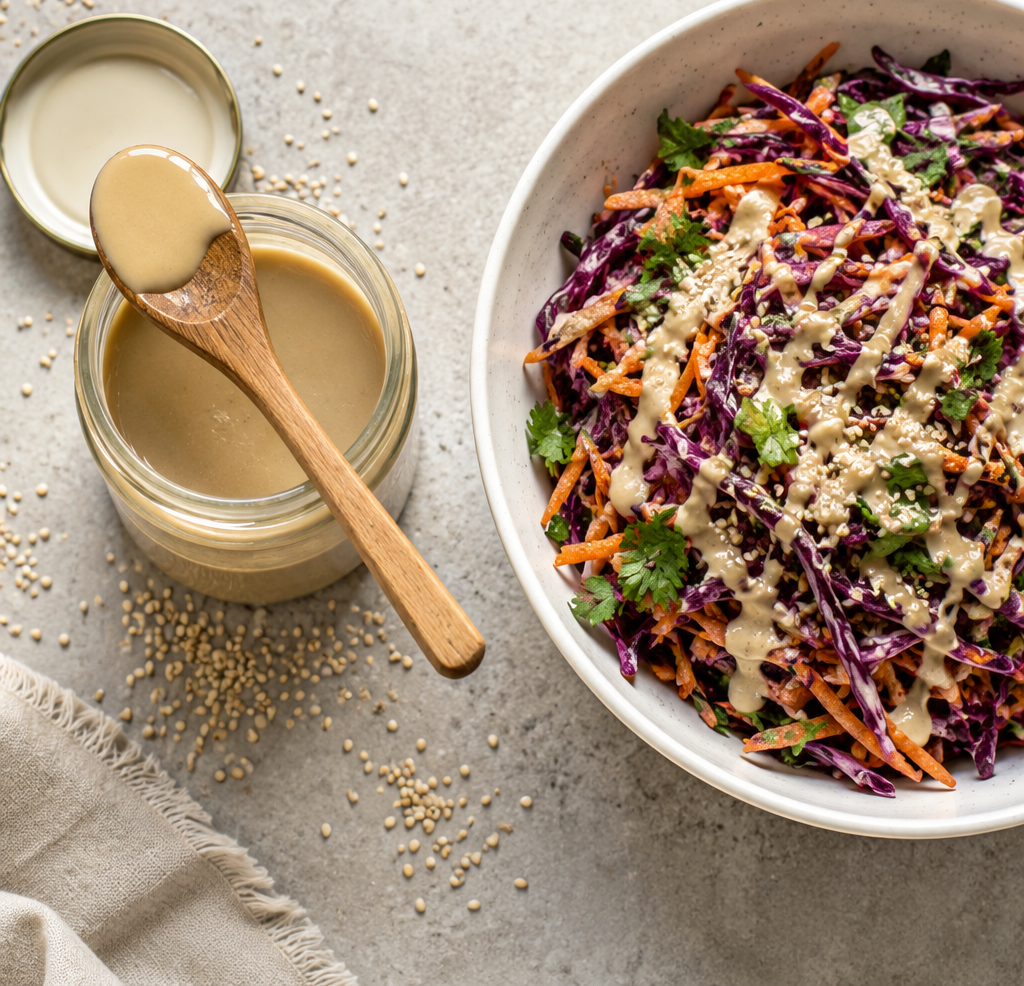
On Pesto & Margaritas, this style of dressing already appears in the red cabbage and carrot salad with lemon tahini dressing — a great reference point if you want to see the ratios in action. The same approach works over grain bowls, roasted vegetables, warm lentil dishes, or cold pasta salads. It’s also excellent drizzled over grilled chicken or roasted carrots — the kind of thing that turns a simple tray of food into something that looks intentional.
Way 2: Dips, Spreads, and Mezze
Tahini is fundamental to two of the most popular dips in the world — hummus and baba ganoush — and that’s not going to change. For hummus, tahini is blended with chickpeas, garlic, lemon juice, and olive oil to create that silky, rich texture. For baba ganoush, it’s stirred into strained roasted aubergine along with lemon, herbs, and olive oil. Both are infinitely better when made with good-quality tahini rather than a cheaper version.
Beyond those two classics, tahini is surprisingly easy to turn into quick dips without much effort. Stir it into yoghurt with a little garlic and lemon for an instant sauce. Blend it with roasted peppers or white beans for a mezze-style spread. Drizzle it over stuffed eggplants or roasted eggplant with pomegranate as a finishing flourish — the combination of tahini, pomegranate seeds, and fresh herbs is one of those things that photographs beautifully and tastes even better than it looks.
Way 3: Quick Sauces for Weeknight Dinners
Tahini makes sauces that cling well to vegetables, pulses, noodles, and proteins, in the same way peanut butter is used in satay-style dishes. The building block is easy: tahini plus something salty (soy sauce, miso, or just salt), something acidic, a little sweetness, and enough water to get it to the consistency you need. You can have a sauce ready in five minutes that makes a simple sheet pan dinner feel like a proper meal.
It works particularly well over roasted cauliflower, crispy chickpeas, or chicken thighs — essentially anything that benefits from a creamy, nutty coating. Tahini also blends beautifully with miso for a more complex, umami-heavy sauce, and with harissa for a smoky, spiced version that works brilliantly on roasted carrots or lamb. For a quick weeknight formula, try it tossed through hot pasta with a splash of pasta water, a squeeze of lemon, and some fresh herbs — it sounds unusual but works in exactly the way a cream sauce would, minus the cream.
Way 4: Baking and Sweet Treats
Tahini behaves a lot like peanut butter in baking, bringing moisture, fat, and a distinctive nutty flavour to everything it touches. It can be swirled through brownie batter before baking, used as the main fat in shortbread-style cookies, or folded into banana bread and cake batters for extra depth. Because it has a slightly savoury edge, it works particularly well in recipes that involve dark chocolate, coffee, dates, honey, or maple syrup.
The flavour pairing to know here is tahini and chocolate, which is genuinely excellent — rich, slightly bitter, and complex in a way that feels grown-up without being difficult. A swirl of tahini over the top of a chocolate brownie before it goes in the oven is an extremely easy upgrade. It also works in frostings, caramel drizzles, and energy balls, where it can stand in for peanut butter for a nut-free option that still has plenty of richness.
Way 5: Breakfasts, Snacks, and Smoothies
This is where tahini earns its place as a genuine everyday ingredient rather than a special occasion one. Spread it on toast — plain, or with sliced banana and a drizzle of honey. Stir a spoonful into warm porridge. Mix it into a yoghurt bowl with berries and some granola. It adds richness and staying power without tasting exotic or complicated.
In smoothies, tahini blends smoothly and brings creaminess without dairy, especially combined with banana, cocoa, coffee, or dates. For quick snacks, it’s an easy dip for apple slices or vegetable sticks when mixed with a little honey, lemon juice, and salt — a combination that takes about thirty seconds to pull together. If you’re already making energy balls or no-bake oat bars at home, swap the peanut butter for tahini and you’ll get a subtler, slightly more interesting flavour with a naturally nut-free result.
A Few More Ideas Worth Knowing About
Once you’ve got the hang of the basics, tahini starts showing up in places you wouldn’t expect. It works well as part of a marinade for chicken, lamb, or tofu, where its fat content helps carry spices and keeps things moist during cooking. Whisked into a vegetable soup at the end — a carrot lentil soup or cauliflower soup, for example — it adds body and richness without changing the flavour dramatically.
Tahini also plays well with other bold pantry ingredients. Mixed with miso, it becomes a deeply savoury, almost umami sauce. Combined with harissa, it takes on warmth and smoke. Paired with gochujang, it creates something creamy and spicy that’s excellent over roasted carrots or grain bowls. Even a small spoonful stirred into a simple dish — over a tray of Mediterranean roasted vegetables, or drizzled on a weeknight chicken dinner — can shift it from “fine” to genuinely good.
How to Make Tahini at Home
If you ever want to make your own, the process is straightforward. Toast sesame seeds gently in a dry pan or oven until lightly golden and fragrant — the key is to keep the heat low and watch them carefully, as the line between golden and burnt is quick to cross. Once cooled, blitz them in a food processor with a tablespoon or two of neutral oil (rapeseed, light olive, or avocado oil all work well) until smooth and runny. Pause to scrape down the sides as you go, add more oil if needed, and season with a small pinch of salt if you like.
Homemade tahini keeps well in a clean jar with a tight lid at room temperature for at least a month. The flavour is often fresher and more delicate than commercial versions, which is worth the small amount of effort involved if you’re using it frequently. That said, good commercial tahini from a reliable brand is perfectly excellent — homemade is a nice option to know about, not a requirement.
Common Tahini Pitfalls (and How to Fix Them)
If your tahini tastes very bitter: It may be made from unhulled seeds, over-toasted, or simply not a great brand. Pairing it with more sweetness and acid in your recipe will help, or try a different brand next time. Lighter, hulled-seed versions tend to be milder and more approachable.
If your tahini has seized and gone thick when mixing: This is normal — just keep whisking and adding liquid a little at a time. It will loosen back into a smooth sauce. Warm water works particularly well for this.
If the oil and paste have separated dramatically: Nothing is wrong with it. Give it a really thorough stir, working from the bottom of the jar upward. A long-handled spoon or butter knife helps. Once combined, it will be fine to use.
If homemade tahini tastes burnt: The sesame seeds were toasted for too long. Aim for a very light golden colour and a pleasant fragrance — they’ll continue to cook slightly in their own heat after you take them off the heat, so pull them just before they look fully done.
The Bottom Line on Tahini
Tahini is one of those rare ingredients that earns its cupboard space several times over. It’s creamy without being heavy, flavourful without being loud, and genuinely useful across more meal occasions than almost any other single ingredient. One jar can cover your salad dressings, your dipping sauces, your weeknight pasta, your weekend baking, and your quick morning toast — which makes it an extremely good investment.
If you’ve had a jar sitting at the back of your cupboard waiting for a hummus occasion, now you know there’s really no need to wait. Start with a simple lemon tahini dressing over anything roasted and work your way from there. The rest tends to follow naturally once you’ve got a feel for how it behaves.
Continue Reading
- Baba Ganoush — a classic tahini-forward dip that’s easier to make than most people think
- Roasted Eggplant with Pomegranate & Tahini Dressing — one of the best combinations in Middle Eastern cooking
- Red Cabbage and Carrot Salad with Lemon Tahini Dressing — a great starter recipe for making tahini dressings from scratch
- 5 Easy Weeknight Dinners Using Miso — more of the “one bold ingredient, lots of uses” series
- Easy Mediterranean Oven Roasted Vegetables — a brilliant base for a tahini drizzle
Have you been using tahini at home already, or is this your first time exploring it? Drop a comment below and let me know what you end up making with it — I’d especially love to hear if anyone tries the pasta version.
If you’d like more ingredient guides like this one — plus easy weeknight dinner ideas and recipe inspiration for every season — sign up to the Pesto & Margaritas newsletter below.
