Lamb Substitutes: What to Use Instead in Every Dish
Not everyone reaches for lamb, and that is perfectly fine. Maybe the gamey edge puts you off, maybe your grocery store only stocks it around the holidays, or maybe you simply never got in the habit of keeping it in the freezer. Whatever the reason, you can still make the kofte, the kebabs, the slow-braised tagine, and the Sunday roast that made you want to cook lamb in the first place.
As an Amazon Associate I earn from qualifying purchases and sometimes recommend products from other sellers at no extra cost you. For more details see my disclosure policy and privacy policy.
The trick is matching the substitute to the job the lamb was doing, not just grabbing the nearest red meat. A gyro loaf needs something different from a roast leg, which needs something different again from a stew that simmers for two hours. Below is a function-first breakdown so you can go straight to the dish you are making and get a swap that actually works.
Why Cooks Look for a Lamb Substitute in the First Place
Lamb’s flavour comes largely from its fat, and that fat carries compounds that read as “gamey” to a lot of palates, especially in older or grass-fed animals. If you have tried lamb and found it too strong, you are not alone, and a milder substitute will solve that instantly.
Availability is the more common issue, though. Plenty of grocery stores carry lamb only in small chops or a leg around Easter, and butchers who stock it regularly are not everywhere. On top of that, most home cooks simply do not keep lamb on hand the way they keep chicken or ground beef, so when a recipe calls for it, a fridge-and-pantry swap is the practical answer.
Ground Lamb Swaps: Kofte, Burgers, and Meatballs
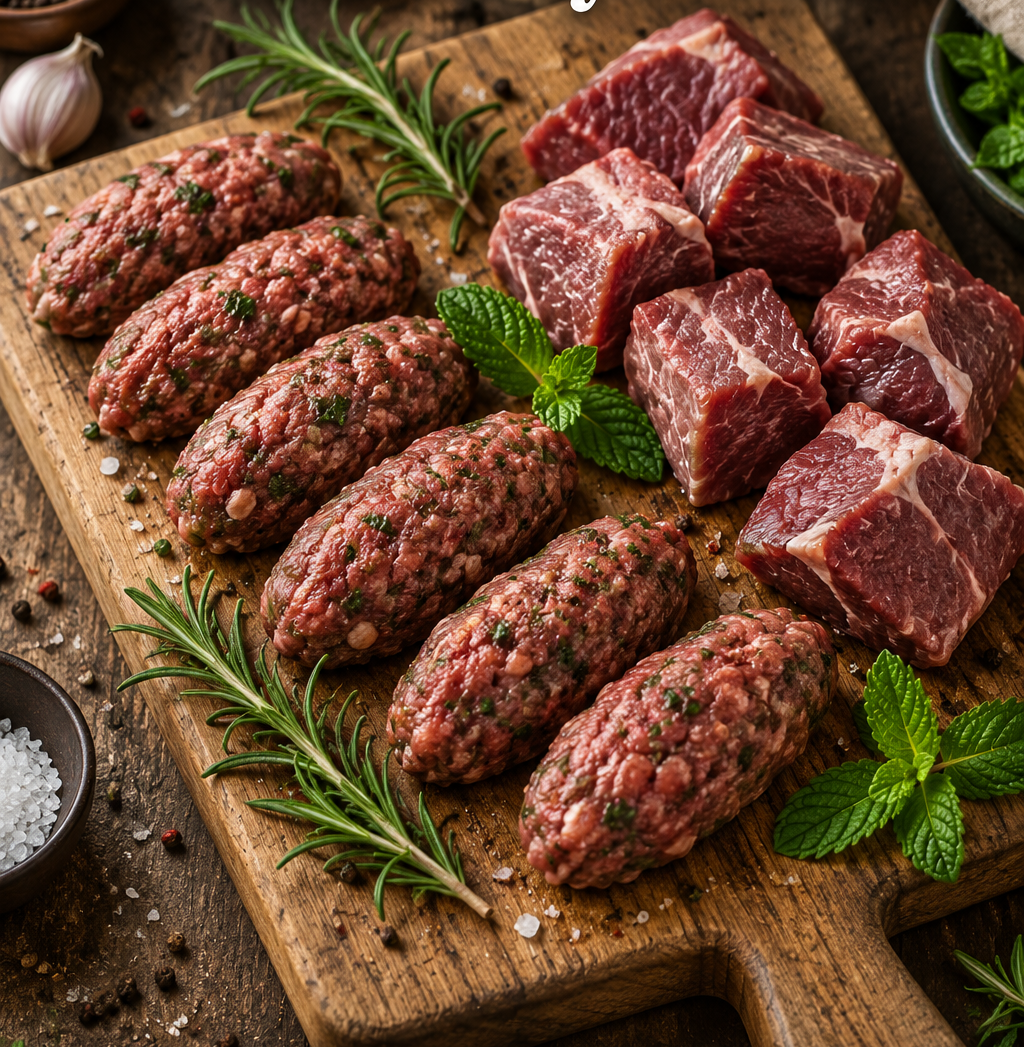
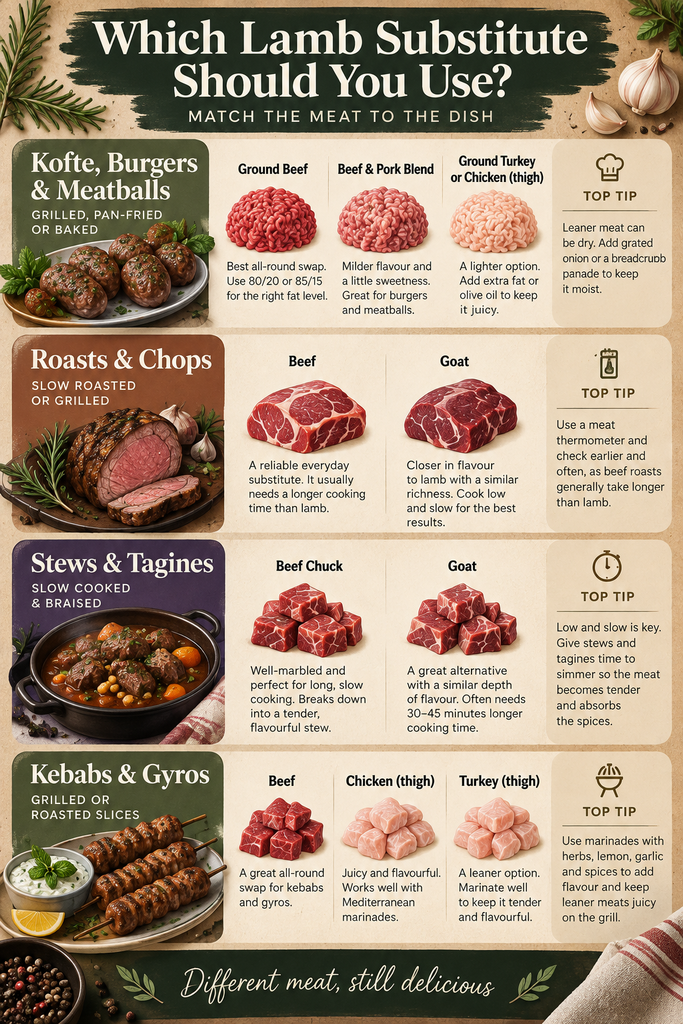
For kofte, lamb burgers, and Mediterranean-style meatballs, ground beef is the most reliable stand-in. Look for 80/20 or 85/15 beef, since the extra fat is doing the same moisture-keeping job that lamb fat normally does. Leaner beef will work, but the meatballs can turn dry, so compensate with grated onion or a panade of breadcrumbs soaked in milk.
A beef and pork blend is another strong option, particularly for burgers and meatballs where a slightly sweeter, milder background flavour is welcome. Ground turkey or chicken thigh meat can also stand in if you want something lighter, though you will want extra fat or a splash of olive oil worked into the mixture to keep it from drying out on the grill.
If you happen to have both beef and a small amount of ground lamb on hand, a partial blend gives you a lot of the character with a fraction of the gaminess. This is essentially how many restaurant kofte and gyro blends are built, so it is not cutting corners, it is standard practice.
Roasts and Chops: Beef and Goat Alternatives
For a roast leg or rack, beef is the everyday substitute, but the cooking math changes. Lamb is a smaller animal with less connective tissue relative to its size, so equivalent cuts cook faster than beef and are traditionally served closer to medium-rare, in the 130 to 135°F range. A beef roast of comparable size will often need more time in the oven, so plan on checking earlier and often rather than trusting the clock alone. This is exactly the kind of swap where a meat thermometer earns its keep, since eyeballing doneness across two different meats is a good way to overcook one of them.
Fat content matters here too. Lamb typically carries noticeably more fat than a comparable cut of beef, and that fat is where a lot of its character lives. When you swap in a leaner beef roast, baste more often or add a bit of extra oil or butter under the skin so the meat does not dry out during the longer cook.
Goat is worth seeking out if you can find it, since it is closer to lamb in flavour than beef is, with a similar richness but a slightly leaner bite. It also tends to come from older animals than the lamb you buy at the store, so goat cuts often benefit from a lower oven temperature and a longer, gentler cook to keep them tender. If you are building out a beef-forward pantry more generally, our beef substitutes guide has more detail on matching cuts to cooking methods. For herb pairing on a roast, the rosemary garlic beef tenderloin on the site is a good template, since rosemary is doing a lot of the flavour work that lamb usually carries on its own.
Stews and Tagines: Beef Chuck or Goat, With a Longer Simmer
Braises are the most forgiving place to swap lamb out, because low, slow cooking hides a lot of differences between meats. Beef chuck is the standard substitute for a lamb stew or tagine. It has enough marbling and connective tissue to break down into that same fall-apart texture, and it takes on warm spices like cumin, cinnamon, and coriander just as readily as lamb does.
Goat also works beautifully in a tagine and is often the closer flavour match of the two. Because goat can come from an older animal than lamb, give it extra time on the stove or in the oven, sometimes 30 to 45 minutes longer than a lamb version of the same recipe, until a fork slides in without resistance. A heavy Dutch oven is genuinely the right tool for this, since it holds steady heat for the hour-plus simmer both beef and goat need to get properly tender.
Either way, resist the urge to rush a braise just because the meat has changed. Check for tenderness rather than watching the clock, and taste the sauce near the end since a lamb tagine’s spice blend can taste slightly different once it has soaked into beef or goat instead.
Gyro and Kebab-Style: Beef, Chicken, or Turkey
Doner and gyro-style meat is usually a lamb and beef blend to begin with, so straight beef is an easy, authentic-feeling substitute rather than a compromise. Aim for meat with at least 20 percent fat if you are grinding or forming your own loaf, since a lean mix bakes up dry and crumbly instead of dense and sliceable.
Chicken thigh, dark meat turkey, or a mix of the two will get you a lighter kebab that’s easier to find at a regular grocery store, though the texture will be noticeably different. Ground lamb has a springy, slightly fatty chew that poultry doesn’t fully replicate, so expect something closer to a well-seasoned chicken kebab than a true gyro clone. Skewered chicken thighs, marinated well and grilled hot, are the better move if you want char and juiciness rather than the sliced-loaf texture. Our chicken shawarma recipe uses a similar spice base and is a solid reference point if you are building a poultry-based kebab night from scratch.
The Flavor-Matching Trick: Herbs and Spices That Recreate Lamb’s Character
Whatever meat you land on, the seasoning is doing a lot of the work in making the dish taste like the lamb version you remember. Rosemary and mint are the two herbs most associated with lamb, and both hold up well against beef or goat too. A rosemary-heavy marinade or rub is an easy way to nudge a beef roast toward lamb territory, while a mint yoghurt sauce alongside kebabs or kofte does the same job at the table.
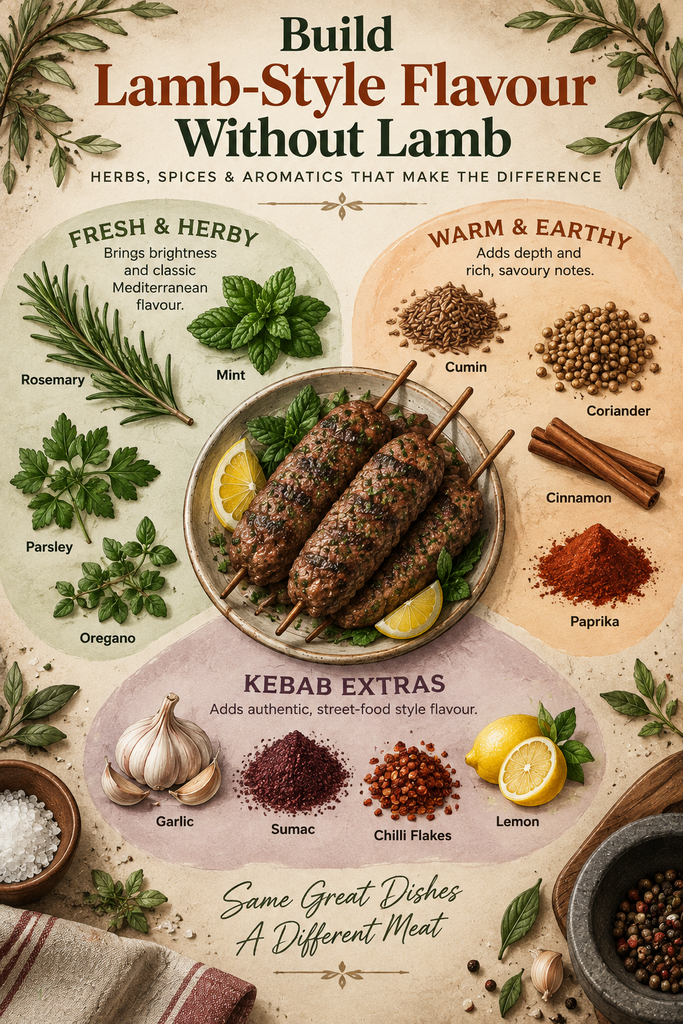
On the spice side, cumin and coriander are the backbone of most lamb seasoning blends, and their warm, slightly citrusy notes translate just as well onto beef, goat, chicken, or turkey. A touch of cinnamon or allspice, used sparingly, adds the same subtle warmth you would find in a Moroccan or Middle Eastern lamb dish. Garlic, sumac, and a little smoked paprika round things out nicely for kebabs and kofte in particular.
None of this will make beef or chicken taste identical to lamb, and that’s not really the goal. What it will do is put the same warm, herby, slightly earthy flavour profile on the plate, which is usually what people are actually craving when a recipe calls for lamb. If you are shopping for cast iron or a casserole dish for the cast iron shepherd’s pie or a stovetop braise, this is a great place to try a ground beef swap first since the dish already leans on warm seasoning rather than the lamb itself to carry the flavour.
Once you know which job the lamb was doing in a recipe, whether that’s holding a kofte together, cooking down slowly in a tagine, or getting sliced thin off a gyro loaf, picking the right substitute stops being a guessing game. Match the fat content, adjust your cooking time, lean on the herbs and spices lamb is known for, and you’ll end up with a dish worth making again.