

Baked Pineapple Pork Tenderloin (Sweet Brown Sugar Glaze)
Indulge in the succulent flavors of Baked Pineapple Pork Tenderloin with Sweet Brown Sugar Glaze, a pork recipe that promises to elevate your dining experience to an extraordinary level. Marrying the tender juiciness of pork tenderloin with the tropical sweetness of pineapple and the warming depth of brown sugar, honey, and spices, this dish offers a perfect balance of flavors.
As an Amazon Associate I earn from qualifying purchases and sometimes recommend products from other sellers at no extra cost you. For more details see my disclosure policy and privacy policy.
Ideal for a cozy family dinner or a festive occasion, it’s a testament to how simple ingredients can produce a taste sensation that lingers in memory.
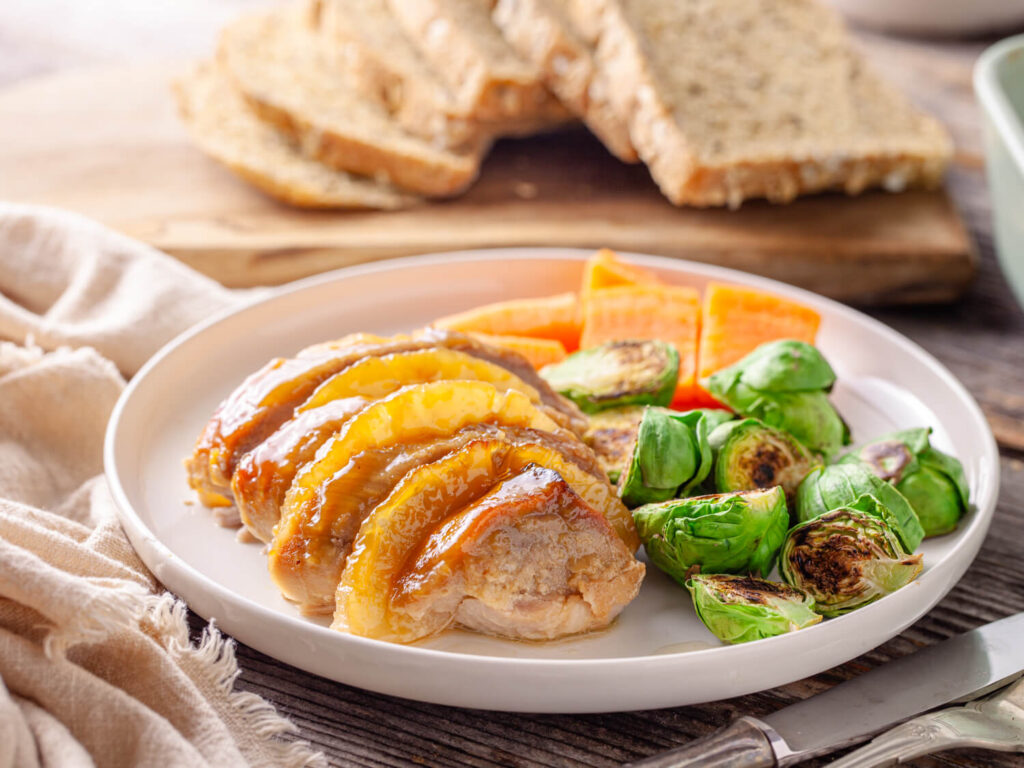
Why you’ll love this recipe
- Unforgettable Flavors: The combination of sweet pineapple, rich brown sugar, and savory pork creates a flavor infusion that dances on the palate, offering a culinary experience you won’t forget.
- Easy to Prepare: Despite its gourmet appeal, this easy recipe is surprisingly simple to put together, making it accessible for chefs of all skill levels.
- Perfect for Any Occasion: Whether you’re hosting a special holiday dinner or looking for a delightful change to your weekly meal rotation, this pork tenderloin is perfect for any scenario.
- Healthy & Satisfying: With the lean protein from pork tenderloin and the natural sweetness from pineapple, this dish offers a healthier alternative to heavy, processed meals, without sacrificing satisfaction or flavor.
What is Pork Tenderloin?
Pork tenderloin is a prime cut of pork from the loin of a pig. It is renowned for its tenderness, lean texture, and mild flavor, making it an excellent choice for quick cooking methods. This cut is highly regarded among chefs and home cooks alike for its versatility in the kitchen.
It can be roasted, grilled, or seared to perfection, absorbing the flavors of marinades and spices exceptionally well. The main difference between pork tenderloin and other cuts is by its narrow, elongated shape, and because it is one of the most tender cuts of pork, it is also one of the most sought-after pieces for creating elegant and delicious meals.
Ingredients
- Pork Tenderloin, Trimmed: Look for a pork tenderloin that’s pinkish-red in color with little marbling. This cut is exceptionally lean and tender, perfect for baking to achieve that melt-in-your-mouth texture.
- Pineapple Juice: Use pure pineapple juice for a tropical tanginess that infuses the pork with a delightful sweetness and helps tenderize the meat.
- Brown Sugar: Light or dark brown sugar adds a rich molasses flavor, creating a glaze that caramelizes beautifully on the tenderloin.
- Honey, Local Preferred: Honey not only contributes sweetness but also aids in creating a sticky, glossy finish on the pork. Local honey is preferred for its superior flavor and potential health benefits.
- Yellow Mustard: Adds a tangy depth that cuts through the sweetness of the brown sugar and honey, providing a subtle but complex flavor enhancement.
- Cinnamon Sticks: Using whole cinnamon sticks during the cooking process infuses the dish with a warm, spicy note that complements the sweetness of the other ingredients.
- Cloves: Whole cloves add a hint of aromatic spice that’s traditional in holiday cooking but is sensational with pork at any time of the year.
- Fresh Ground Nutmeg: A little nutmeg goes a long way, offering a nutty, slightly sweet warmth that harmoniously ties the spices together.
- Can Pineapple Slices, Drained: When baked, pineapple chunks or slices become tender and caramelized, providing a fruity contrast to the savory pork and enhancing the overall tropical flavor profile.
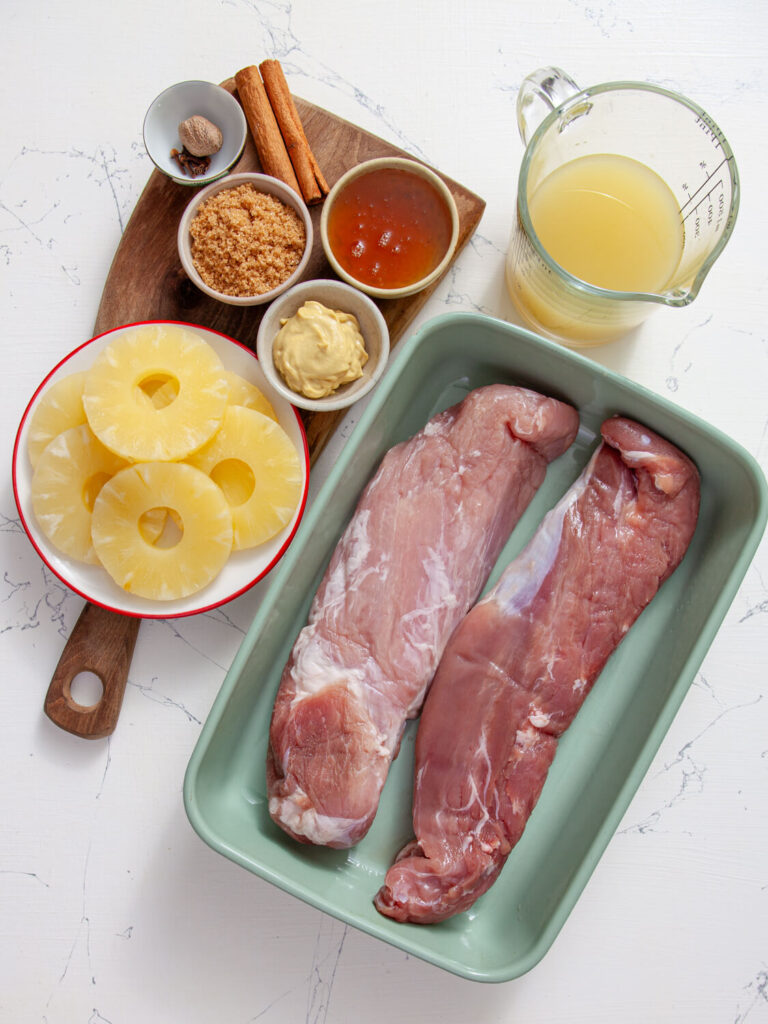
Grab the full ingredients details and instructions in the recipe card below to create this tantalizing Baked Pineapple Pork Tenderloin with Sweet Brown Sugar Glaze, a dish that promises an unforgettable culinary experience.
Substitutions and Additions
Sometimes, adapting a recipe to fit what you have on hand or to meet dietary restrictions is necessary. Here are some suggestions for substitutions and additions that can help make the pork recipe your own:
- Pork Tenderloin Substitutions: If pork tenderloin is not available or you’re seeking an alternative, other white meat, such as chicken breast or turkey tenderloin, can be excellent substitutes. Both options deliver lean, tender meat that complements the glaze well.
- Pineapple Juice: If you find yourself without pineapple juice, orange juice makes for a good substitute, offering a different but equally delicious citrus note.
- Brown Sugar: For a lower glycemic index option, coconut sugar can replace brown sugar. It provides a similar sweetness with a slight hint of caramel.
- Honey Substitutions: Agave syrup or maple syrup can be used in place of honey for a similar sweetness and glazing property.
- Yellow Mustard: Dijon mustard or even stone-ground mustard can provide a more nuanced flavor if you’re looking to experiment beyond yellow mustard.
- Spices: If whole spices are not an option, ground spices can be used in a pinch. Use 1/4 teaspoon of ground cinnamon in place of the cinnamon sticks and a small pinch of ground cloves instead of whole cloves. Be mindful that ground spices may integrate more intensely into the glaze.
- Pineapple Slices: For a different texture or if canned pineapple isn’t your favorite, fresh mango slices can offer a tropical sweetness with a slightly different flavor profile.
Additions to Try:
- Garnishes: Adding a garnish of chopped fresh cilantro or parsley before serving can introduce a fresh, herbaceous element that balances the sweetness.
- Spice it Up: For those who enjoy a little heat, a sprinkle of red pepper flakes into the glaze or a finely chopped chili pepper added to the baking dish can add a welcoming warmth.
- Crunch Factor: Sprinkle toasted, sliced almonds or cashews on top before serving for an added crunch that contrasts the tender pork.
Instructions
Set the oven to preheat at 375 degrees Fahrenheit.
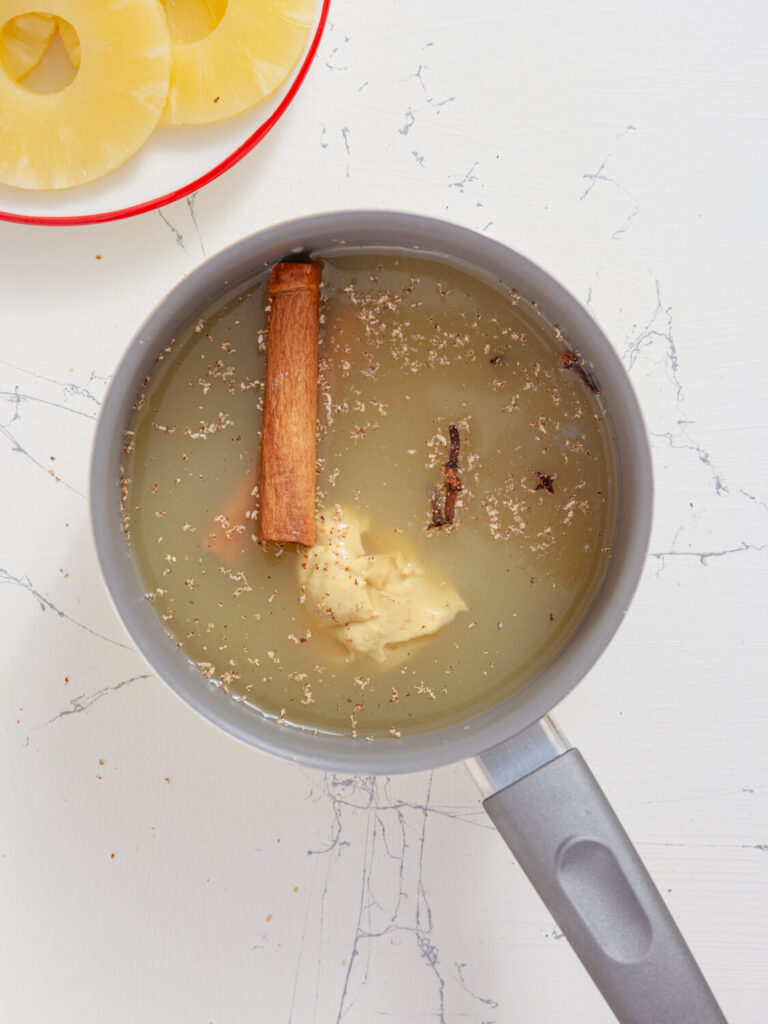
Mix pineapple juice, brown sugar, honey, mustard, cinnamon sticks, cloves, and ground nutmeg in a medium saucepan. Heat on the stove top until it reaches a robust simmer, then lower the heat to medium-low. Let the glaze simmer until it has thickened, about 15-20 minutes.
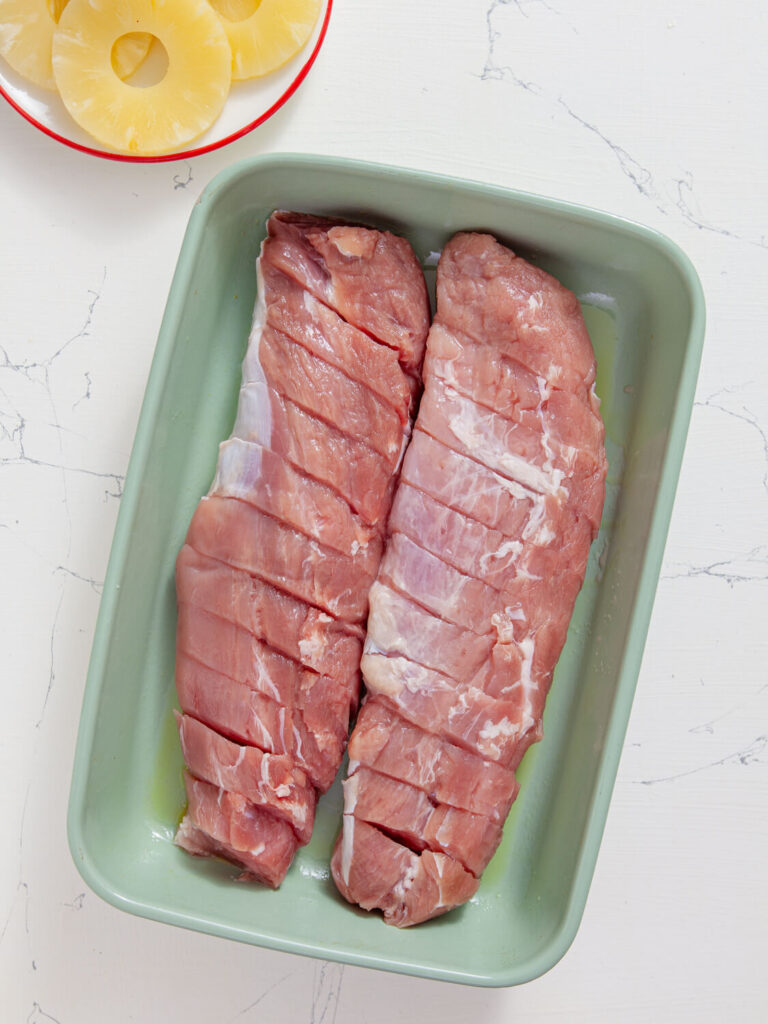
Position the tenderloin in a 9” x 13” baking dish. Create 3/4-inch spaced incisions across its length, ensuring not to slice through the bottom, maintaining a 1/2-inch gap beneath the tenderloin.
Generously apply half of the glaze over the entire tenderloin and into every cut.
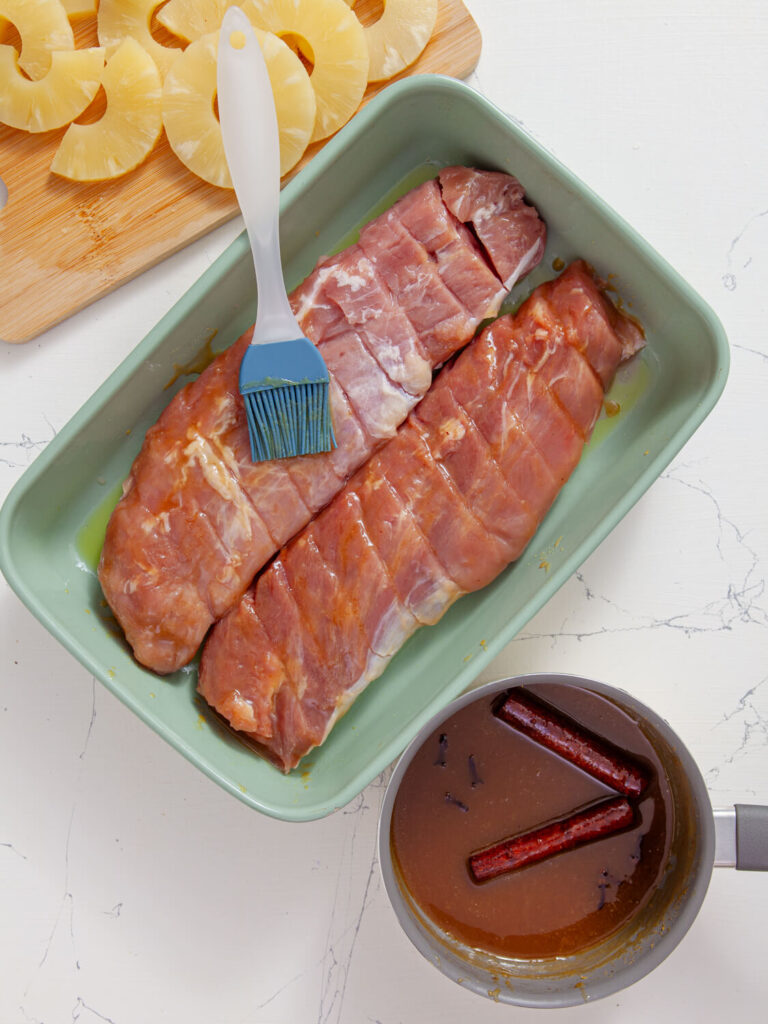
Cut the pineapple slices in half and insert them into the cuts.
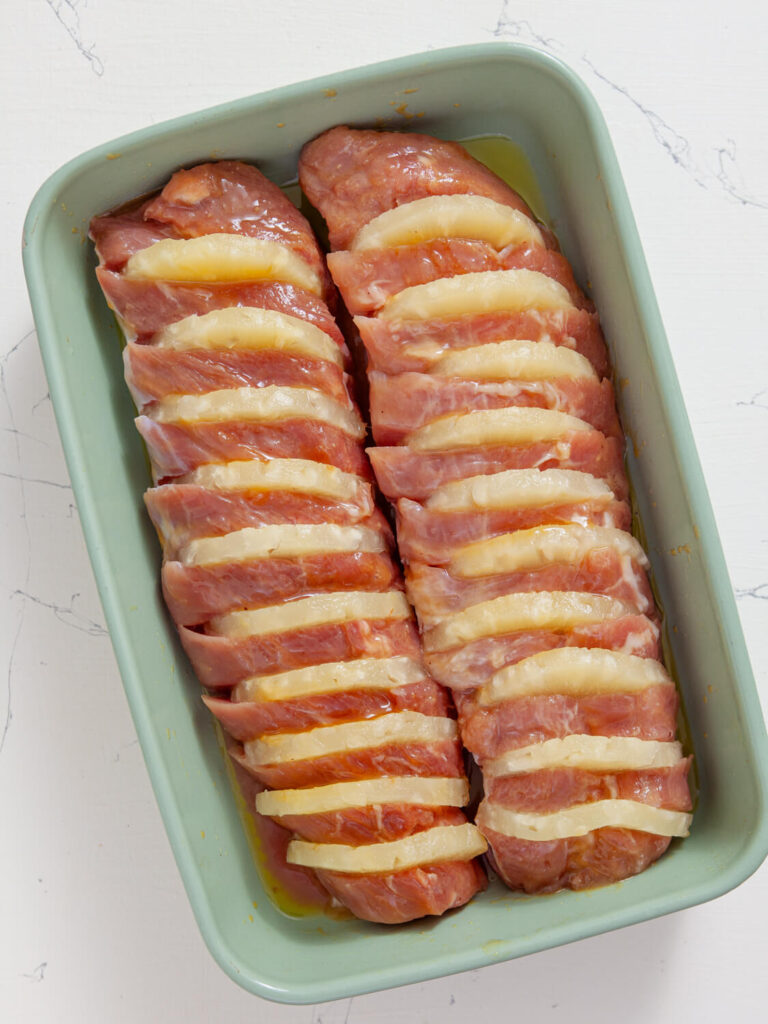
Bake the pork until its internal temperature hits 145°F, which should take about 25-30 minutes. Then, remove it from the oven and turn the heat up to 400°F.
Generously apply the leftover glaze to the tenderloin and pineapple slices, then return them to the oven. Continue baking for an additional 10 minutes or until they exhibit a slight caramelization.
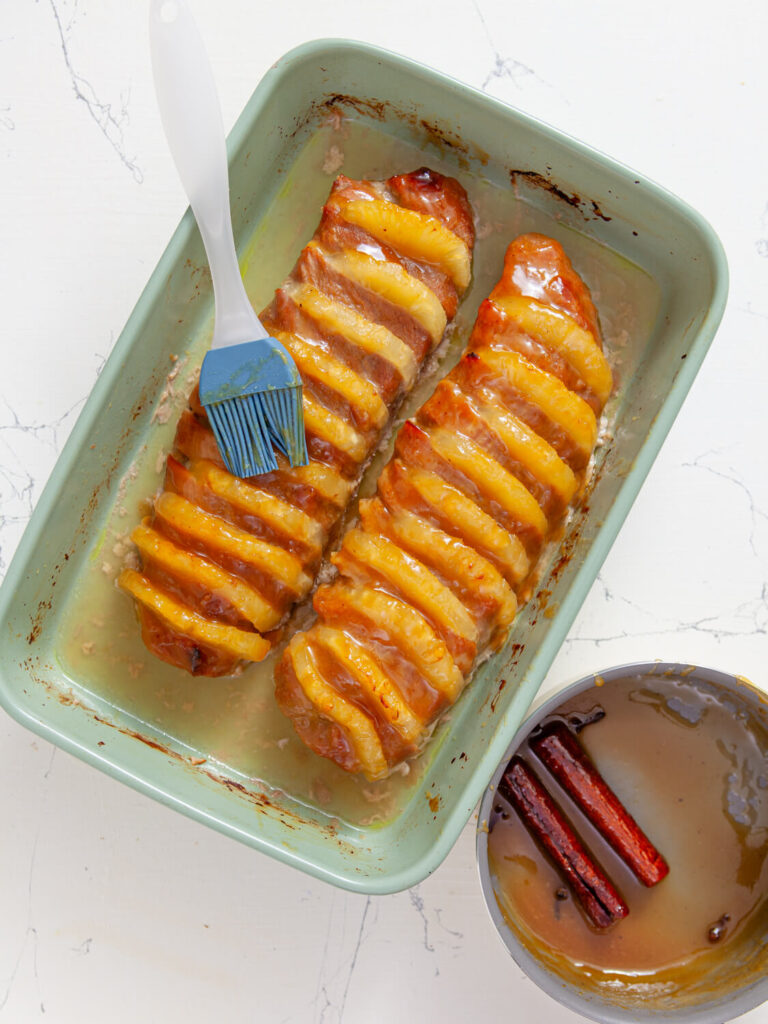
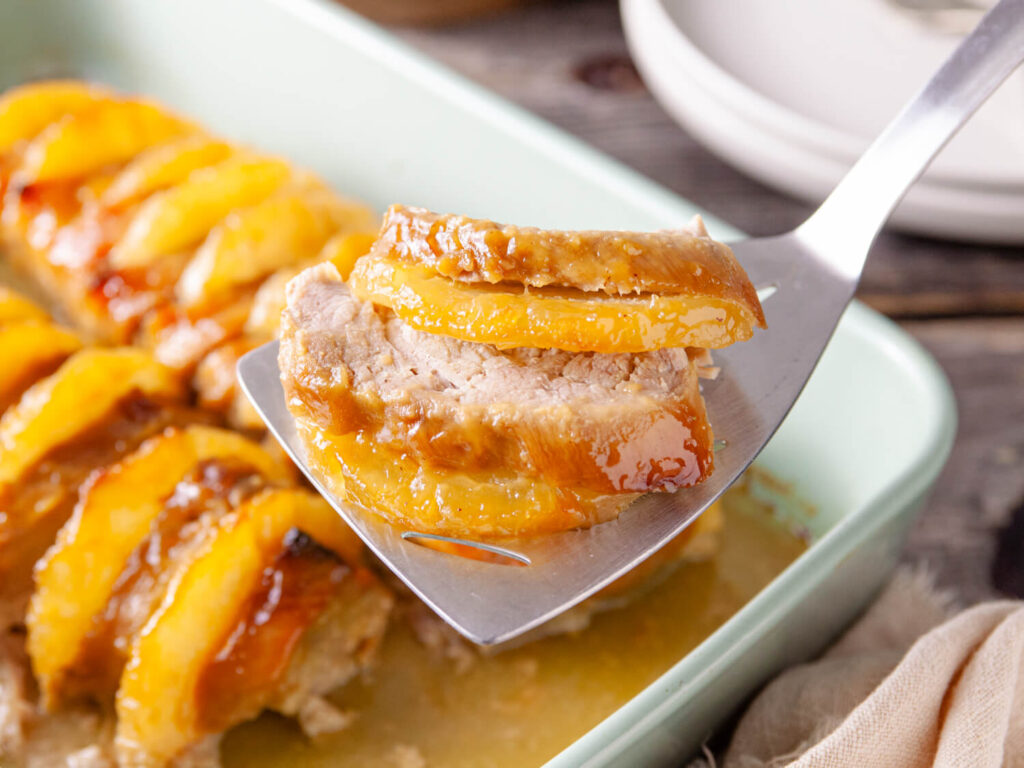
Take it out of the oven, and the meat rest for a minimum of 10 minutes before serving.
Recipe tips
- Evenly Distribute Glaze: To ensure that the glaze flavors penetrate the meat uniformly, use a pastry brush to evenly distribute the glaze over the tenderloin and into the incisions before baking.
- Monitor Glaze Consistency: While simmering the glaze, stir occasionally to prevent it from sticking to the bottom of the pan. If the glaze thickens too much, a tablespoon of pineapple juice can be added to thin it out.
- Resting Time Matters: Allowing the pork tenderloin to rest after baking is crucial. This resting period lets the juices redistribute throughout the meat, resulting in a juicier and more flavorful dish.
- Customize Your Spice Levels: If you’re adding chili pepper for a spicy kick, start with a small amount and adjust according to taste preferences. It’s easier to add more spice than to try and balance it out after the fact.
- Check Internal Temperature: For the perfect doneness, use a meat thermometer to check that the pork has reached the safe internal temperature of 145°F. This ensures that the pork is cooked through but still tender and juicy.
- Alternative Baking Dish: If you don’t have a 9” x 13” baking dish, any similar-sized oven-safe dish can be used. Just ensure there’s enough room for the tenderloin and the pineapple slices.
Serving Suggestions
To complement the sweet and savory flavors of the Baked Pineapple Pork Tenderloin with Sweet Brown Sugar Glaze, consider pairing it with the following dishes for a balanced and complete meal:
- Roasted Vegetables: A medley of roasted carrots, Brussels sprouts, and sweet potatoes can add color, texture, and a hearty element to the meal.
- Caramelized Onion Mashed Potatoes: The sweetness of caramelized onions mixed into creamy mashed potatoes adds a layer of flavor that pairs wonderfully with the tenderloin.
- Green Bean Almondine: Lightly sautéed green beans with slivered almonds offer a crunchy, nutty contrast to the dish’s rich flavors.
- Apple and Walnut Salad: A fresh apple and walnut salad dressed with a light vinaigrette can provide a crisp and refreshing side, cutting through the dish’s sweetness.
- Jasmine Rice: For those who prefer a simpler side, jasmine rice can be a delicate accompaniment, soaking up the tenderloin’s glaze and complementing its tropical pineapple notes.

Storage & reheating
Storing Leftovers: Properly storing any leftovers is key to enjoying this dish more than once. Allow the tenderloin to cool to room temperature before wrapping it tightly in aluminum foil or placing it in an airtight container. Stored in the refrigerator, the pork tenderloin will keep for up to 3-4 days.
Freezing: If you wish to extend the shelf life of your Baked Pineapple Pork Tenderloin, you can freeze it. Slice the cooled tenderloin and place the slices between layers of wax paper to prevent sticking. Store the slices in a freezer bag or airtight container. The tenderloin can be frozen for up to 2 months when stored properly. Remember to label your container with the freezing date for best quality.
Reheating: For the best results, thaw frozen tenderloin slices in the refrigerator overnight before reheating. To reheat the tenderloin, place it in a baking dish, cover it with aluminum foil to retain moisture, and warm it in a preheated oven at 350°F (175°C) for about 10-15 minutes or until heated through.
If you’re in a hurry, you can also gently reheat slices in the microwave with a cover, using a low-power setting to prevent drying out the meat. Ensure the tenderloin reaches the safe internal temperature of 165°F (74°C) when reheating for both taste and food safety.
Recipe FAQ
Can I make this recipe with chicken instead of pork?
Yes, you can substitute chicken for pork in this recipe. Chicken thighs or breasts would work well, but keep in mind cooking times may vary. Chicken should be cooked to an internal temperature of 165°F (74°C). Adjustments in baking time should be made accordingly to ensure the chicken is fully cooked but remains juicy.
Is there a vegetarian or vegan alternative for this dish?
For a vegetarian or vegan alternative, consider using thick slices of tofu or tempeh as the protein base. You’ll want to press the tofu to remove excess moisture before applying the glaze and baking. The cooking time will be shorter, so keep an eye on your dish to prevent it from drying out.
Can I prepare this dish ahead of time?
Absolutely. You can prepare the glaze and marinate the pork (or substitute) in the refrigerator overnight. This not only saves time but also allows the flavors to penetrate more deeply into the meat. If baking from chilled, remember to adjust the cooking time slightly, as the starting temperature of the meat will be lower.
What if I don’t have pineapple juice for the glaze?
If you don’t have pineapple juice on hand, orange juice makes a good substitute, offering a similar citrusy sweetness that complements the other glaze ingredients well. Apple juice or a mixture of lime or lemon juice with a bit of honey or sugar for sweetness can also work in a pinch.
How can I ensure the pineapple doesn’t burn while baking?
To prevent the pineapple from burning, ensure it’s adequately covered with the glaze, which provides moisture and protection from direct heat. Additionally, keeping an eye on the dish during the final minutes of baking is crucial. If the pineapple or the top of the tenderloin starts to brown too much, you can loosely cover the dish with aluminum foil for the remainder of the cooking time.
Baked Pineapple Pork Tenderloin (Sweet Brown Sugar Glaze)
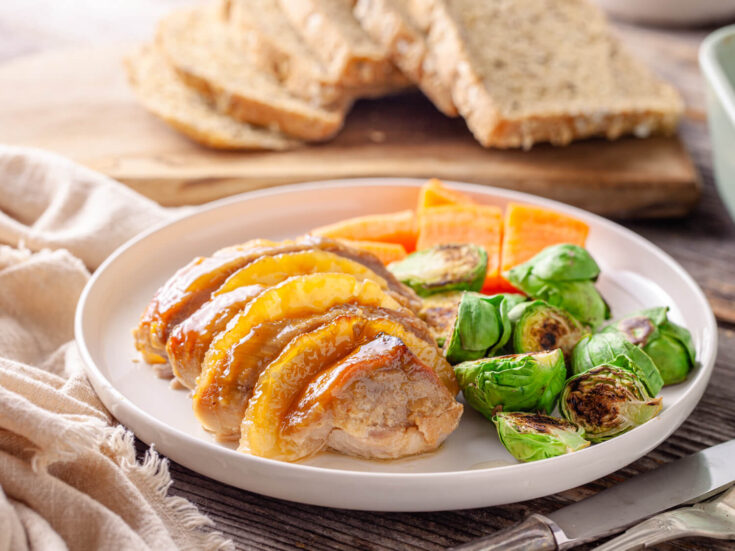
Try this delicious baked pineapple pork tenderloin with a sweet brown sugar glaze for your next evening meal
Ingredients
- 3 lb. pork tenderloin, trimmed
- 1 c. pineapple juice
- 1/4 c. brown sugar
- 1/4 c. honey, local preferred
- 2 T. yellow mustard
- 2 cinnamon sticks
- 6 cloves
- 1/4 t. fresh ground nutmeg
- 1 8-oz. can pineapple slices, drained
Instructions
- Set the oven to preheat at 375 degrees Fahrenheit.
- Mix pineapple juice, brown sugar, honey, mustard, cinnamon sticks, cloves, and ground nutmeg in a medium saucepan. Heat on the stove top until it reaches a robust simmer, then lower the heat to medium-low. Let the glaze simmer until it has thickened, about 15-20 minutes.
- Position the tenderloin in a 9” x 13” baking dish. Create 3/4-inch spaced incisions across its length, ensuring not to slice through the bottom, maintaining a 1/2-inch gap beneath the tenderloin.
- Generously apply half of the glaze over the entire tenderloin and into every cut.
- Cut the pineapple slices in half and insert them into the cuts.
- Bake the pork until its internal temperature hits 145°F, which should take about 25-30 minutes. Then, remove it from the oven and turn the heat up to 400°F.
- Generously apply the leftover glaze to the tenderloin and pineapple slices, then return them to the oven. Continue baking for an additional 10 minutes or until they exhibit a slight caramelization.
- Take it out of the oven, and the meat rest for a minimum of 10 minutes before serving
Notes
- Evenly Distribute Glaze: To ensure that the glaze flavors penetrate the meat uniformly, use a pastry brush to evenly distribute the glaze over the tenderloin and into the incisions before baking.
- Monitor Glaze Consistency: While simmering the glaze, stir occasionally to prevent it from sticking to the bottom of the pan. If the glaze thickens too much, a tablespoon of pineapple juice can be added to thin it out.
- Resting Time Matters: Allowing the pork tenderloin to rest after baking is crucial. This resting period lets the juices redistribute throughout the meat, resulting in a juicier and more flavorful dish.
- Customize Your Spice Levels: If you're adding chili pepper for a spicy kick, start with a small amount and adjust according to taste preferences. It's easier to add more spice than to try and balance it out after the fact.
- Check Internal Temperature: For the perfect doneness, use a meat thermometer to check that the pork has reached the safe internal temperature of 145°F. This ensures that the pork is cooked through but still tender and juicy.
- Alternative Baking Dish: If you don't have a 9” x 13” baking dish, any similar-sized oven-safe dish can be used. Just ensure there's enough room for the tenderloin and the pineapple slices.
Nutrition Information:
Yield:
8Serving Size:
1Amount Per Serving: Calories: 333Total Fat: 7gSaturated Fat: 2gTrans Fat: 0gUnsaturated Fat: 4gCholesterol: 124mgSodium: 146mgCarbohydrates: 21gFiber: 1gSugar: 18gProtein: 45g


