Substitutes for Lemon Juice: What to Use Instead (and How Much)
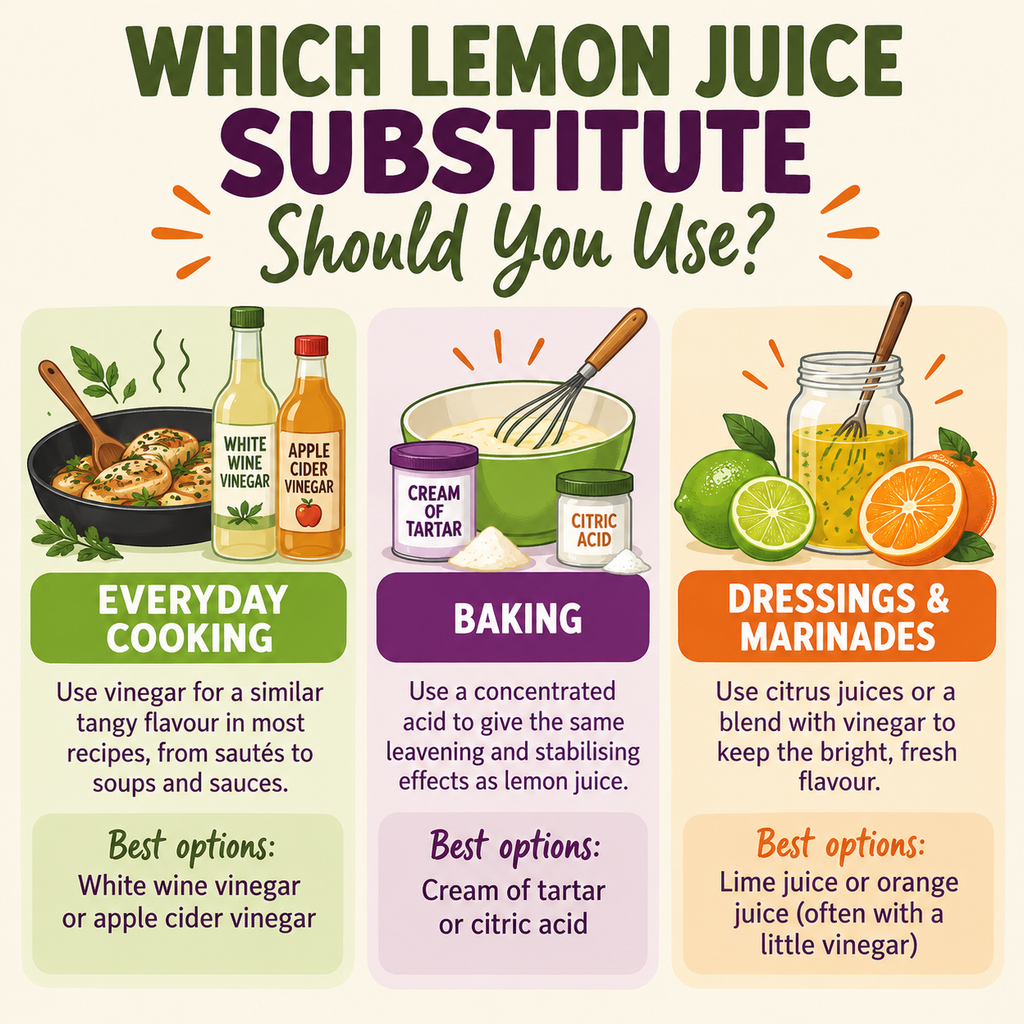
The best substitute for lemon juice depends on what job the lemon is doing. For general cooking, white wine vinegar or apple cider vinegar diluted with a splash of water gets you the same acidity.
As an Amazon Associate I earn from qualifying purchases and sometimes recommend products from other sellers at no extra cost you. For more details see my disclosure policy and privacy policy.
For baking, where lemon juice reacts with raising agents, cream of tartar or citric acid are closer matches. For dressings and marinades, where the point is fresh brightness rather than just acid, lime juice or a vinegar and orange juice blend works better than a flat vinegar swap.
None of these are identical to fresh lemon. They get you close enough to finish the dish, and which one you reach for depends on whether you need acidity, brightness, or a specific chemical reaction.
🍋 Best All-Purpose Substitutes (With Ratios)
These are the swaps to use when a recipe just needs acid to balance richness, cut through fat, or season a sauce, and the lemon flavour itself isn’t the point.
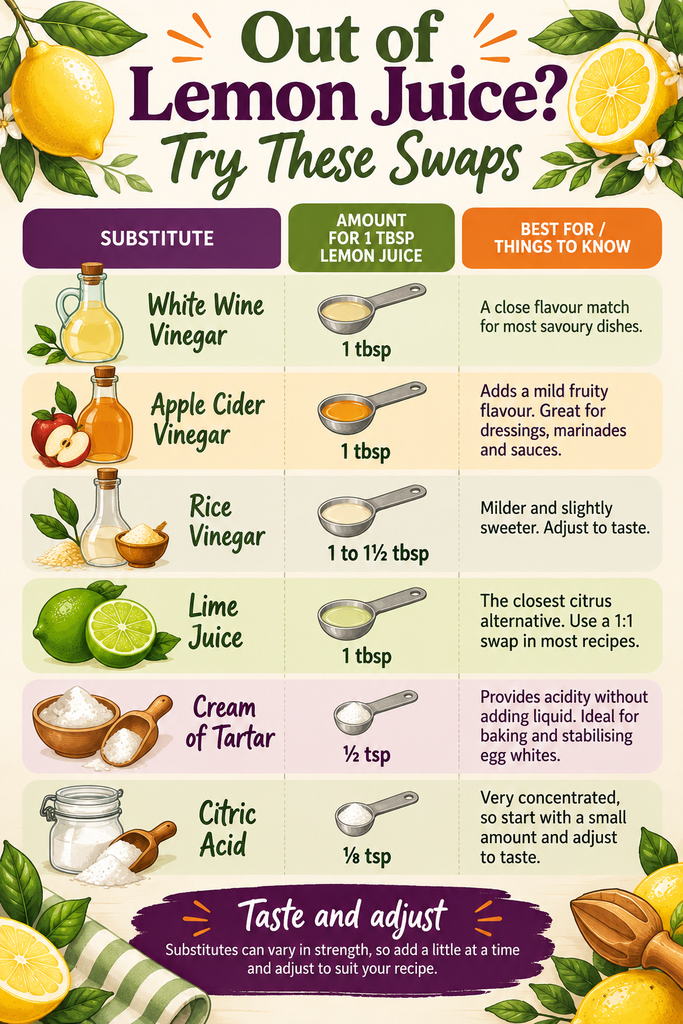
White wine vinegar is the closest all-purpose match. It’s sharp without being sweet, and it won’t throw off delicate sauces or dressings the way a stronger vinegar can. Use it at a 1:1 ratio, or slightly less if the vinegar is on the strong side, tasting as you go.
Apple cider vinegar works nearly as well, though it carries a faintly fruity, mellower edge. It’s a good option if you already have a bottle open and don’t want to buy something new for one recipe. Use roughly 1:1, again tasting before you commit to the full amount.
Rice vinegar is milder and slightly sweet, so it suits lighter dishes such as Asian-style dressings or delicate fish. Because it’s less acidic than lemon juice, you may need slightly more, around 1 to 1.5 tablespoons for every tablespoon of lemon juice called for.
A quick rule for all of these: add less than you think you need, taste, then top up. Vinegars vary in strength between brands, so a fixed ratio only gets you in the right range, not the exact result.
🥞 Baking Substitutes (When Acidity Affects the Rise)
Baking is where a straight vinegar swap can go wrong. Lemon juice in a cake or scone batter often isn’t there for flavour. It’s there to react with bicarbonate of soda and help the bake rise, and vinegar can bring an off flavour into a delicate crumb.
Cream of tartar is the standard substitute in baking. It’s a dry acid, so it won’t add extra liquid to your batter the way lemon juice or vinegar would. As a general guide, use about half a teaspoon of cream of tartar to replace one tablespoon of lemon juice, and reduce another liquid in the recipe slightly to compensate for the lemon juice you’ve left out.
Citric acid is the other reliable option, especially if you bake often and want something shelf-stable on hand. It’s more concentrated than cream of tartar, so start with a small pinch, around an eighth of a teaspoon per tablespoon of lemon juice, and adjust to taste.
If the recipe only needs a small splash of lemon juice for flavour rather than for the rise, a mild vinegar in a small amount will usually pass unnoticed once baked.
🥗 Dressings and Marinades: Substitutes for Fresh Brightness
Dressings and marinades are where fresh flavour matters most, so a plain vinegar swap can taste flat next to the original recipe.
Lime juice is the best substitute here. It’s close enough in acidity and brightness that most people won’t notice the difference in a vinaigrette or marinade, and it works particularly well in anything with garlic, herbs, or chilli.
Orange juice with a splash of vinegar is a good option when you want sweetness alongside acidity, such as in a citrus dressing or a marinade for chicken or fish. Use mostly orange juice with a small amount of white wine vinegar or apple cider vinegar to bring the acidity back up, since orange juice alone is much milder than lemon.
White wine vinegar diluted with water is the fallback if you have neither lime nor orange on hand. It won’t have the same fruit character, but it will do the acidic job in a marinade where the lemon flavour isn’t essential.
🍊 Need Zest Too? What to Reach For
If your recipe calls for both lemon juice and lemon zest, none of the substitutes above will replace the zest’s oils and aroma. Lime zest is the closest match if you’re already substituting lime juice, since the two work together the way lemon juice and zest do.
If lime isn’t available either, a small amount of lemon extract can stand in for the aromatic element, used sparingly since it’s concentrated. There isn’t a good vinegar-based substitute for zest specifically, so if the zest is doing a lot of the flavour work in a recipe, it’s worth checking whether you can leave it out rather than force a swap.
⚠️ One Substitute to Use With Caution
Bottled lemon juice is often treated as an obvious swap for fresh, since it’s technically the same fruit. In practice, it tastes noticeably different: flatter, sometimes slightly metallic, and without the aromatic oils that come from fresh zest and juice together. It will work in a pinch for straightforward acidity, such as balancing a soup or sauce, but it’s worth avoiding in anything where lemon flavour is meant to be the standout, like a lemon curd or a citrus dressing.
📋 Quick-Reference Ratio Cheat Sheet
| Instead of 1 tbsp lemon juice, use… | Amount |
|---|---|
| White wine vinegar | 1 tbsp |
| Apple cider vinegar | 1 tbsp |
| Rice vinegar | 1 to 1.5 tbsp |
| Cream of tartar (baking) | 1/2 tsp |
| Citric acid (baking) | 1/8 tsp, adjust to taste |
| Lime juice (dressings/marinades) | 1 tbsp |
| Orange juice + vinegar (dressings/marinades) | 1 tbsp orange juice + small splash of vinegar |
❓ Common Questions
Can I use vinegar instead of lemon juice in every recipe? Not quite. Vinegar works well for general cooking and savoury dishes, but in baking it can leave an odd flavour behind, and in dressings it can taste flatter than fresh lemon. Match the substitute to the job the lemon juice is doing.
What’s the best substitute if I don’t have any citrus in the house? White wine vinegar or apple cider vinegar diluted slightly with water is the most reliable all-purpose stand-in, since most kitchens already have one of the two.
Is bottled lemon juice as good as fresh? It’s acceptable for basic acidity in cooking, but it lacks the aromatic brightness of fresh lemon, so it’s not ideal in recipes where lemon flavour is the main event.