
Seasonal Produce Calendar UK: What to Cook Each Season
Most seasonal produce calendars tell you what is in season and then leave you standing in the shop wondering what to do with a bag of leeks. This one pairs every season’s best ingredients with a simple way to cook them, so you can use it as a planning tool rather than a reference list.
As an Amazon Associate I earn from qualifying purchases and sometimes recommend products from other sellers at no extra cost you. For more details see my disclosure policy and privacy policy.
Think of it as a seasonal produce calendar for the UK that actually helps you decide what is for dinner. Bookmark it, come back each month, and let the weather and the market stalls do some of the planning for you.
🌦️ How UK Seasons Really Run
The UK growing year does not follow neat calendar boundaries. A cold spring can push asparagus back by a couple of weeks, and a warm autumn can stretch tomatoes well into October. Treat every date in this post as a rough guide, not a promise.
North and south also differ. Growers in the south of England often see crops arrive a few weeks before those in northern England and Scotland. If you shop locally, your own market stall is the best calendar you will find.
There are three things worth understanding before you dive into the months.
- Gluts: When a crop peaks, there is suddenly far too much of it. Courgettes in August and apples in October are classic examples, and this is when prices drop and freezing or preserving makes sense.
- The hungry gap: In spring, the stored winter crops run low and the new season’s vegetables are not quite ready. Roughly April to early summer can feel thin, which is why purple sprouting broccoli, rhubarb and early salad leaves feel so welcome.
- Home-grown versus imported: Plenty of what sits on supermarket shelves in the gap months has travelled from warmer countries. Nothing wrong with that, but it is worth knowing which things you are buying in their natural window and which you are not.
If you want a bit more background on the basics, my older guide on how to eat seasonally and what’s available in early spring covers the idea in more depth.
📅 UK Seasonal Fruit and Vegetables by Month at a Glance
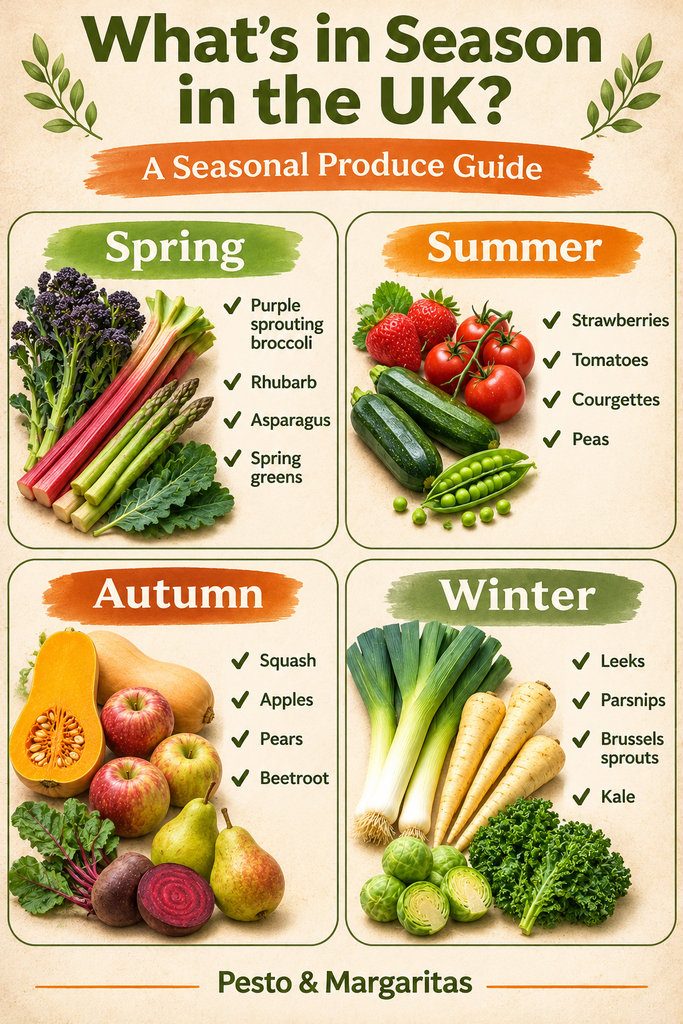
Here is the quick view. Use it to spot what is at its best now, then jump down to the season sections for ideas on how to cook it.
Remember that these are approximate windows. Some items, like potatoes, onions and apples, store well and are available for many months beyond their harvest.
| Month | Vegetables | Fruit |
|---|---|---|
| January | Leeks, kale, parsnips, swede, celeriac, Brussels sprouts, cauliflower | Forced rhubarb, apples, pears |
| February | Leeks, kale, purple sprouting broccoli, parsnips, swede, celeriac | Forced rhubarb, apples (stored) |
| March | Purple sprouting broccoli, spring greens, spinach, leeks, spring onions | Rhubarb |
| April | Asparagus (late April), Jersey Royals, radishes, watercress, purple sprouting broccoli | Rhubarb |
| May | Asparagus, new potatoes, peas, salad leaves, radishes, broad beans (late May) | Rhubarb |
| June | Broad beans, peas, courgettes, new potatoes, lettuce, beetroot | Strawberries, cherries, gooseberries |
| July | Courgettes, runner beans, tomatoes, peas, carrots, beetroot | Raspberries, cherries, blackcurrants, strawberries |
| August | Tomatoes, courgettes, sweetcorn, runner beans, aubergines, peppers | Plums, raspberries, blueberries, early apples |
| September | Squash, sweetcorn, tomatoes, kale, leeks, beetroot | Blackberries, apples, plums, pears, damsons |
| October | Pumpkin, squash, celeriac, kale, leeks, parsnips, mushrooms | Apples, pears, quince, blackberries (early) |
| November | Parsnips, swede, celeriac, Brussels sprouts, cabbage, leeks | Apples, pears, cranberries (imported) |
| December | Brussels sprouts, parsnips, red cabbage, carrots, leeks, kale | Apples, pears, clementines (imported) |
🌱 Spring: Late February to May
Spring cooking is about fresh, green flavours after a long winter of roots. It starts slowly, with sprouting broccoli and rhubarb, and picks up speed once asparagus and new potatoes arrive.
This is also the season where being flexible pays off. If the weather has been cold, the best produce may be a week or two behind what you expect.
The best ingredients in spring
- Purple sprouting broccoli: Steam or roast it until the stems are just tender, then finish with lemon, garlic and a little olive oil. It is lovely tossed through pasta with anchovies and chilli.
- Rhubarb: Roast it in the oven with a spoonful of sugar and a splash of orange juice until soft. Spoon it over yoghurt, porridge or a simple sponge.
- Asparagus: Snap off the woody ends, then griddle or roast for a few minutes with olive oil and salt. Serve with a soft-boiled egg for a quick lunch. For more ideas, see my top things to do with asparagus.
- Jersey Royals and new potatoes: Boil them in salted water with a sprig of mint and toss with butter. Their thin skins mean no peeling is needed.
- Spring greens: Shred finely and fry briefly in butter with a pinch of nutmeg. They are a brilliant, quick side for roast chicken.
- Wild garlic: If you forage or find it at a market, blitz it into a pesto or wilt it into scrambled eggs.
Cook this now (spring)
Roast a tray of rhubarb, steam a bunch of asparagus, and serve both on the same table: one savoury, one sweet. It takes under half an hour and shows off the season in a single meal.
☀️ Summer: June to August
Summer is the season of abundance. There is so much on offer that the hardest part is knowing when to stop buying.
Cooking in summer should be light-touch. Good tomatoes, fresh peas and ripe strawberries barely need any help.
The best ingredients in summer
- Tomatoes: Slice them thickly, season well with flaky salt and olive oil, and serve with torn bread. Save the smaller, sweeter ones for salads and the larger ones for slow-roasting.
- Courgettes: Grate and squeeze out the moisture before frying into fritters, or slice into ribbons for a raw salad. If you end up with a glut, freeze courgettes for soups later in the year.
- Broad beans and peas: Pod them and simmer for a couple of minutes. Mash with mint, lemon and olive oil for a quick spread on toast.
- Strawberries: Eat them as they are, or macerate with a little sugar and black pepper for a few minutes before spooning over cream.
- Runner beans: Slice thinly on the diagonal and simmer until tender. Dress with butter and a squeeze of lemon.
- Raspberries and blackcurrants: Use raspberries fresh, and cook blackcurrants down into a tart compote for ice cream or yoghurt.
For a longer rundown of warm-weather ideas, take a look at my guide to summer seasonal foods and what to make with them.
Cook this now (summer)
Make a big tray of roasted tomatoes and courgettes with garlic and thyme. Eat half warm with pasta, then blitz the rest into a quick sauce for another night.
🍂 Autumn: September to November
Autumn is when the kitchen starts to feel cosy again. Squash, apples and mushrooms arrive, and cooking moves back towards the oven and the hob.
It is also the best season for preserving. The harvest is at its peak, and a little effort now fills the freezer for winter.
The best ingredients in autumn
- Squash and pumpkin: Roast wedges with the skin on, then scoop out and blend into soup or fold into risotto. If you are stuck for ideas, my list of things to do with butternut squash is a good place to start.
- Apples: Bake them whole with cinnamon, slice them into a salad with cheddar, or stew them down with a little sugar. UK varieties like Bramley are excellent for cooking.
- Blackberries: Early autumn is the time to pick them from hedgerows. Simmer with apples for a classic crumble filling.
- Mushrooms: Fry in a hot pan in batches so they brown rather than steam. Finish with garlic, parsley and a knob of butter.
- Kale: Strip from the stem and sauté with garlic, or bake into crisps. It also holds up well in hearty soups and stews.
- Pears: Poach in spiced syrup or slice into salads with blue cheese and walnuts.
When you want a warming bowl, try this roasted autumn harvest soup built from seasonal vegetables.
Cook this now (autumn)
Roast a whole tray of squash, onions and apples, then blend half into soup and keep the rest for salads and grain bowls. One roasting session covers several meals.
❄️ Winter: December to February
Winter produce looks plain, but it is built for slow cooking. Roots, brassicas and alliums turn sweet and deeply savoury given enough time.
This is the season to lean on your oven, your slow cooker and your stockpot. It is also the most budget-friendly time to cook, as many winter staples are cheap and keep for weeks.
The best ingredients in winter
- Leeks: Slice and sweat in butter until silky, then use in tarts, soups or a simple gratin. They are also excellent in a pie filling.
- Parsnips: Roast with a drizzle of honey and a little mustard, or simmer into a smooth soup with thyme and pancetta.
- Brussels sprouts: Shred and stir-fry with bacon, or roast cut-side down until the edges caramelise. They taste very different from the boiled version many of us grew up with.
- Swede and celeriac: Mash swede with butter and black pepper, or cut celeriac into chunky chips and roast. Both are fantastic in stews.
- Cabbage and kale: Braise red cabbage with apples and vinegar, or shred savoy into a quick stir-fry. Winter greens are very forgiving.
- Forced rhubarb: The bright pink stems appear in the coldest months and are a welcome splash of colour. Roast gently and serve warm.
For a month of ideas built entirely around cold-weather cooking, see my post on easy February dinners using seasonal produce. And if you want to waste less of your winter veg, my zero-waste winter veg guide covers buying, storing and using it up.
Cook this now (winter)
Slow-roast a tray of root vegetables with garlic and rosemary, then turn the leftovers into a thick soup the next day. It is cheap, filling and almost entirely hands-off.
🛒 Buying and Storing Seasonal Produce
Seasonal produce tends to be cheaper because there is a lot of it and it has not travelled far. It often tastes better too, because it has had time to ripen properly and reach you quickly.
That said, price depends on where you shop. Farm shops can cost more than supermarkets, so compare before you assume.
Buying tips
- Shop at markets or farm shops: Stallholders usually know exactly what is at its best that week and can point you to bargains.
- Look for signs of freshness: Firm stems, bright colour and no wilting or soft spots are good signs.
- Buy what is abundant: When a crop is in glut, it is usually at its cheapest. That is your cue to cook with it or preserve it.
- Use a veg box: Many UK suppliers offer boxes based on the season, which can take the guesswork out of planning.
- Ask about origin: Labels and stallholders can tell you where produce was grown. It is a quick way to check whether something is in its natural UK window.
- Buy a little less, more often: Fresh seasonal produce is at its best within a few days. Smaller, regular shops mean less food heading for the bin.
Storing tips
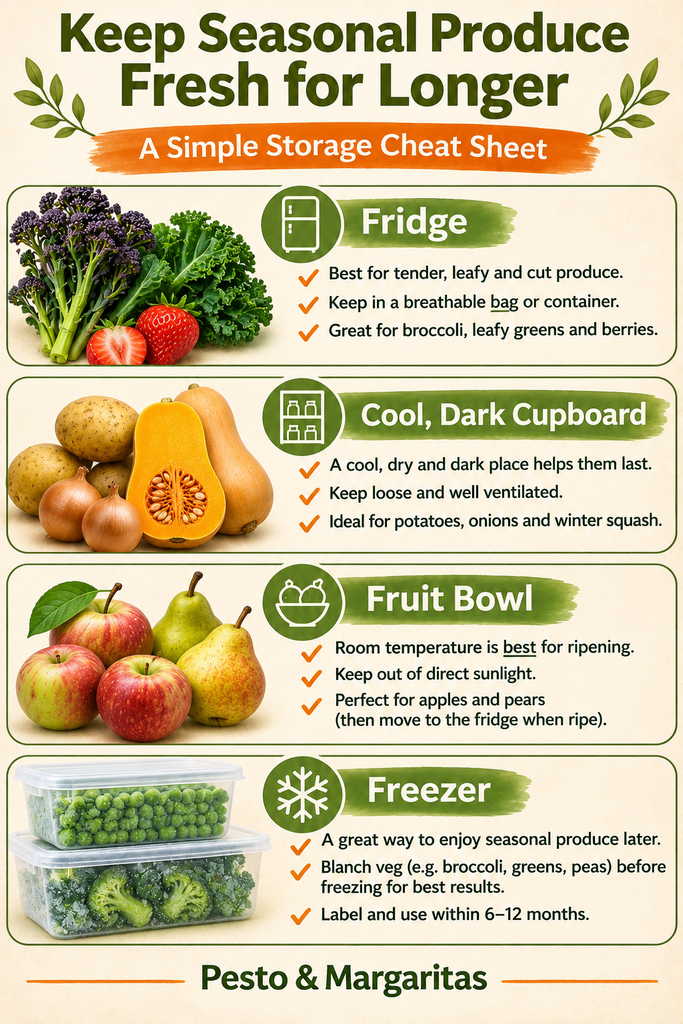
- Leafy greens and salad: Wash, dry well and store with a sheet of kitchen paper. A salad spinner makes drying leaves much quicker and helps them last longer in the fridge.
- Roots and squash: Keep them in a cool, dark, dry spot. Leave the skin on until you are ready to cook.
- Berries and soft fruit: Store unwashed in the fridge and wash just before eating. Freeze extras on a tray before bagging them so they do not clump.
- Leftovers and batch cooking: Cool completely before sealing. A decent set of airtight storage containers keeps soups and sauces fresh, while sturdy freezer bags are ideal for flat-freezing portions.
If you want to preserve the end-of-season harvest, my guide to storing and freezing autumn produce walks through freezing, canning and pickling.
🗓️ How to Plan a Week Around the Season
A calendar is only useful if it changes what lands on your plate. Here is a simple way to turn it into a weekly routine.
Start by picking two or three ingredients from the current month. Choose one to roast, one to simmer and one to eat raw or lightly cooked, so the week does not feel repetitive.
A sample week in each season
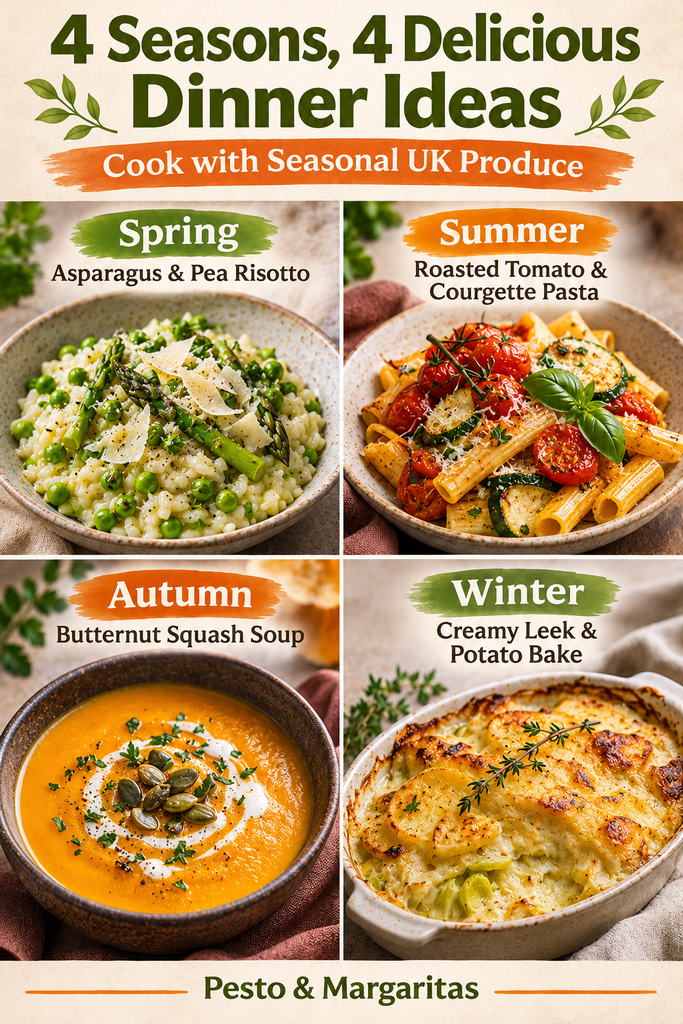
- Spring: Pasta with purple sprouting broccoli on Monday, an asparagus and egg lunch midweek, and a roasted rhubarb pudding at the weekend.
- Summer: Tomato and bread salad early in the week, courgette fritters with a dip on Wednesday, and a strawberry and cream dessert when friends visit.
- Autumn: Squash soup on Monday, mushroom and kale on toast midweek, and an apple and blackberry crumble on Sunday.
- Winter: A leek and potato soup to start, roast parsnips and sprouts with the weekend joint, and slow-cooked red cabbage with sausages.
Make the most of a glut
Gluts are the best excuse to stock your freezer. Cook once, then portion into containers so a future weeknight is already half done.
- Soup base: Roast whatever is cheapest, blend with stock and freeze in single portions.
- Sauce: Simmer surplus tomatoes or plums down with onion and herbs, then freeze flat.
- Pickles and jams: Quick-pickle cucumbers or beetroot, or turn soft fruit into small-batch jam.
- Prepped veg: Chop and freeze items like leeks or peppers so they are ready for a stir-fry.
Fill the gaps without guilt
No one eats only local, seasonal food all year, and you do not need to. Frozen peas, tinned tomatoes and dried pulses are brilliant stand-ins when fresh produce is thin on the ground.
The goal is simply to lean on the season when you can. Even a few seasonal swaps a week make cooking feel fresher and more connected to the time of year.
🍽️ Putting It All Together
You do not need to follow this calendar to the letter. The idea is to nudge your shopping towards what is abundant, and let that guide your menu.
A simple routine helps. Once a month, glance at the at-a-glance table, pick two or three ingredients, and build a few meals around them.
For more seasonal inspiration, browse these recipe collections:
- Easy February dinners using seasonal produce for deep winter cooking.
- Summer seasonal foods for light, bright warm-weather meals.
- Winter ingredient substitute guide for cold-weather swaps when something is hard to find.
- Top things to do with asparagus for the spring peak.
Come back to this page as the year turns, and let the seasons do half the work.
❓ Seasonal Produce FAQs
What does in season mean in the UK?
In season means a crop is being harvested in the UK at its natural time of year, rather than grown under heated glass or flown in. It is usually at its freshest, its tastiest and, often, its cheapest.
When is the UK hungry gap?
The hungry gap is roughly April to early summer, when winter stores run low and new crops are not ready. Exact timing varies with the weather and where you live.
Is seasonal produce really cheaper?
Often, yes, because supply is high and transport costs are lower. Prices still vary by shop, so it pays to compare rather than assume.
Can I rely on these dates?
Treat them as a guide. Weather, region and variety all shift harvest times by a few weeks, so use the calendar as a starting point and trust what you see on the stall.

