
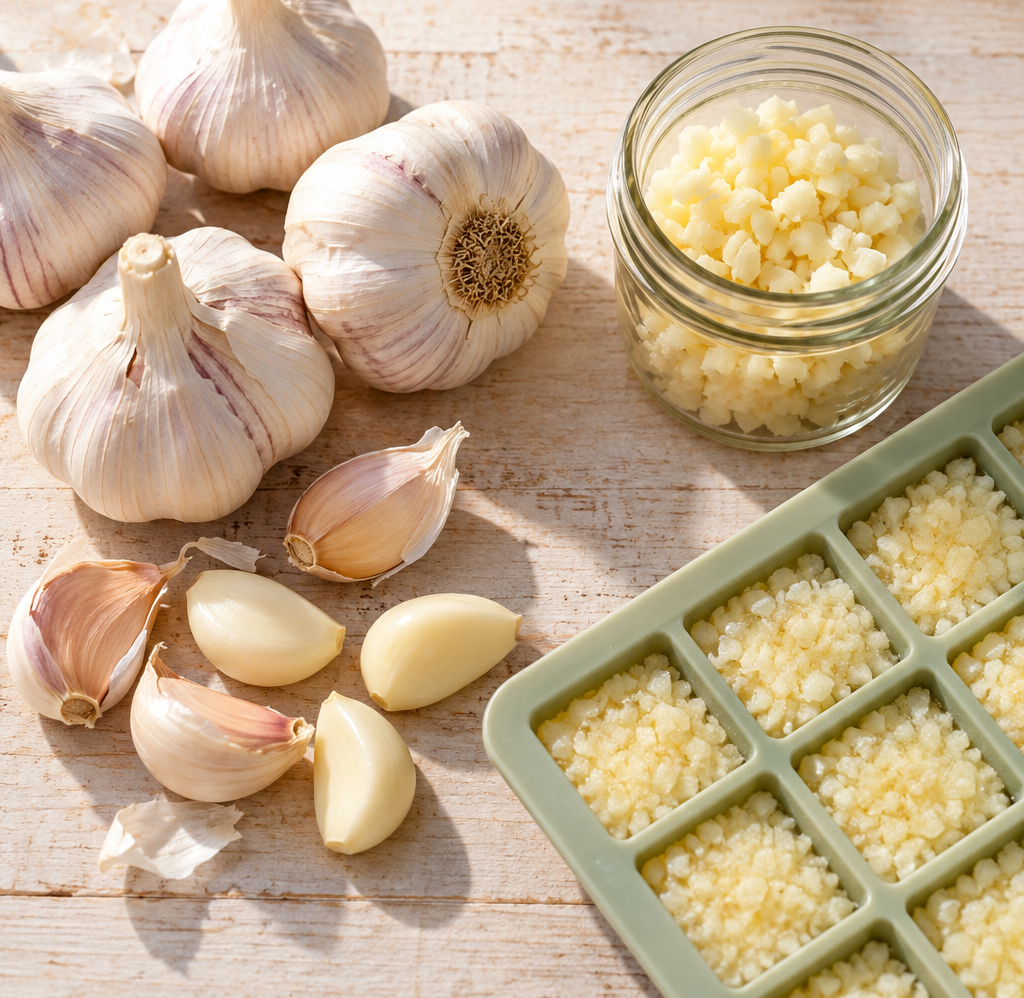
How to Store and Freeze Garlic (Safely, from Whole Bulbs to Roasted)
Most of us buy garlic in bulk because it is cheap, and then watch half of it sprout, soften or dry out before we get through it. The good news is that garlic is easy to keep, as long as you match the storage method to the form it is in.
As an Amazon Associate I earn from qualifying purchases and sometimes recommend products from other sellers at no extra cost you. For more details see my disclosure policy and privacy policy.
This guide on how to store and freeze garlic is organised by what is actually in your kitchen: whole bulbs, loose cloves, peeled cloves, minced garlic and roasted garlic. It also covers the one thing most storage posts skip, which is why garlic in oil needs real care.
🧄 Whole Bulbs: Keep Them Cool, Dry and Dark
An intact bulb is the longest-lasting form of garlic. The papery skin protects the cloves, so your job is mostly to leave it alone.
Store whole bulbs somewhere cool, dry, dark and ventilated. A basket, a mesh bag or an open bowl in a cupboard or pantry works well. Avoid sealed containers and plastic bags, because trapped moisture encourages mould and rot.
Keep them out of the fridge. Cold, damp air can make bulbs sprout sooner and leave the cloves rubbery.
Once you break a bulb apart, the clock speeds up. The loose cloves keep their papery skins on, so use the broken bulb within a few weeks and check it every few days. A firm bulb will keep for noticeably longer than one that has been split.
🥄 Loose Cloves and Peeled Garlic: Use Them Quickly or Freeze Them
Cloves that are still in their skins can stay with the broken bulb in the same cool, dry spot. Pick out any that feel soft, shrivelled or discoloured as you go, so they do not spoil their neighbours.
Peeled and chopped garlic is a different story. With the skin gone, the cloves dry out and spoil faster, so they belong in the fridge in a small airtight container. Plan to use them within a short window, a few days rather than weeks.
If you will not get through peeled garlic that quickly, freeze it. Freezing is the better home for anything you have already prepared. A good set of airtight storage containers keeps fridge-stored garlic from perfuming everything else on the shelf.
❄️ How to Freeze Garlic Four Ways
Garlic freezes well, with one trade-off that I will come back to. The texture softens after freezing, so frozen garlic is for cooking, not for raw dishes. These methods all work, and each suits a slightly different cook.
Whole Peeled Cloves
This is the simplest option. Peel the cloves, spread them on a tray in a single layer and freeze until solid. Then tip them into a freezer bag or container and squeeze out the air.
Freezing them on a tray first stops them clumping into one block. You can then grab a clove or two as you need them.
Minced or Crushed Garlic, Flat-Frozen
If you cook with minced garlic most of the time, this is the most convenient method. Mince or crush the garlic, then spread it thinly in a freezer bag and press the bag flat.
Freeze it flat, then snap off a piece whenever a recipe calls for garlic. Thin, flat slabs break easily and thaw in seconds. Heavy-duty freezer bags are ideal here, and a flat bag also stacks neatly in the freezer.
Ice Cube Tray Portions
For ready-measured portions, spoon minced garlic into a silicone ice cube tray with a lid. Freeze it solid, pop out the cubes and move them to a labelled bag.
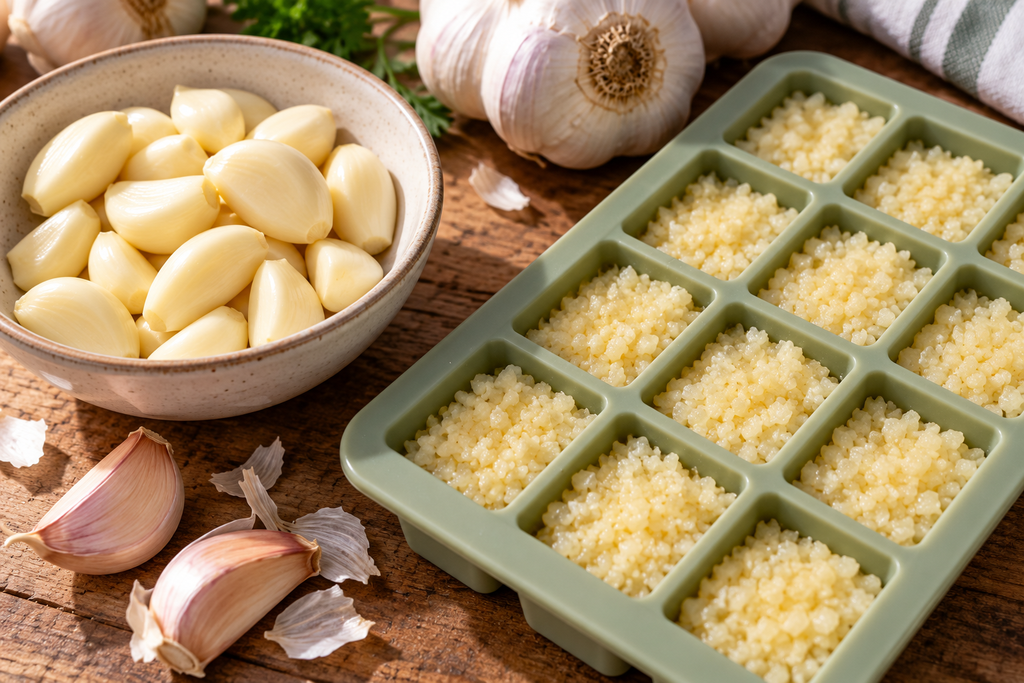
Each cube is roughly the garlic for one dish, which makes it handy for soups, stews and sauces. If you like, mix the garlic with a little water in the tray to make it easier to portion. Do not use oil for this; see the garlic in oil section below.
Roasted Garlic
Roasted garlic freezes beautifully, and it is worth making in a big batch. Roast whole bulbs until soft, squeeze out the cloves and let them cool completely. Freeze them in a single layer, then bag them up, or mash them into a paste and freeze it in tray portions.
Roasted garlic is soft and sweet, so it suits mashed potatoes, dips, dressings and spreads. If you want to put a roasting tray to good use, our guide to the sheet pan explains how to choose one that does the job well.
⚠️ Garlic in Oil: Why It Needs Real Care
This is the section that matters most for safety. Garlic stored in oil can create the low-oxygen, low-acid conditions in which the bacteria that cause botulism can grow. The risk is highest when the mixture sits at room temperature.
Extension service guidance is clear on this. Garlic-in-oil mixtures stored at room temperature are at risk for the development of botulism, so never leave a jar of garlic in oil on the counter or in a cupboard.
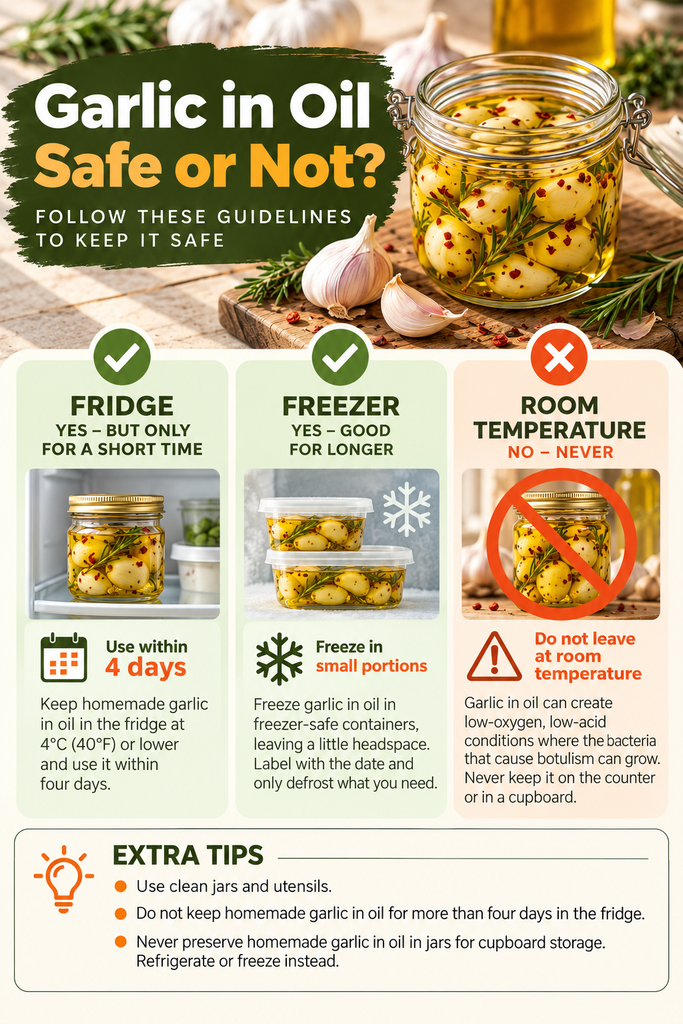
If you make a garlic and oil mixture at home, make it fresh and keep it in the fridge at 4°C (40°F) or lower. The same guidance says to use it within four days. If you want to keep it longer, freeze it in a freezer-safe container, leaving a little headspace, and label it with the date.
A few practical rules follow from this:
- Do not keep homemade garlic in oil at room temperature, even for a short time.
- Do not rely on a jar of homemade garlic oil that has been in the fridge for more than a few days.
- Freeze garlic in oil in small portions, so you only defrost what you need.
- Treat home canning of garlic as off the table, because safe processing times have not been established for it.
If you only want the flavour of garlic in oil, the simplest route is to cook fresh garlic in oil at the moment you need it. For more on choosing the right oil for the job, see our cooking oils guide.
🔥 Using Frozen Garlic
Frozen garlic goes straight into the pan. There is no need to thaw it, and thawing first only makes it soggy.
Grate or chop whole frozen cloves while they are still hard, which is often easier than working with fresh ones. Drop flat-frozen pieces or cubes directly into hot oil, soups, sauces and braises.
Expect a texture change. Frozen garlic is softer than fresh, and it can be a little less pungent in the finished dish. For anything where raw garlic is the star, such as a punchy dressing or a bruschetta topping, use fresh.
Frozen garlic shines in cooked dishes. Think lemon garlic shrimp, garlic and parmesan potatoes, or a loaf of garlic bread.
🔍 Signs Garlic Has Gone Off (and What Is Harmless)
It helps to know the difference between garlic that is past its best and garlic that is still fine to use.
Harmless
- Green sprouts in the centre of a clove. Garlic that has started to sprout is still safe to eat. The green shoot can taste bitter, so slice the clove open and remove it first.
- A slightly dry, papery outer skin. This is normal and does not affect the cloves inside.
- A small amount of shrivelling. The clove may be past its prime, but it is usually usable if it is otherwise firm.
Time to Bin It
- Soft, mushy or slimy cloves.
- Visible mould, or dark patches that spread.
- A sour or unpleasant smell.
- Cloves that have turned dark brown or yellow and feel hollow.
When in doubt, trust your nose and your fingers. Fresh garlic should feel firm and smell sharply of garlic, not sour or musty.
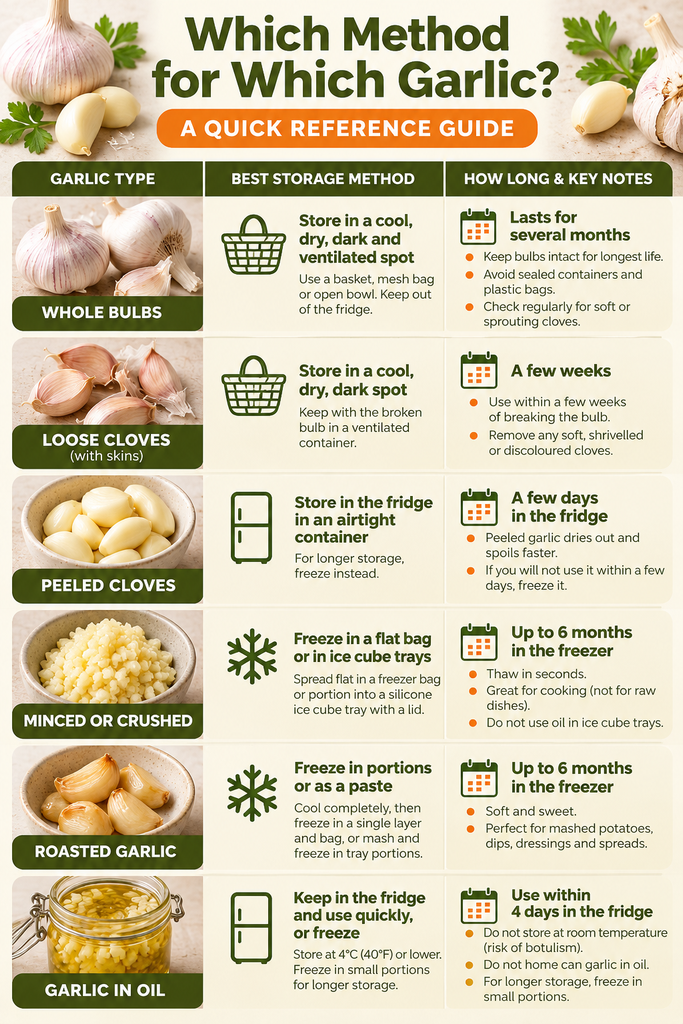
📝 Quick Reference: Which Method for Which Garlic?
- Whole bulb: keep cool, dry, dark and ventilated, not in the fridge.
- Broken bulb with skins on: same spot, use within a few weeks.
- Peeled or chopped garlic: fridge for a short time, or freeze.
- Freezing for cooking: whole peeled cloves, flat-frozen mince or ice cube portions.
- Roasted garlic: cool, then freeze in a single layer or as a paste.
- Garlic in oil: fridge only, use within four days, or freeze. Never at room temperature.
🧅 More Store and Freeze Guides
Garlic is only one part of a well-run kitchen. If you like keeping your ingredients fresh for longer, our guides on how to store and freeze onions, store butternut squash and store and freeze cabbage follow the same practical approach.
And if you have a glut of garlic to use up, our list of the top 16 things to do with garlic is a good place to start.
❓ Garlic Storage FAQs
Can I store garlic in the fridge?
Whole bulbs are better kept in a cool, dry cupboard. The fridge is the right place for peeled or chopped garlic that you plan to use soon, in a sealed container.
Does freezing garlic ruin it?
It softens the texture, but the flavour holds up well in cooked dishes. Use frozen garlic in soups, sauces and sautés rather than raw recipes.
Can I freeze garlic in oil?
Yes, freezing is a safe way to keep garlic in oil for longer. Use a freezer-safe container, leave a little headspace, label it and defrost small portions as needed.
Do I need to thaw frozen garlic before cooking?
No. Add it straight from the freezer to the pan or pot.

