
Seasonal Produce Calendar US: What to Cook Each Season
Most seasonal produce charts tell you what is in season and then leave you standing in the grocery aisle with a bunch of kale and no plan. This one does something different. For every season, you get the best ingredients to buy and a simple way to cook each one.
As an Amazon Associate I earn from qualifying purchases and sometimes recommend products from other sellers at no extra cost you. For more details see my disclosure policy and privacy policy.
It is written for the whole country, with honest notes on how things shift between regions. Use it as a planning tool for your weekly shop, your farmers’ market trips and your CSA box, rather than a reference list you read once and forget.
🗺️ How US Seasons Really Work
The United States covers a huge range of climates, so “in season” depends on where you live. A farmer in Florida is picking strawberries while a farmer in Vermont is still waiting for the snow to melt.
That is why a single national calendar can only ever be a guide. Treat every date in this post as approximate, and check what your local market is actually selling.
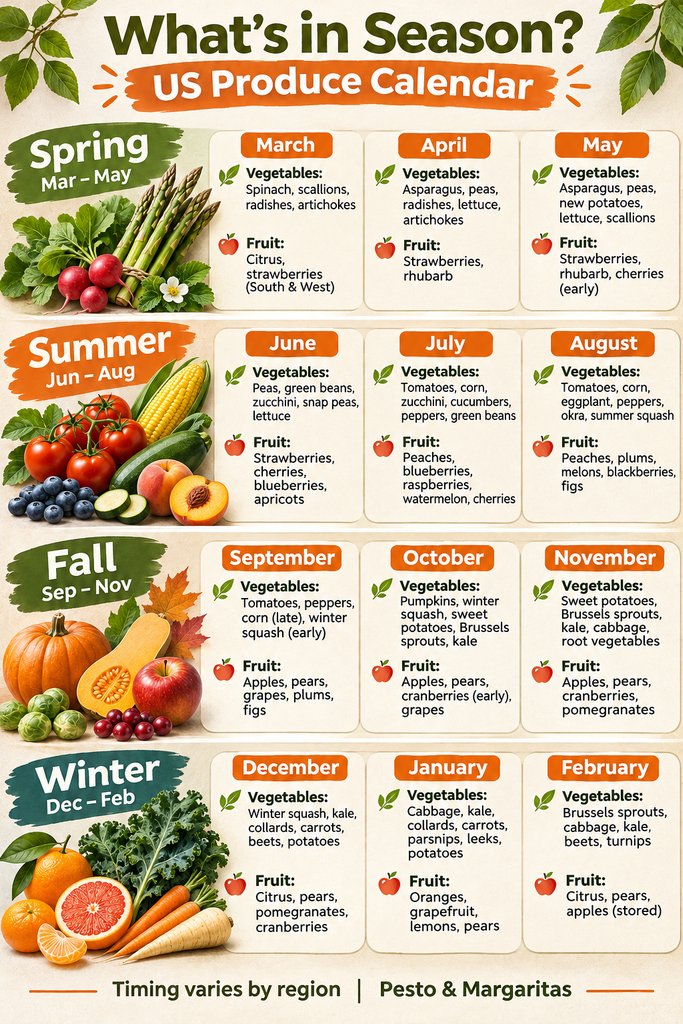
The South has the longest growing season. Spring crops arrive early, and the hottest months can slow down tender greens and some lettuces. Citrus and winter greens do well in the cooler months.
The Northeast has a shorter, intense growing season. Spring is late and summer is crowded, with tomatoes, corn and berries all arriving at once. Fall brings apples, squash and root vegetables.
The Midwest is corn, tomato and apple country. Summer produce arrives mid to late season, and storage crops like potatoes, onions and winter squash carry people through the colder months.
The West Coast is the most year-round of all. Farmers’ markets run for much of the year, and California in particular grows an enormous range, from artichokes and avocados in spring to citrus in winter.
🛒 Peak Season vs Year-Round Availability
Walk into a supermarket in January and you will still find tomatoes, berries and asparagus. Imports and long-distance shipping mean most produce is available all year.
Peak season is something different. It is when a crop is harvested close to home, at its best, and usually at its lowest price. A peak-season peach and a January peach are really two different fruits.
You can shop seasonally without changing your whole routine. A few easy habits help.
- Farmers’ markets: talk to the growers, who will tell you what is just arriving.
- CSA boxes: a weekly box of what the farm is picking is a built-in seasonal menu.
- Store flyers: supermarkets often discount what is plentiful, which tends to line up with the season.
- Frozen and canned: frozen produce is picked and frozen at its peak, so it is a smart fallback out of season.
📅 At-a-Glance Calendar: Month by Month
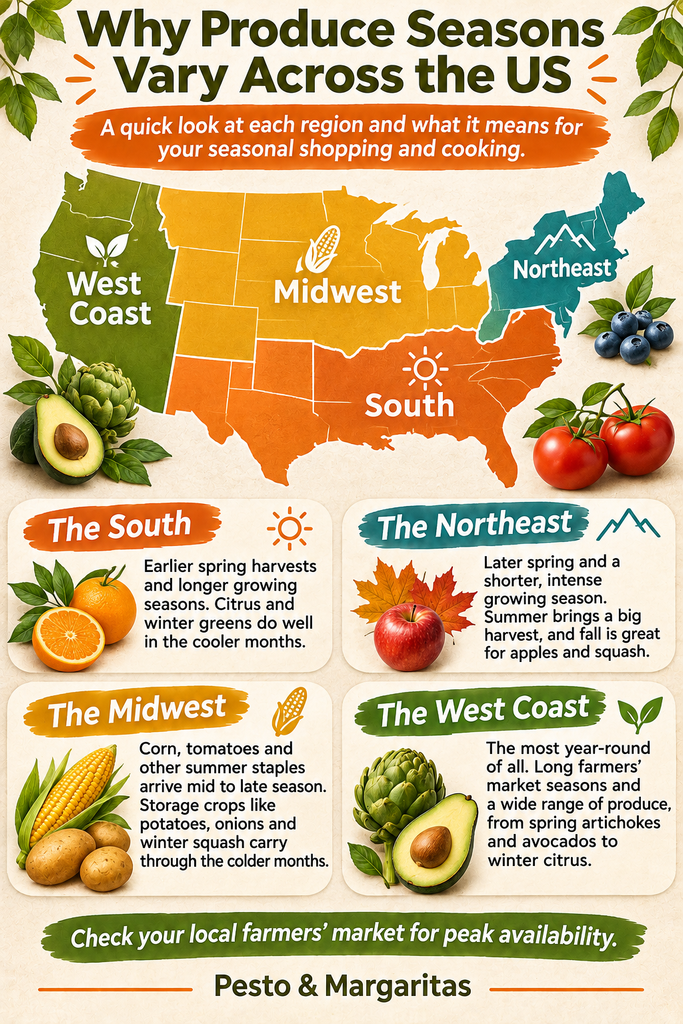
Use this table as a rough guide for much of the country. Availability depends on your region and growing zone, so expect it to run earlier in warmer areas and later in cooler ones.
| Month | Vegetables | Fruit |
|---|---|---|
| January | Cabbage, kale, collards, carrots, parsnips, leeks, potatoes | Oranges, grapefruit, lemons, pears |
| February | Brussels sprouts, cabbage, kale, beets, turnips | Citrus, pears, apples (stored) |
| March | Spinach, scallions, radishes, artichokes | Citrus, strawberries (South and West) |
| April | Asparagus, peas, radishes, lettuce, artichokes | Strawberries, rhubarb |
| May | Asparagus, peas, new potatoes, lettuce, scallions | Strawberries, rhubarb, cherries (early) |
| June | Peas, green beans, zucchini, snap peas, lettuce | Strawberries, cherries, blueberries, apricots |
| July | Tomatoes, corn, zucchini, cucumbers, peppers, green beans | Peaches, blueberries, raspberries, watermelon, cherries |
| August | Tomatoes, corn, eggplant, peppers, okra, summer squash | Peaches, plums, melons, blackberries, figs |
| September | Tomatoes, peppers, corn (late), winter squash (early) | Apples, pears, grapes, plums, figs |
| October | Pumpkins, winter squash, sweet potatoes, Brussels sprouts, kale | Apples, pears, cranberries (early), grapes |
| November | Sweet potatoes, Brussels sprouts, kale, cabbage, root vegetables | Apples, pears, cranberries, pomegranates |
| December | Winter squash, kale, collards, carrots, beets, potatoes | Citrus, pears, pomegranates, cranberries |
🌱 Spring: March to May
Spring is about tender, fresh flavors after a long winter. Greens, shoots and early fruit arrive first in the South and West, then spread north.
Best Spring Ingredients and How to Cook Them
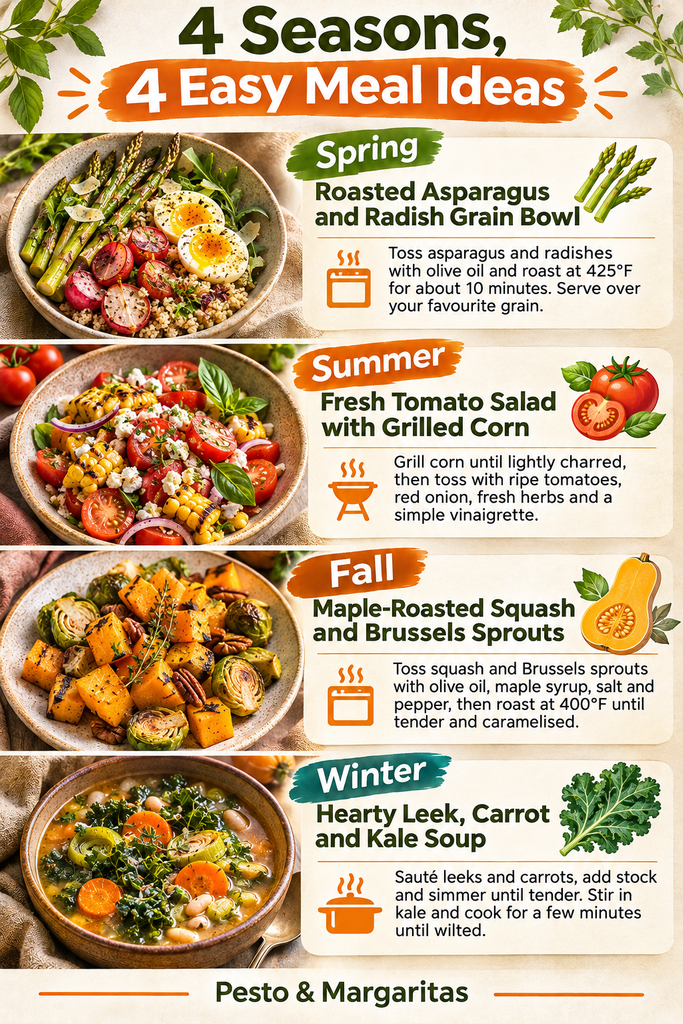
Asparagus: snap off the woody ends, toss the spears in olive oil and salt, and roast them at 425°F for about 10 minutes. For more ideas, see our guide to things to do with asparagus.
Peas and snap peas: cook them for only a minute or two in boiling water, or toss them raw into salads. Overcooking makes them dull and starchy.
Radishes: slice them thin for tacos and salads, or roast them whole to mellow the bite. They turn sweet and juicy in the oven.
Artichokes: steam whole artichokes for 30 to 45 minutes, then dip the leaves in melted butter or garlic mayonnaise. Baby artichokes can be halved and roasted.
Rhubarb: simmer chopped rhubarb with sugar until soft, then use it for compote, pies and crisps. It is tart, so it needs a sweetener.
Strawberries: the best ones taste fragrant and sweet from edge to edge. Eat them plain, or slice them over yogurt and shortcake.
Cook This Now: Spring
Roast a tray of asparagus and radishes, and serve them over a soft-boiled egg or grain bowl. It takes less than 20 minutes, and it tastes like the first warm day of the year. Our guide to eating seasonally in early spring has more ideas.
☀️ Summer: June to August
Summer is the easy season. The produce is so good that it needs almost nothing done to it.
Best Summer Ingredients and How to Cook Them
Tomatoes: slice them, add flaky salt, a drizzle of olive oil and torn basil, and you are done. Keep them on the counter, not in the fridge, so they stay flavorful.
Sweet corn: grill it in the husk, or boil it for just a few minutes. Brush it with butter or mayonnaise and chili powder. Our 8 things to do with corn has more.
Zucchini and summer squash: grill thick slices, shave them raw into salads, or sauté them with garlic. Do not overcook them, or they turn watery.
Peaches: eat them over the sink while they are juicy, or grill halves and serve them with ice cream. Our top 10 things to do with peaches is a good place to start.
Berries: blueberries, raspberries and blackberries are best eaten fresh. Fold them into pancakes, cobblers and salads.
Watermelon and melons: serve them cold, with salt, lime or feta. Wedges on a hot day need no recipe.
Cook This Now: Summer
Make a tomato salad with the ripest tomatoes you can find, and serve it with grilled corn on the side. If you want a wider plan, read our full guide to summer seasonal foods.
🍂 Fall: September to November
Fall is when the cooking gets cozy. Apples, squash and root vegetables bring sweet, earthy flavors, and the oven comes back into daily use.
Best Fall Ingredients and How to Cook Them
Apples: bake them, slice them into salads or simmer them into sauce. Use firm, tart varieties for baking, and sweeter ones for eating raw.
Pears: poach them in spiced syrup, or roast them with cheese and nuts. They are ripe when the neck gives slightly under gentle pressure.
Winter squash: butternut, acorn and delicata all roast well. Cut them in half, season with oil and salt, and bake at 400°F until tender. For storage tips, see how to store and freeze butternut squash.
Sweet potatoes: roast them whole, mash them or cut them into wedges. A hot oven brings out their natural sweetness.
Brussels sprouts: halve them and roast at high heat until the edges are dark and crisp. They taste nothing like the boiled kind.
Cranberries: cook fresh cranberries with sugar and orange for a quick sauce. They are very tart, so expect to add a sweetener.
Cook This Now: Fall
Roast squash and Brussels sprouts on one sheet pan, and finish with a drizzle of maple syrup or balsamic. For more ideas, browse our fall superfoods roundup.
❄️ Winter: December to February
Winter produce is sturdy and comforting. This is the season of citrus, cabbage and hearty greens that stand up to long, slow cooking.
Best Winter Ingredients and How to Cook Them
Citrus: oranges, grapefruit, lemons and tangerines are at their best now. Segment them into salads, or squeeze the juice into dressings and drinks.
Kale and collards: braise them slowly with garlic and a splash of vinegar, or massage raw kale with lemon juice for salads.
Cabbage: roast wedges until the edges char, or shred it for slaw. It is cheap, keeps for weeks and is more versatile than it looks.
Carrots and parsnips: roast them together with a little honey. Cold weather makes carrots taste sweeter.
Leeks: slice them, wash out the grit, and sauté them gently for soups and tarts.
Beets: roast them wrapped in foil, then peel and slice. They pair well with citrus and goat cheese.
Cook This Now: Winter
Make a big pot of soup using leeks, carrots and kale, and finish it with a squeeze of lemon. For more winter ideas, take a look at our winter seasonal foods guide and these easy February dinners.
🥬 Buying and Storing Seasonal Produce
Shopping seasonally only pays off if the food lasts until you cook it. A few storage habits make a big difference.
Leafy greens: wash, dry and wrap them in a clean towel in the fridge. A salad spinner removes excess water quickly, which helps greens stay crisp.
Root vegetables: store them somewhere cool and dark, and scrub them well before cooking. A good vegetable brush makes quick work of dirt on carrots, beets and potatoes.
Tomatoes and stone fruit: keep them on the counter until ripe, then eat them within a few days.
Berries: refrigerate them unwashed and rinse right before eating. Freeze extra berries on a tray, then bag them in heavy-duty freezer bags.
Herbs: treat tender herbs like flowers, with the stems in a jar of water, or wrap sturdy herbs in a damp paper towel.
One last habit is worth building. When you bring produce home, spend ten minutes sorting it. Wash and dry what needs it, put the most delicate items at the front of the fridge, and decide which two or three things you will cook first. That small reset cuts food waste more than any gadget.
💰 Why Seasonal Produce Tends to Cost Less and Taste Better
When a crop is at its peak, there is a lot of it. Growers have more to sell, shipping distances are often shorter, and prices tend to fall.
The fruit and vegetables are usually picked closer to ripeness, which tends to give better flavor. A summer tomato is the clearest example. It is not a rule, and some imported produce is excellent, but it is a reliable pattern.
Seasonal cooking can also make dinner easier. When the ingredients are good, you need fewer sauces and fewer steps. Salt, fat and acid do most of the work.
🧂 Pantry Staples That Make Seasonal Cooking Easier
You don’t need a long shopping list to cook seasonally. A small set of pantry staples turns almost any vegetable or fruit into a meal.
- Good olive oil and flaky salt: these two do most of the work for tomatoes, asparagus and sliced peaches.
- Acid: lemons, limes and a couple of vinegars (apple cider, red wine and balsamic) brighten rich fall and winter vegetables.
- Something crunchy: toasted nuts, seeds or breadcrumbs add texture to soft roasted vegetables.
- Something creamy: yogurt, goat cheese, ricotta or tahini balance sharp or bitter flavors.
- Fresh herbs: a handful of parsley, basil or dill can make a plain plate feel finished.
With those on hand, the produce can stay the star and the recipe can stay simple.
🍽️ A Sample Week of Seasonal Dinners
Here is how the idea works in practice. This sample week is built for a fall kitchen, but the same pattern works in any season.
- Monday: roasted sweet potato wedges with a yogurt and lime sauce.
- Tuesday: a sheet pan of sausage, Brussels sprouts and apple slices.
- Wednesday: a big pot of white bean and kale soup, with crusty bread.
- Thursday: roasted butternut squash over rice with toasted pecans and a drizzle of maple syrup.
- Friday: pizza topped with thin pear slices, blue cheese and arugula.
To adapt it, swap the vegetables for whatever is peaking in your area. In spring, think asparagus, peas and radishes. In summer, switch to tomatoes, corn and zucchini.
🌿 Don’t Forget the Less Obvious Seasonal Foods
Fruit and vegetables get most of the attention, but plenty of other foods have a season too. Fresh herbs, edible flowers, wild greens and even certain seafood and eggs follow a seasonal rhythm in many places.
Farmers’ markets are a great place to discover these. Ask the growers what they are excited about this week, and you might leave with ramps, garlic scapes, fennel or a fruit you have never cooked before.
Trying one unfamiliar ingredient a month is a low-pressure way to expand your cooking. If it turns out you don’t like it, you’ve lost very little, and if you love it, you’ve found a new favorite for next year.
🇬🇧 A Note for Readers Outside the US
If you are cooking in the UK, growing seasons and availability are quite different. We have a separate seasonal produce calendar for the UK written for British shops and weather.
📝 How to Use This Calendar Week to Week
Don’t try to memorize everything. Pick one or two ingredients each week, and build a few meals around them.
- Check the month in the table, and pick two vegetables and one fruit.
- Look at what is on sale at your market or store, and let that guide you.
- Choose one simple cooking method from the season sections.
- Cook the ingredient plain the first time, so you can taste it.
- Freeze or preserve any extra before it spoils.
After a few weeks, you will start to recognize the rhythm of the year without needing a chart.
❓ Frequently Asked Questions
What fruits and vegetables are in season right now?
Check the month in the calendar above. In November, for example, think sweet potatoes, Brussels sprouts, kale, apples, pears and cranberries.
Do seasons differ across the US?
Yes. Warmer states like Florida and California have earlier springs and longer seasons, while cooler states start later and finish sooner.
Is seasonal produce cheaper?
Often, because supply is high at peak harvest. Prices vary by region and store, so check your local market.
Is frozen produce a good option out of season?
Yes. Frozen fruit and vegetables are usually frozen soon after harvest, so they are a good fallback.
How do I find what is in season near me?
Visit a farmers’ market, join a CSA or ask the produce staff at your store. They know what is arriving.
