Bitters and Cordials: What They Are and Which Ones Your Home Bar Needs
Bitters and cordials are two of the most misunderstood bottles in a home bar. Bitters are potent, alcohol-based flavourings added a few dashes at a time, while a cordial is a sweet concentrate that you dilute or splash into a drink. Neither is essential, but one bottle of each covers a lot of classic recipes.
As an Amazon Associate I earn from qualifying purchases and sometimes recommend products from other sellers at no extra cost you. For more details see my disclosure policy and privacy policy.
Short answer: you do not need either to make a good drink. A bottle of Angostura turns a glass of bourbon into an Old Fashioned, and a bottle of lime cordial is what makes a Gimlet a Gimlet.
What are bitters?
Bitters are a neutral spirit infused with herbs, spices, fruit peel, seeds, roots or bark. Many began as medicinal tonics, and bartenders kept using them because a few drops add depth and balance to a drink.
There are two families, and they are easy to mix up. Cocktail bitters come in small bottles and go in by the dash. Drinkable bitters, such as Campari, are bottled like a liqueur and poured by the measure.
Cocktail bitters: the small bottles
Angostura aromatic bitters is the one to buy first. Dr Johann Siegert created it in Venezuela in 1824, and it has been made in Trinidad since 1875, as Angostura’s own history explains. At 44.7% ABV it is alcoholic, even though you only use a couple of dashes at a time.
It is the standard bottle for an Old Fashioned and a Manhattan. A few dashes in gin give you a pink gin.
Peychaud’s bitters comes from New Orleans and is now made at the Buffalo Trace Distillery in Kentucky. It is 35% ABV and lighter than Angostura, with anise and cherry notes. It is the defining bitters in a Sazerac.
Orange bitters is worth adding next. It brings a dry citrus note to a Martini and brightens bourbon and rye drinks. Non-alcoholic versions exist, but check the label, because the standard bottles are alcoholic.
Drinkable bitters: Campari, Aperol and amaro
Campari is an Italian bitter made from herbs and fruit, first created by Gaspare Campari around 1860. Its deep red colour and sharp bitterness anchor a Negroni and an Americano.
Aperol is the gentler option. The Barbieri brothers created it in Padua in 1919, and Campari Group bought the brand in 2003. At 11% ABV it is lighter, sweeter and more orange than Campari, and it is the base of an Aperol Spritz.
Amari such as Averna sit alongside these. They are Italian herbal liqueurs, usually sipped over ice after dinner, and some work well in cocktails too.
What are cordials?
The word means two things depending on where you are. In the UK, a cordial is a non-alcoholic concentrate that you dilute with water or soda, such as lime or elderflower cordial. In the US, cordial is an older word for a liqueur, so it usually contains alcohol.
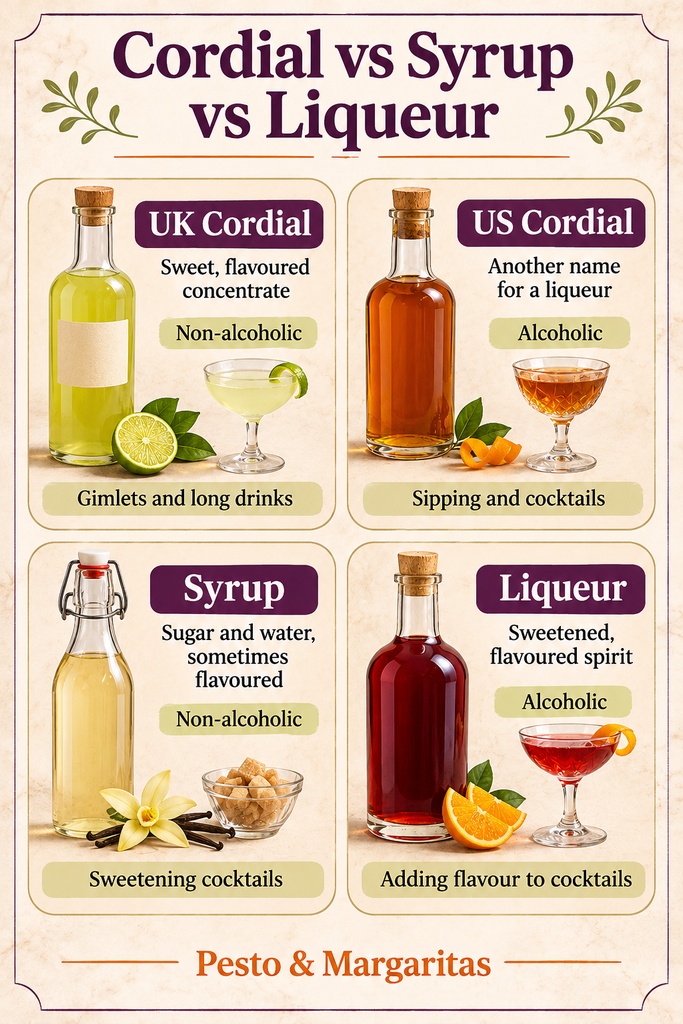
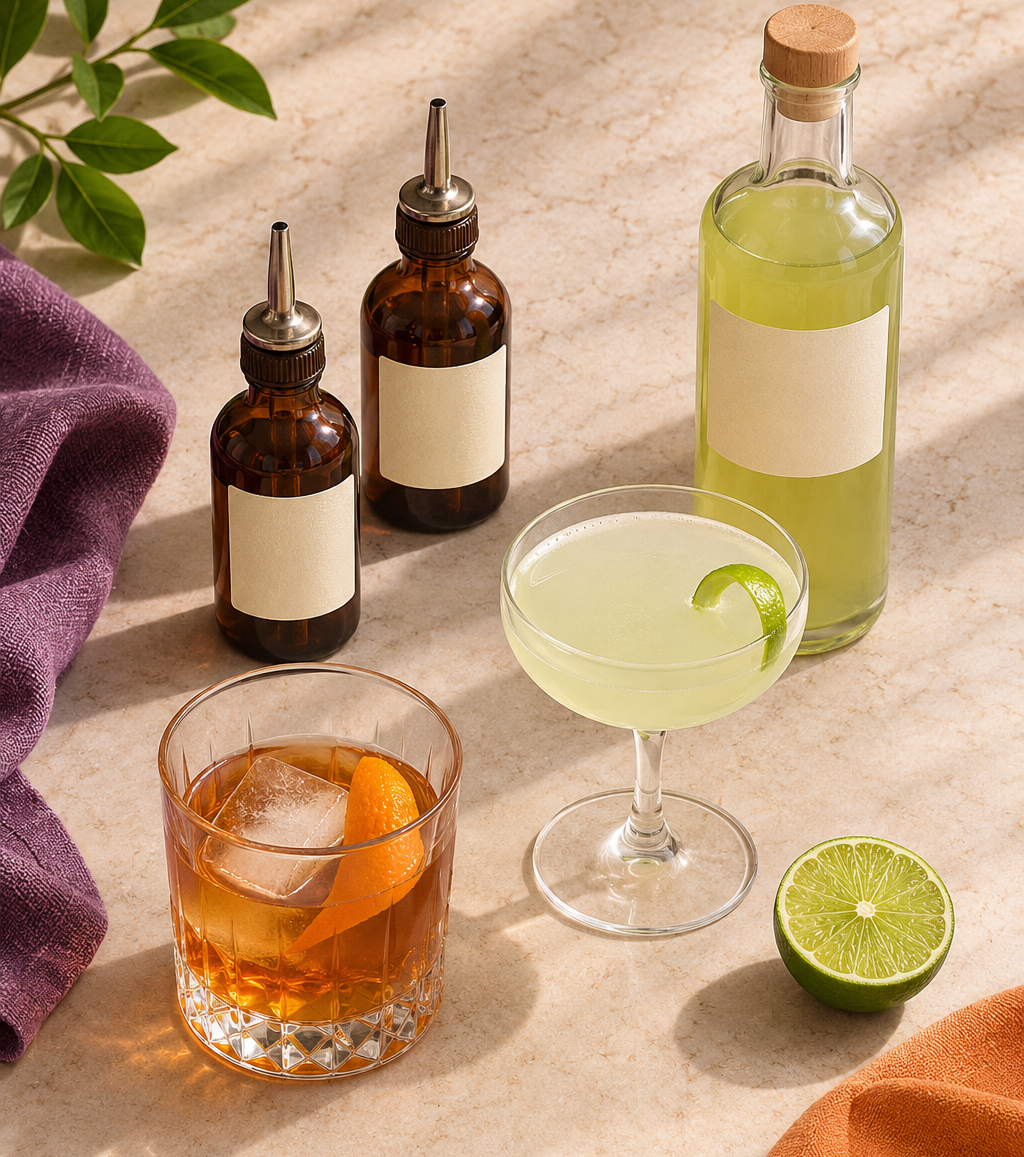
Cocktail recipes from British bartenders normally mean the UK type. The classic example is the Gimlet, made with gin and sweetened lime cordial in place of fresh juice. In a pinch, fresh lime juice and a little sugar syrup comes close, though it tastes fresher and sharper than the real thing.
Elderflower is the other common one. Elderflower cordial is a sweet, floral concentrate you can top up with soda or sparkling wine, while elderflower liqueur is its alcoholic cousin and goes into drinks by the measure.
One warning: some recipes online add lime cordial to a Hurricane, but it is not part of the recipe. The original used lemon juice and passion fruit syrup, and the modern version uses fresh lime juice.
Cordial vs syrup
A syrup is sugar dissolved in water, sometimes flavoured with herbs, spices or fruit. A cordial is also sweet and thick, but it is a flavoured concentrate meant to be diluted, often made with fruit juice or a flower infusion and sometimes a little citric acid.
| Term | What it is | Contains alcohol? | Typical use |
|---|---|---|---|
| Cordial (UK) | Sweet, flavoured concentrate, diluted before drinking | No | Gimlet, long drinks, soft drinks |
| Cordial (US) | Another word for a liqueur | Yes | Sipped, or used in cocktails |
| Syrup | Sugar and water, sometimes flavoured | No | Sweetening cocktails |
| Liqueur | Sweetened, flavoured spirit | Yes | Cocktail modifier |
Do you need bitters and cordials?
No. Plenty of good drinks use neither, and you can skip both until a recipe asks for them. If you want to start, buy in this order:
- Angostura aromatic bitters, for an Old Fashioned or a Manhattan
- Orange bitters, for Martinis and brighter bourbon drinks
- Peychaud’s bitters, if you want to make a Sazerac
- Lime cordial, only if you like a Gimlet
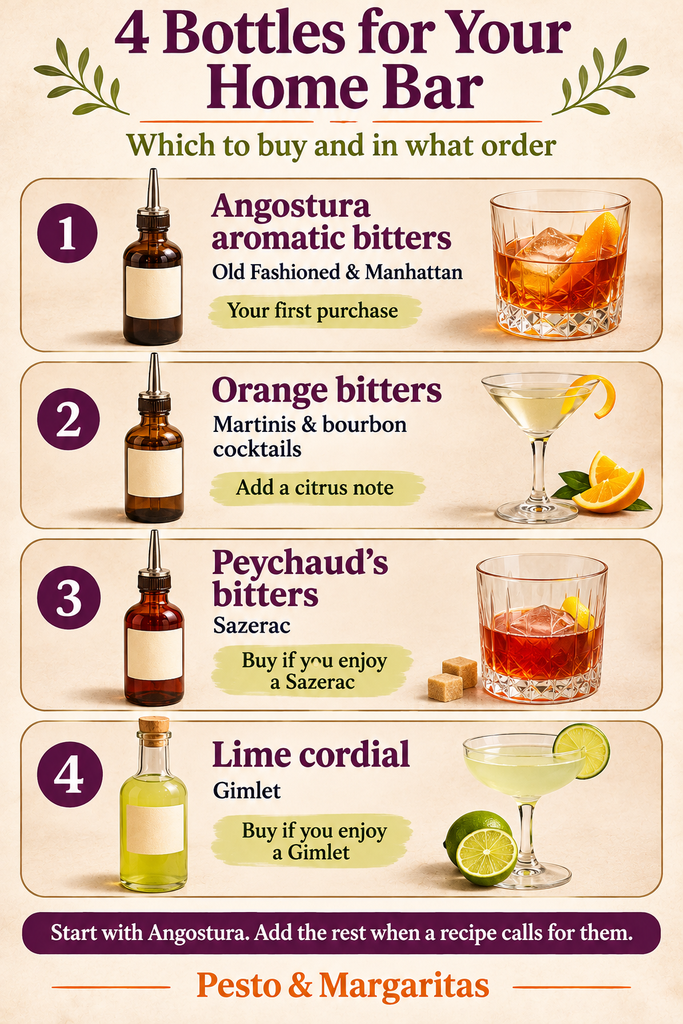
A bottle of bitters lasts a long time because each drink uses so little, which makes it the cheapest upgrade for a home bar. If you like bourbon and rye, put it to work in these best whiskey cocktails.
Bitters add depth and cordials add sweetness, so start with a bottle of Angostura and add the rest when a recipe asks for it.
FAQs
What is the purpose of bitters?
Bitters add depth, aroma and balance to a drink. A couple of dashes are enough to bring spice, citrus or herbal notes without changing the drink’s character.
Do bitters contain alcohol?
Standard cocktail bitters do. Angostura is 44.7% ABV and Peychaud’s is 35%, though you only use a few dashes at a time. Non-alcoholic versions exist and are labelled as such.
What is a cordial in a cocktail?
In UK recipes it is a sweet, flavoured concentrate such as lime cordial, used in a Gimlet. In US recipes it can mean a liqueur, so check which one the recipe wants.
What is the difference between a cordial and a syrup?
A syrup is sugar and water. A cordial is a flavoured concentrate, often made with fruit juice or a flower infusion, that you dilute before drinking.