
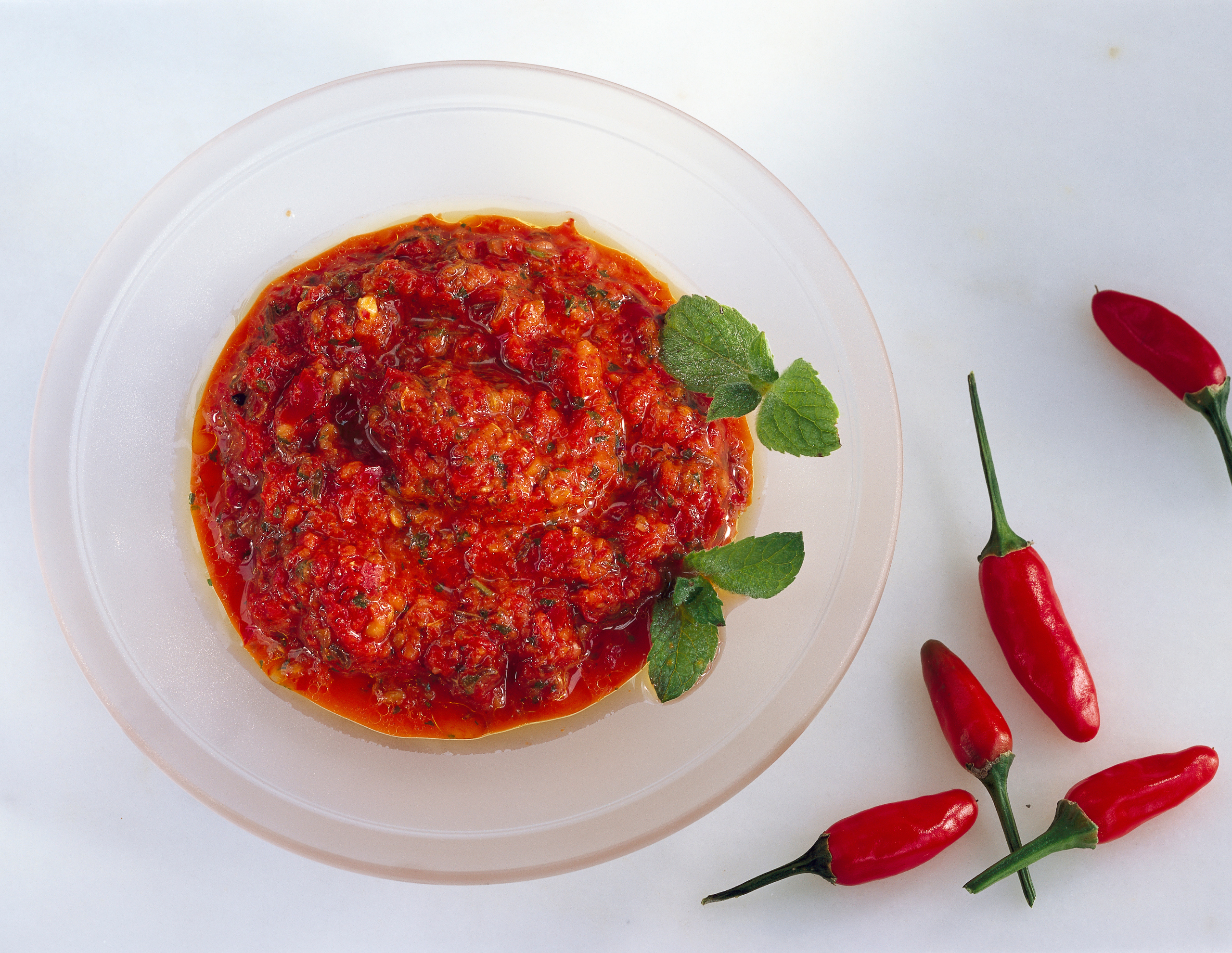
5 Easy Weeknight Dinners Using One New Ingredient: Harissa
If you’ve ever opened your fridge at 6pm with no plan and zero inspiration, harissa is the ingredient that could genuinely change that. One jar — from the condiment aisle, usually sitting quietly next to the tahini — can turn plain chicken into something you’d happily serve at a dinner party, make a can of chickpeas taste rich and complex, or pull together a tray-bake that smells incredible from the moment it hits the oven.
As an Amazon Associate I earn from qualifying purchases and sometimes recommend products from other sellers at no extra cost you. For more details see my disclosure policy and privacy policy.
⚡ A Quick Look at This Post
What is this post about? Five easy weeknight dinners using harissa paste — a smoky North African chilli condiment that transforms into sauces, marinades, and tray-bake coatings in minutes.
💡 Quick tip: Rose harissa is the best starting point if you’re new to the ingredient — it’s floral and rounded rather than fiery, and pairs beautifully with yoghurt, chicken, and roasted vegetables.
This post is built around a simple idea: one new ingredient, five real weeknight dinners. Each recipe comes with a quick sauce formula so you can riff on it, and there’s guidance on how to dial the heat up or down depending on who’s eating.
What Is Harissa?
Harissa is a North African chilli paste — rooted in Tunisian cooking, though it’s now made and used across the Middle East and North Africa. At its most traditional, it’s built from roasted red chillies, garlic, caraway seeds, coriander, and olive oil. The result is thick, intensely flavoured, and deeply fragrant. It’s not just heat — there’s a smokiness, a floral depth, and an earthiness that makes it far more interesting than a standard hot sauce.
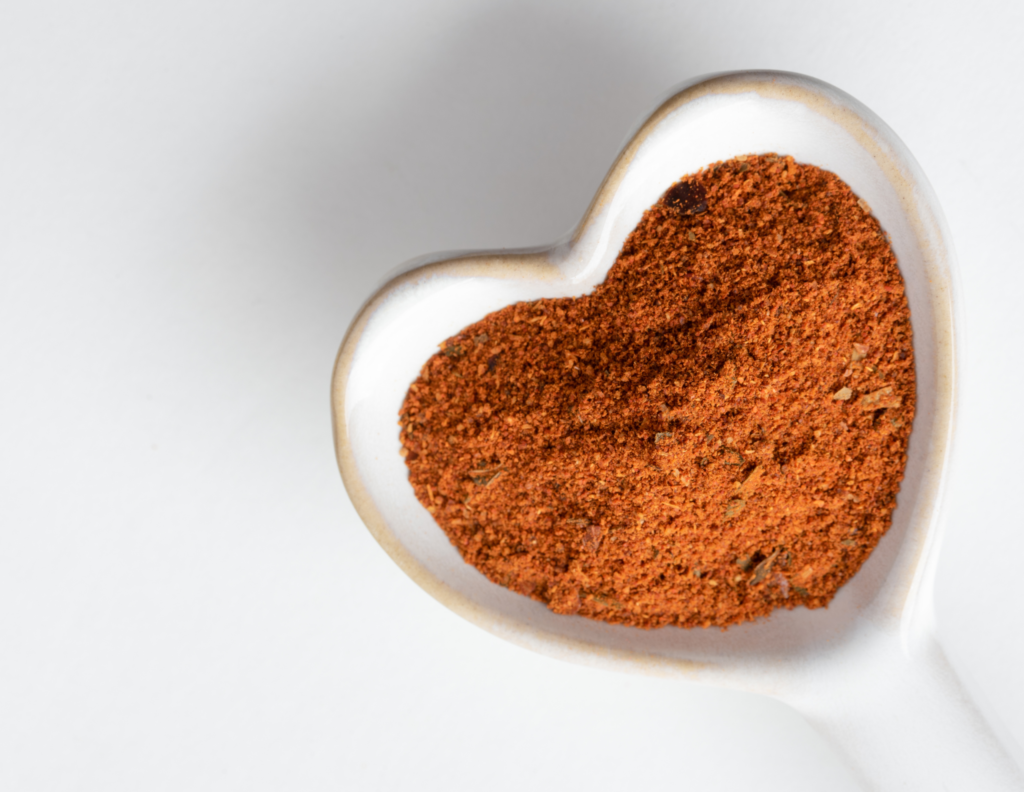
You’ll find it in most supermarkets now, usually in small jars or tubes, and it comes in a few different styles. Classic Tunisian harissa — brands like Le Phare du Cap Bon — is more traditional, with a punchy chilli-forward flavour. Rose harissa, like Belazu’s widely available version, adds rose petals to the mix and is floral, rounded, and notably less aggressive on the heat. If you’re picking up your first jar, rose harissa is a great starting point, especially if you’re cooking for anyone who’s sensitive to spice.
The Mild vs Spicy Path
One of the best things about harissa is how easy it is to steer the heat level. For a milder result, use rose harissa or a branded mild version, and combine it with Greek yoghurt, coconut milk, or a little honey to soften the chilli. For something with more fire, go for a traditional Tunisian-style paste and keep the rest of the dish simple — the spice itself becomes the centrepiece rather than the background. Both approaches make excellent weeknight dinners; it’s just a question of your mood and your audience.
The Simple Harissa Sauce Formula
Before we get to the five dinners, it helps to understand how harissa works as a sauce base. The paste is very forgiving to cook with, and once you know the basic formula, you can adapt it to almost anything in your fridge.
Harissa + something creamy + something acidic + something sweet = a great sauce
In practice, that looks like: harissa paste, a spoonful of yoghurt or coconut milk, a squeeze of lemon or orange juice, and a drizzle of honey. You can loosen it with olive oil for a marinade, stir it into tomato sauce for a pasta-style base, or leave it thick for coating vegetables before roasting. The paste also works stirred into mayonnaise for a quick harissa mayo that does serious work on sandwiches, burgers, and roasted veg.
Here are four quick sauce ideas to keep in your back pocket:
- Harissa yoghurt — stir harissa into Greek yoghurt with lemon juice and a pinch of salt; serve as a dip, drizzle, or marinade
- Harissa mayo — mix harissa into mayonnaise; works beautifully on wraps, burgers, and roasted cauliflower
- Harissa oil — loosen harissa with olive oil and a squeeze of lemon to create a fast marinade for chicken, fish, or vegetables
- Harissa orange glaze — whisk harissa with orange juice and a little honey for a sweet-heat glaze that’s especially good on chicken or salmon
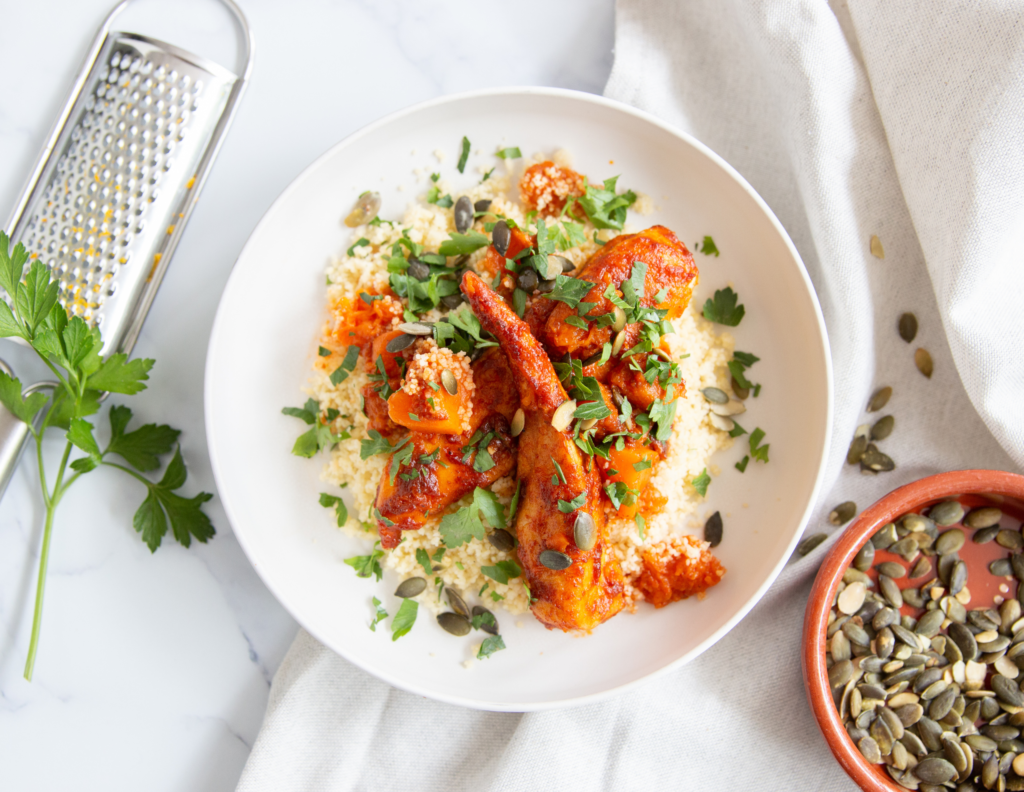
5 Easy Weeknight Harissa Dinners
1. Harissa Chicken Traybake with Potatoes and Onions
This is the dinner to make when you want something that feels properly homemade but only requires about ten minutes of hands-on time. It’s a sheet-pan format — everything goes in together, the oven does the work, and you’re left with sticky, caramelised chicken and soft, flavour-soaked potatoes that have been sitting in the harissa oil the whole time.
The method: mix harissa paste with olive oil, cumin, salt, and a squeeze of lemon. Coat bone-in chicken thighs and drumsticks generously, then arrange them in a roasting tin with sliced potatoes and red onion wedges. Roast at 200°C / 180°C fan for about 40 minutes, turning the vegetables halfway through, until the chicken is cooked through and everything is golden at the edges. Serve straight from the tin with a big spoonful of harissa yoghurt on the side.
Mild version: Use rose harissa and add a drizzle of honey to the marinade. The sweetness softens the heat and creates an almost sticky glaze on the chicken skin.
Spicy version: Use a traditional-style harissa and add a pinch of smoked paprika or cayenne to the marinade. Make sure the yoghurt is on the table — it’s the essential cooling element here.
2. One-Pan Harissa Chicken and Broccoli
This one takes under 30 minutes and gives you that “fast but feels special” quality that’s hard to find on a Tuesday evening. It’s built around a harissa glaze that you add towards the end of cooking, so the chicken stays juicy and the broccoli gets those slightly charred edges that make it worth eating.
Start by pan-frying chicken breast or thighs in a hot, oiled skillet until golden on both sides. While the chicken rests, add broccoli florets to the same pan with a splash of water and let them steam for a couple of minutes. Mix harissa with orange juice and honey to make your glaze, then pour it over everything and cook for another two to three minutes until the sauce is thick and sticky. If you often find broccoli a bit dull, a glaze like this is a genuine revelation — especially if you usually serve it plain as a side. Take a look at our 7 things to do with broccoli for more ways to make it the main event.
Mild version: Use rose harissa and a generous amount of honey in the glaze. Add a small splash of coconut milk to the pan for a creamy sauce rather than a sticky one.
Spicy version: Use traditional harissa and skip the honey. Add a pinch of chilli flakes along with the glaze for extra heat.
3. Creamy Harissa Chickpeas
This is the vegetarian option, and it genuinely doesn’t feel like a compromise. A one-pan chickpea dinner built around harissa, tomato, and coconut milk is rich, warming, and filling — the kind of thing that works equally well on a cold weeknight or when you’re trying to stretch what’s in the cupboard. It’s also naturally dairy-free, which makes it a good option when you’re cooking for mixed dietary needs.
The method: fry a diced onion and a couple of crushed garlic cloves in olive oil until soft. Add harissa paste and stir it through the onion for about a minute — this is where the kitchen starts to smell very good. Add a tin of chopped tomatoes, a tin of drained chickpeas, and half a tin of coconut milk. Simmer for 15 minutes until the sauce is thick and the chickpeas have taken on the flavour of everything around them. Serve with flatbreads, pitta, or just a big spoon.
Mild version: Use rose harissa and a full tin of coconut milk rather than half — it creates a creamier, gentler sauce that’s still very flavourful.
Spicy version: Use traditional harissa and add a pinch of cayenne with the paste. A squeeze of lemon at the end lifts the heat nicely.
4. Harissa Sheet-Pan Chicken with Cauliflower and Onion
The beauty of this one is how simple it is. You’re essentially coating everything in a harissa-olive oil mix and letting the oven do its thing — no babysitting required. Cauliflower is an excellent companion for harissa because it soaks up the paste beautifully and takes on a wonderful colour as it roasts. If you’ve been stuck serving it plain or steamed, this is a strong argument for reconsidering. Our guide to cauliflower substitutes and how to use it has more ideas if you end up becoming a fan.
Coat chicken thighs and cauliflower florets in a mix of harissa, olive oil, cumin, and salt. Arrange in a single layer on a large baking tray with sliced onion, making sure nothing is overcrowded — that’s how you get roasting rather than steaming. Cook at 200°C / 180°C fan for 35–40 minutes, until the chicken is cooked and the cauliflower has caught some colour at the edges. Finish with a handful of chopped fresh parsley and a squeeze of lemon.
Mild version: Rose harissa works brilliantly here. Add a small drizzle of honey to the coating and a spoonful of yoghurt on the side.
Spicy version: Traditional harissa with extra chilli flakes in the coating. The cauliflower absorbs the heat well, so don’t be shy.
5. One-Pot Harissa Chicken and Rice
This is the dinner that makes harissa feel genuinely essential rather than optional. Rice cooked in a harissa-spiced broth absorbs everything — the heat, the smokiness, the sweetness if you’ve added honey or orange juice — and what comes out is a complete, deeply flavoured meal from one pot. It’s the kind of dinner that tastes like it took longer than it did.
Brown seasoned chicken thighs in a wide, deep pan until golden on both sides, then remove and set aside. Add diced onion to the same pan and cook until soft. Stir in harissa paste, garlic, and cumin, then add long-grain rice and stir to coat it in the spiced oil. Pour in chicken stock — roughly double the volume of rice — then nestle the chicken back in, skin side up. Cover and cook on a low heat for 20–25 minutes until the rice has absorbed the stock and the chicken is cooked through. Add a squeeze of orange or a handful of dried dates at the start if you want a sweeter, more complex flavour profile.
Mild version: Rose harissa with orange juice stirred into the stock. The citrus and floral notes make this version feel almost fragrant rather than spicy.
Spicy version: Traditional harissa with a pinch of cayenne in the stock. Keep the accompaniments simple — a dollop of yoghurt and some fresh coriander are all you need.
Picking Your Harissa: A Quick Brand Guide
You don’t need to overthink this, but it helps to know what you’re buying — especially if you’ve had a bad experience with an overly hot version that put you off the ingredient entirely.
For UK cooks, Belazu Rose Harissa is widely available and a genuinely excellent starting point. It’s floral, rounded, and good for anyone who wants harissa flavour without too much chilli heat. Le Phare du Cap Bon is the more traditional Tunisian option — roasted red chillies, garlic, caraway, and coriander — and it’s significantly more punchy. Cooks’ Ingredients Rose Harissa Paste (Waitrose) is another reliable and accessible option. If you want a shortcut sauce rather than a pure paste, Al’Fez Smoky Harissa Tagine Sauce does the work for you.

For US cooks, Mina Harissa has a clean ingredient list and works well as both a sauce and a spread. Trader Joe’s Traditional Tunisian Harissa is a good Tunisian-style option from a widely accessible retailer. If you’d rather keep things in the spice cupboard, McCormick Gourmet Harissa Seasoning is a dry version worth knowing about.
Once you’ve got a jar open, keep it in the fridge and use a clean spoon each time — it’ll last for several months without any issues. Harissa is a condiment that earns its place on the shelf.
A Few Final Tips
The five dinners above follow a loose structure — one traybake, one skillet, one vegetarian option, one tray-roast, one one-pot — so you can slot them into any week depending on what you have and how much washing up you’re willing to do. All of them work well for batch cooking, too: the chickpeas and the chicken and rice both reheat beautifully, and the traybake is arguably even better the day after, eaten cold from the fridge with a flatbread.
If you want to take harissa further, it’s also a natural partner for lamb, white fish, and roasted root vegetables. If you’re working through a jar and want new ideas, stirring a spoonful into a soup or stew at the end of cooking is an easy way to add depth without reworking the whole dish. Our guide to using spice substitutes has some useful context on how chilli-based pastes fit into broader cooking, if you want to read more about layering flavour.
The main thing is to start. One jar, one dinner, and you’ll wonder why you waited.
Continue Your Journey
- The Ultimate Spice Substitute Guide: Never Run Out of Flavour Again — when harissa isn’t to hand, here’s what else works
- Everything You Need to Know About Chili Peppers: Types, Heat Levels, and Recipes — understand the chilli world harissa sits in
- Substitutes for Cauliflower in Your Recipes — useful if you want to swap out the veg in the sheet-pan dinner
- 7 Things to Do with Broccoli — more inspiration for the one-pan harissa chicken
- Slow Cooker Magic: The Ultimate Guide to Ingredient Substitutes — if you want to adapt any of these recipes for a slow cooker
Which dinner are you making first? Drop a comment below — and if you end up going off-piste with the harissa sauce formula, tell us what you came up with.
Want more one-ingredient weeknight ideas delivered to your inbox? Sign up for the Pesto & Margaritas newsletter — new posts, seasonal recipe ideas, and practical cooking shortcuts, straight to you.


