Substitutes for Celery: What to Use in Soups and Stocks
Out of celery and already elbow-deep in a pot of stock? You’re not stuck. Celery plays a specific job in soups and stocks, and once you know what that job actually is, swapping it out gets a lot less stressful.
As an Amazon Associate I earn from qualifying purchases and sometimes recommend products from other sellers at no extra cost you. For more details see my disclosure policy and privacy policy.
This guide sticks to soups and stocks specifically, because that’s where most “what can I use instead of celery” searches actually start. A substitute that works beautifully in a tuna salad can fall completely flat in a simmered stock, so general “celery substitute” lists aren’t much help here.
The right substitute really comes down to one question: are you chasing celery’s flavour, or just its crunch? We’ve split the options below along exactly that line, so you can skip straight to the section that matches what you’re actually missing.
🥣 Why Celery Is in Your Soup in the First Place
Celery is one-third of the classic mirepoix, alongside onion and carrot (our onion substitute guide and carrot substitute guide are worth a look if you’re missing more than one). Its job is to build a savoury, slightly bitter aromatic base while the vegetables sweat down at the start of a recipe.
In stocks, celery does something similar but over a longer, gentler simmer, adding depth without dominating the pot. It’s a background player, not a star, which is exactly why it’s easier to substitute than people expect.
That background role matters when you’re choosing a swap. You’re not trying to recreate a strong, distinct flavour the way you might with a headline ingredient. You’re aiming to fill the same quiet, savoury gap, which gives you more flexibility than a straight ingredient swap usually allows.
Which Celery Substitute Should You Use?
1. What are you making?
2. What do you actually need from the substitute?
3. Is anyone eating this allergic to celery?
🌿 Best Flavour-Matched Substitutes
If you want the pot to taste as close to “normal” as possible, reach for one of these.
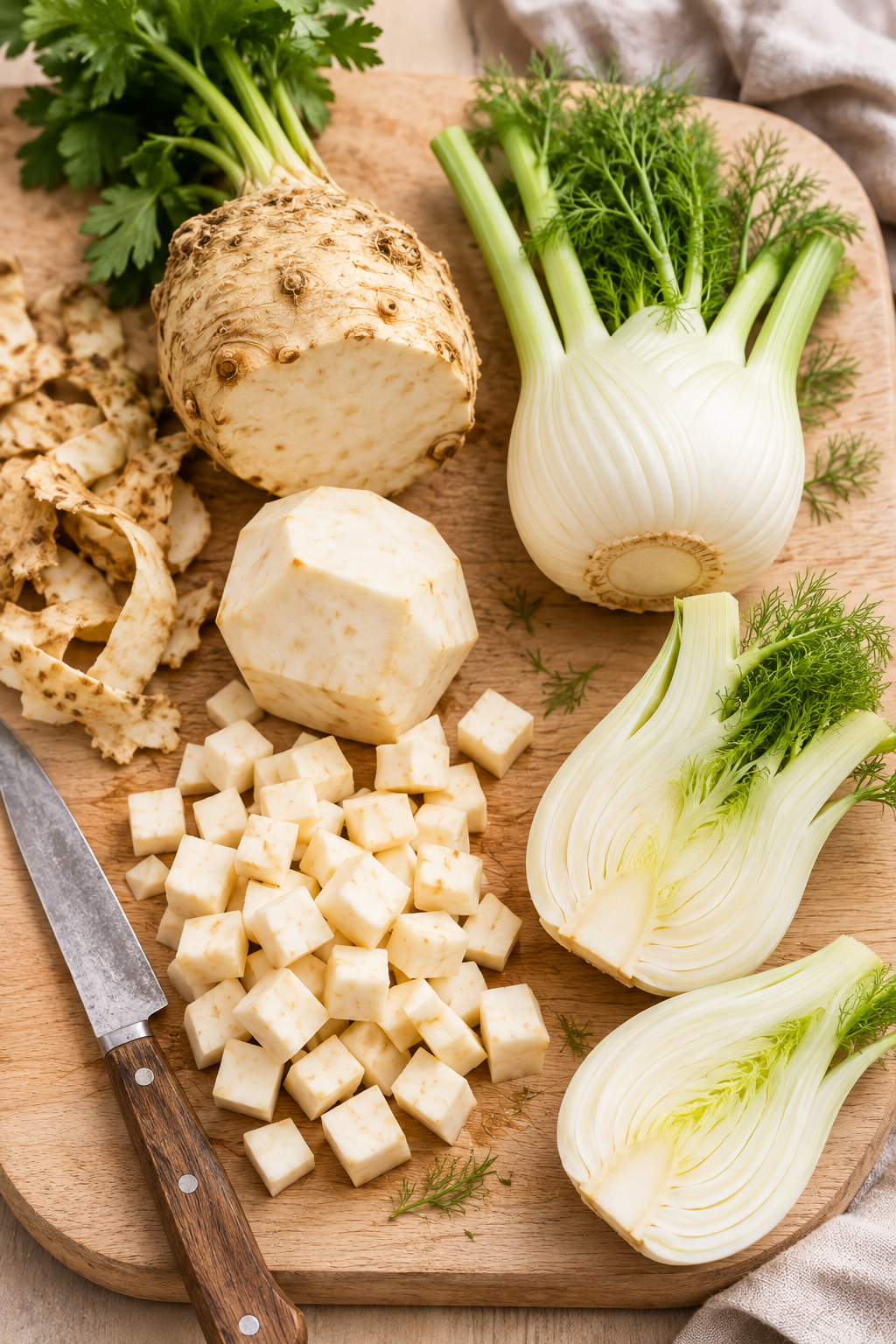
- Celeriac (celery root): the closest flavour match by far, since it comes from a close relation of the same plant and carries a similar aromatic profile. Peel and dice it to match your celery’s ¼-inch cubes and use it 1:1.
- Celery seed: a good pantry-shelf fallback when you have no fresh celery-family vegetables at all. Use about ⅛ to ¼ teaspoon per stalk of celery called for, added at the same point you’d sauté your aromatics.
- Fennel bulb: milder and sweeter than celery, with a faint aniseed note that mellows a lot once cooked. Because the flavour is stronger than celery’s, use it at around 75% of the amount, diced small.
None of these are a perfect 1:1 flavour match for fresh celery, and it’s worth being upfront about that rather than promising an identical result. They’ll shift the pot’s flavour slightly, just in a direction that still works in a savoury soup or stock rather than fighting it.
If you’re working with a recipe that leans on celery early, in a sauté with onion and carrot, celeriac is the safest first choice since it holds up to that initial cooking stage the same way fresh celery does. Fennel is worth reaching for when you’d actually welcome a bit of sweetness in the finished pot, like a tomato-based soup or a lighter chicken broth.
🥬 Best Texture and Crunch Substitutes
Sometimes it’s the crunch you’re after, not the celery taste itself, especially in a soup that isn’t blended smooth.
- Bell pepper: diced small, it brings a clean, mild crunch without adding much flavour of its own. Use 1:1.
- Cabbage: finely shredded cabbage holds its bite well through a simmer and stays fairly neutral in flavour. Use 1:1.
- Bok choy: the stalks (not the leafy tops) give a mild, faintly sweet crunch that works nicely in brothy soups. Dice and use 1:1.
Any of these three will disappear happily into a broccoli and cheddar soupmaker soup or a chunky vegetable base without pulling focus. Because they’re mild rather than aromatic, they’re best added a little later in the cooking process than celery would normally go in, closer to when you’d add other quick-cooking vegetables, so they keep some bite instead of turning fully soft.
⚠️ A Note for Celery-Allergic Cooks
If celery is off the table because of an allergy rather than an empty crisper drawer, skip celeriac. It’s harvested from a close relation of celery and shares much of the same allergen profile, so it’s not a safe swap here.
Some people with a celery allergy also react to other Apiaceae-family vegetables, including fennel, carrot, and parsnip, particularly when the allergy is linked to birch or mugwort pollen sensitivity. This varies a lot from person to person, so if you’re cooking for someone with a diagnosed celery allergy, bell pepper, cabbage, or bok choy are the safer texture-only picks, and it’s worth checking with their allergist before introducing any Apiaceae substitute.
📋 Quick-Reference Substitution Chart
| Instead of celery, use… | Ratio | Best for |
|---|---|---|
| Celeriac | 1:1, diced | Closest overall flavour match |
| Celery seed | ⅛–¼ tsp per stalk | No fresh substitute on hand |
| Fennel bulb | 75% of the amount, diced | Flavour, with a milder edge |
| Bell pepper | 1:1, diced | Crunch, neutral flavour |
| Cabbage | 1:1, shredded | Crunch, holds up in broth |
| Bok choy (stalks) | 1:1, diced | Mild, sweet crunch |
A sharp vegetable peeler makes quick work of celeriac’s knobbly skin, and a slicer with adjustable settings helps you get fennel or cabbage down to a fine, even dice so it cooks at the same pace as the rest of your mirepoix.
For dietary swaps elsewhere in the pot, our cabbage substitute guide covers more ground if you’re missing that too. And if this is only one gap in a longer shopping list, our onion and carrot substitute guides are worth checking before you start cooking, since a missing mirepoix vegetable rarely travels alone.
Once you’ve settled on a swap, taste and adjust as you go rather than trusting the ratio blindly. Every stock and soup base is a little different, and a spoonful part-way through will tell you far more than any chart can.