
Potato Substitutes: Best Swaps for Low-Carb and Allergy-Friendly Cooking
Potato is the vegetable most of us reach for without thinking, so the moment you actually need to swap it out, it’s easy to feel stuck. Whether you’re cutting carbs, working around a nightshade allergy, or just staring at an empty veg drawer at dinnertime, the right potato substitute depends entirely on what you’re cooking and why you’re swapping. This guide walks through the best options for each situation, plus exactly how to use them so the result still tastes like a proper meal.
As an Amazon Associate I earn from qualifying purchases and sometimes recommend products from other sellers at no extra cost you. For more details see my disclosure policy and privacy policy.
Quick Answer
Potato substitutes are useful for two main reasons: cutting carbs or avoiding nightshades. For low-carb cooking, cauliflower, turnip, celeriac, and radish are the best swaps. For a nightshade-free diet, reach for turnip, celeriac, parsnip, or cassava instead of potato, and skip sweet potato if nightshades are the issue since it isn’t actually a nightshade-free fix for that particular reason (more on that below). No substitute tastes exactly like potato, but each one earns its place in a specific dish.
Why People Look for a Potato Substitute
Potatoes are one of the most-cooked vegetables in the average kitchen, so it’s no surprise that when you need to swap them out, it can feel like losing your culinary anchor. There are three common reasons this comes up.
The most frequent is a low-carb or keto goal. A medium potato carries close to 30g of carbohydrate before you’ve added a scrap of butter, which puts it firmly off-limits for anyone tracking carbs closely.
The second is a nightshade allergy or intolerance. Potatoes belong to the nightshade family alongside tomatoes, peppers, and aubergine (eggplant), and some people find they need to avoid the whole group.
The third reason is simpler: you’ve just run out, and dinner needs a starchy stand-in tonight. Whatever brought you here, the right substitute depends on what you’re actually cooking, so let’s break it down by goal and then by method.
Best Low-Carb Potato Swaps
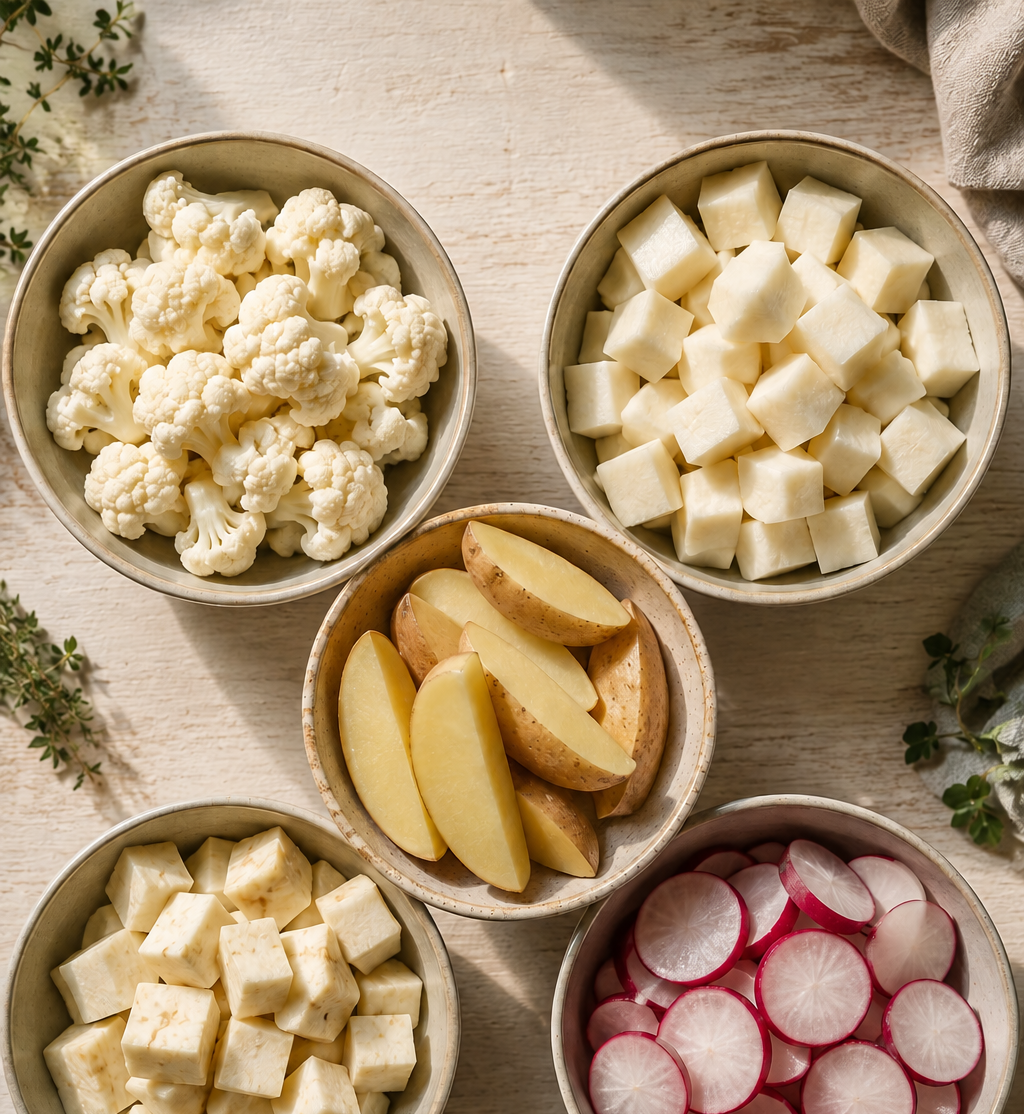
If keto or low-carb eating is the goal, these four vegetables consistently perform best in place of potato. None of them behaves identically to potato, but each has a specific strength worth knowing.
- Cauliflower is the most versatile low-carb swap. It mashes well once well-drained, rices easily for a “hash” style side, and roasts to a pleasant caramelised edge, though it will never hold a knife-cut shape the way a roast potato does.
- Turnip roasts and mashes with a texture closer to potato than most people expect, with a mild peppery note that mellows a lot with cooking. It’s a strong choice for stews and roasts.
- Celeriac (celery root) has a firm, starchy texture that makes it the best option for chips, fries, and roasting where you want some bite to survive. Peel it generously, since the skin is thick and knobbly.
- Radish, especially daikon, is the lowest-carb of the group and works surprisingly well roasted or braised, where its peppery raw bite mellows into something closer to a mild turnip.
For context on how these actually compare, cauliflower and daikon radish come in lowest for carbohydrate content, turnip sits in the middle, and celeriac is the highest of the four, though still well below potato. Exact numbers shift depending on the source and how the vegetable is prepared, so treat any specific gram count as a rough guide rather than gospel, and check your own tracking app if precision matters for your plan.
Nightshade-Free and Allergy-Safe Swaps
If the issue is nightshades rather than carbs, the vegetable list changes slightly, because a couple of the low-carb favourites above are also fine here, but a popular “obvious” swap is not.
Sweet potato is not nightshade-free. This trips people up constantly because the name suggests a close relative, but sweet potato is actually a morning glory relative, not a nightshade at all. If your reason for avoiding potato is nightshade sensitivity rather than carbs, sweet potato is genuinely one of your safest and easiest swaps, not a substitute you need to avoid. If you’re here because of carbs specifically, though, sweet potato won’t help since it carries a similar carbohydrate load to white potato.
Good nightshade-free options across both goals include turnip, celeriac, parsnip, and cassava (the root that tapioca comes from). Parsnip in particular roasts beautifully and has a natural sweetness that plays well in mash. If you’re managing a suspected nightshade sensitivity, it’s worth speaking with a doctor or dietitian before cutting out a whole food family long-term, since an elimination approach done without guidance can get confusing fast.
Best Substitute by Cooking Method
The “best” potato substitute really depends on what you’re making. Here’s how the main contenders stack up by method.
Mashing: Cauliflower and turnip both mash well once thoroughly drained of excess water. Parsnip mash is sweeter and pairs particularly well with roast dinners.
Roasting: Celeriac and turnip hold their shape best and develop good caramelisation. Cut them slightly smaller than you would potato, since they can take longer to cook through.
Frying and chips: Celeriac is the standout here, since its firm, starchy texture survives the fryer or oven better than the softer options. Our guide to choosing the right potato for any dish covers the same principle for potato itself, and the logic carries over: firmer vegetables make better chips.
Soups and stews: Turnip and celeriac both hold their shape in a simmering pot rather than dissolving, which makes them reliable potato stand-ins in a Sunday stew.
Texture and Flavour Trade-Offs
It’s worth being upfront: none of these substitutes taste or feel exactly like potato, and any guide that claims otherwise is overselling it. Cauliflower has a lighter, slightly sweeter flavour and a softer bite once cooked through. Turnip brings a mild peppery edge. Celeriac has a faint celery note that’s more pronounced raw than cooked. Radish keeps a little of its sharpness even after cooking, though it mellows significantly.
None of that is a bad thing, it just means you’re cooking a different vegetable, not a potato in disguise. Season and cook each one on its own terms rather than expecting a one-to-one match.
Simple Swap Ratios
As a starting point for recipe adaptation, swap potato for any of these substitutes at a 1:1 volume ratio, then adjust cooking time.
- Cauliflower and radish cook faster than potato, so start checking doneness several minutes earlier than the recipe states.
- Turnip and celeriac are denser and often need slightly longer than potato to become fork-tender, particularly in larger cuts.
- All of these substitutes release more water than potato when roasted, so give roasting trays a bit more space to avoid steaming instead of browning.
A good vegetable scrubber brush makes prepping knobbly celeriac and turnip skins far less fiddly than a standard peeler, and if you’re adjusting recipes by weight rather than guesswork, a set of digital kitchen scales takes the guesswork out of matching your substitute quantity to the original recipe.
If you’d rather sidestep the substitution question entirely for a night, our roundup of best potato recipes is a good place to start, and if cauliflower is your swap of choice, our dedicated cauliflower substitutes guide goes deeper on using it well.
FAQs
What’s the best all-round potato substitute? Cauliflower is the most versatile pick if you only want to stock one alternative, since it mashes, rices, and roasts reasonably well. For chips or fries specifically, celeriac is the better choice.
Is sweet potato a good potato substitute? It depends why you’re substituting. For a nightshade-free diet, yes, sweet potato is a great option. For a low-carb diet, no, since it carries a similar carbohydrate load to white potato.
Can I substitute potato 1:1 in any recipe? As a starting point, yes, by volume. But watch cooking times closely, since most of these vegetables cook faster or release more water than potato.
Do these substitutes work in potato salad? Turnip and celeriac both work well in a cold salad once cooked and cooled, holding their shape better than cauliflower does.


