
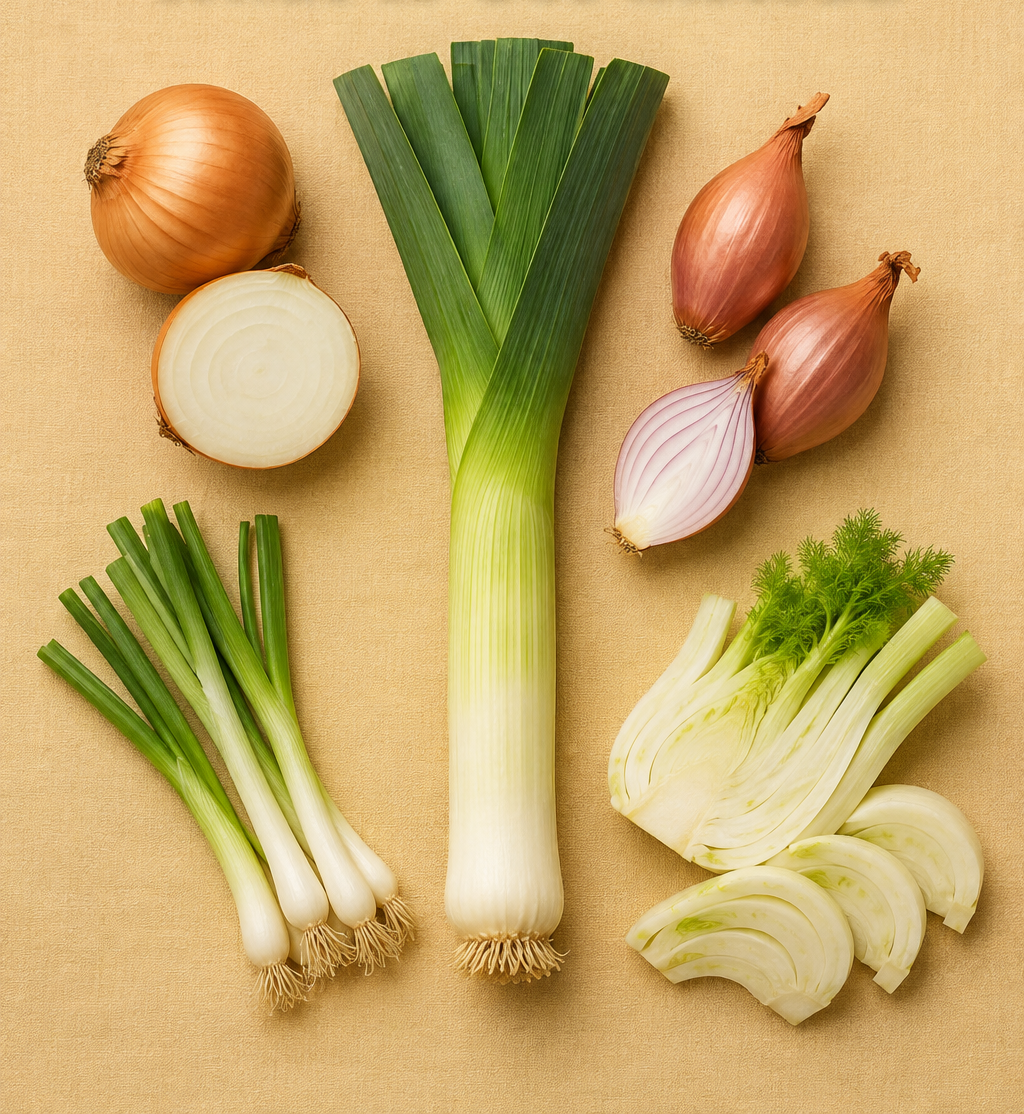
Leek Substitutes: What to Use Instead in Soups, Sautés & More
Out of leeks and halfway through a recipe? You’re not stuck. Leeks are just a mild, sweet member of the onion family, and there’s a good chance you already have something in the crisper drawer or fruit bowl that can step in.
As an Amazon Associate I earn from qualifying purchases and sometimes recommend products from other sellers at no extra cost you. For more details see my disclosure policy and privacy policy.
The trick is matching the substitute to what you’re actually doing with the leek. A soup wants something that melts down slowly and adds body. A quick sauté wants something that browns nicely and holds a little bite. Raw or as a garnish, you want a milder bite, not a face full of onion. This guide breaks it down by use case, so you can grab the right substitute for the job instead of guessing.
What Leeks Actually Bring to a Dish
Leeks taste like onion’s gentler cousin: sweet, faintly grassy, and much less sharp than a yellow onion, especially once cooked. That mildness comes down to chemistry as much as flavour. Leeks contain fewer sulfur compounds than onions and more natural sugars, which is why they turn silky and almost buttery in soups and braises instead of sharp and biting.
Raw leek has a light peppery, oniony edge, but it’s soft compared to raw onion or garlic. Texture-wise, the white and pale green parts cook down into ribbons that soften and almost dissolve into a soup, while a raw slice keeps a bit of crunch. Keep both the flavour and the texture in mind when picking a substitute, since some options nail one but not the other.
Of course, the best substitute for a leek is often just a leek you’ve stored properly so you don’t run out mid-recipe. Our zero-waste guide to buying, storing, and using cabbage, leeks, and sweet potatoes covers exactly that, plus how to use every part of the leek so less ends up in the compost.
The Best All-Purpose Leek Substitute
If you only remember one swap, make it this one: a blend of yellow onion and a small clove of garlic, or a mix of onion and spring onion (scallion). This combination gets closest to the sweet-savoury balance leeks bring, without the sharper punch of onion on its own.
Ratio: use about ¾ cup of chopped onion (plus a small minced garlic clove) for every 1 cup of chopped leek called for. Because leeks are milder, you’re generally better off using slightly less than a straight 1:1 swap of onion alone, then tasting and adjusting, rather than dumping in a full cup and overwhelming the dish. If you want a gentler result, our red onion and onion substitutes guide has more options for softening that bite further, which is worth a look if onion generally, not just leek, is what you’re avoiding.
Substitutes for Soups and Stews
Soups and stews are where leeks are used most, and they’re forgiving territory for substitutes since everything simmers down together anyway.
- Yellow onion is the most reliable stand-in. Sauté it a couple of minutes longer than you would leeks, until it turns translucent and starts to soften, to mellow out its sharper edge before the liquid goes in.
- Shallot is the closer flavour match of the two. Shallots have a sweetness and gentle complexity that sits nearer to leek than a bold yellow onion does, though you’ll need more of them: figure on around 2 large shallots per leek called for.
Both work beautifully in a classic base, and once a soup has simmered for twenty minutes, most people can’t tell the difference. Our ultimate guide to onion soup leans on this same slow-sweat technique. And if celery is also missing from your soup pot, our celery substitutes guide covers that gap too, since the two often go missing from the fridge at the same time.
Substitutes for Sautéing and Pan Dishes
Sautés and pan dishes ask more of your substitute, since there’s less liquid to smooth things over and the texture stays more visible on the plate.
- Spring onion (scallion), the white and light green parts especially, sautés up close to leek in both flavour and how it softens in the pan. It won’t caramelize quite the same way, so keep the heat gentle.
- Fennel is the one to reach for when texture matters as much as flavour. Sliced thin and sautéed, fennel has a similar layered, slightly fibrous bite to leek, with a mild anise note that fades as it cooks. It’s a smart pick for dishes where leeks are meant to hold some shape, like a pan of sautéed vegetables or a tart filling.
A sharp knife or a mandoline slicer makes quick work of getting fennel or onion into thin, even ribbons that cook consistently.
Substitutes for Raw Use and Garnish
Raw leek shows up more than people expect, in salads, as a garnish, or folded into a dressing. This is where the mildness of the substitute matters most, since there’s no cooking to soften a sharper bite.
- Scallion (spring onion), sliced thin, is the go-to. It has the right balance of mild onion flavour and gentle crunch, and it looks similar scattered over a finished dish.
- Chives work well when you want colour and a whisper of onion flavour without much bite at all, particularly as a garnish rather than a bulk ingredient.
Neither of these will fully replicate the sweet, slightly grassy note of raw leek, but both are far gentler than raw onion, which is really the main thing you’re avoiding here.
Quantity: Why You’ll Often Need More Substitute, Not Less
This is the detail that trips people up. Because leeks are milder than onion, shallot, and even scallion in most cases, a straight 1:1 swap by volume often falls flat. You’re better off starting with slightly more of your substitute than the recipe calls for in leeks, tasting as you go, and adding more rather than guessing high from the start.
As a rough guide: 1 cup of chopped leek is closer to ¾ to 1 full cup of chopped onion, about 2 large shallots, or a generous handful of sliced scallions, not a token pinch. Fennel is the exception since its aniseed edge is more assertive, so start closer to a true 1:1 swap and adjust from there.
A Few Prep Notes
None of this is exotic. Onion, shallot, scallion, and fennel all live in the same produce section as leeks and keep about as well. If you’re stocking up on extra onion or shallot, our guide on how to store and freeze onions keeps them from going soft before you need them.
The bigger point is that no single substitute nails everything leeks do. Pick based on what the dish needs: onion or shallot for a soup that has time to simmer, spring onion or fennel for a sauté that needs to hold together, and scallion or chives for a raw finish. Taste as you go, and you’ll land close enough that nobody at the table will ask what happened to the leeks.