
Things to Do with Lemons: Cook, Bake, Drink and Preserve
There is a bag of lemons in the fridge, and some of them are starting to look a bit tired. Maybe you bought them for one recipe and never needed the rest, or a neighbour left a carrier bag of homegrown ones on your doorstep.
As an Amazon Associate I earn from qualifying purchases and sometimes recommend products from other sellers at no extra cost you. For more details see my disclosure policy and privacy policy.
The good news is that a lemon is one of the most useful things in the kitchen. The juice, the zest and even the rind each do a different job, and between them they can brighten a roast chicken, lift a cake, flavour a drink or sit in a jar for months.
This is the guide to keep for the next time you have more lemons than ideas. It is organised by what you are using (juice, zest, whole fruit, rinds) and by what you want to do (use them up, cook, bake, drink or preserve), so you can jump to whatever is in front of you.
🍋 Juice, Zest or Whole Lemon: What Each One Does
Before the ideas, a quick tour of the fruit. Knowing what each part brings to a dish helps you decide where to use it.
Juice
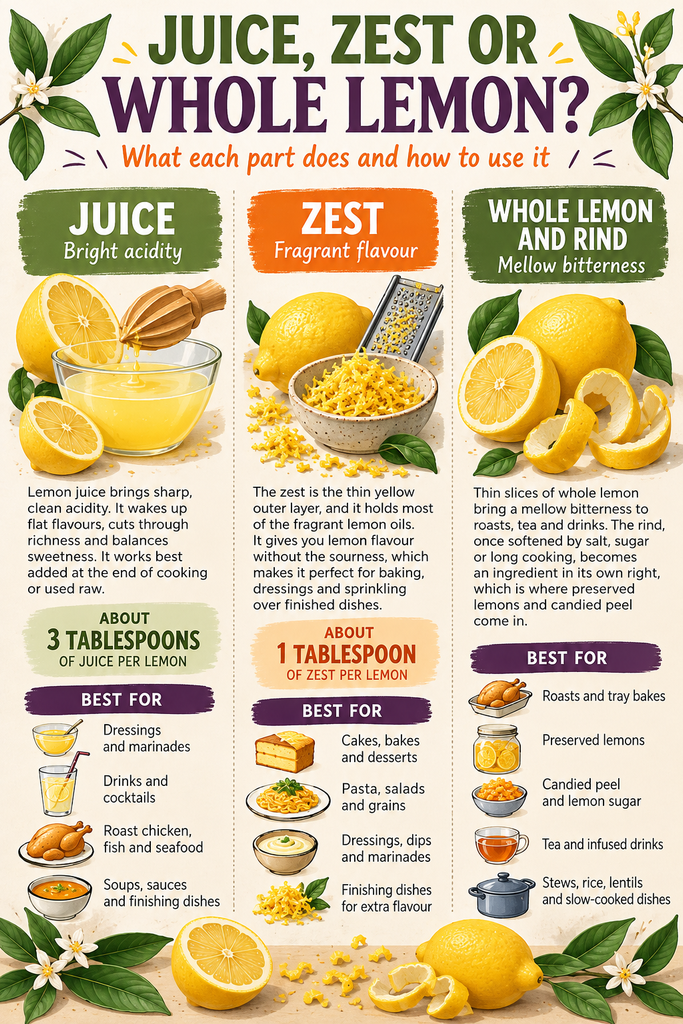
Lemon juice brings sharp, clean acidity. It wakes up flat flavours, cuts through richness and balances sweetness. It works best added at the end of cooking or used raw, since heat dulls its brightness.
A typical lemon gives about 3 tablespoons of juice, though a firm, thick-skinned one may give less. Roll the fruit firmly on the worktop before cutting it, which helps release more. A simple citrus squeezer saves time if you have a lot to get through.
Zest
The zest is the thin yellow outer layer, and it holds most of the fragrant lemon oils. It gives you lemon flavour without the sourness, which makes it perfect for baking, dressings and sprinkling over finished dishes.
One lemon gives around 1 tablespoon of zest. Take only the yellow part, because the white pith underneath is bitter. A fine rasp grater like a Microplane-style grater makes this quick and gives you fluffy zest with no pith.
The whole fruit and the rind
Thin slices of whole lemon bring a mellow bitterness to roasts, tea and drinks. The rind, once softened by salt, sugar or long cooking, becomes an ingredient in its own right, which is where preserved lemons and candied peel come in.
If you plan to use the skin, scrub the fruit well first. A small vegetable brush is handy for getting waxy coatings off the peel. Choose unwaxed or organic lemons when you can.
Eureka vs Meyer lemons
The lemons in most supermarkets are Eureka or Lisbon types, with a firmly tart juice and a bright yellow skin. Meyer lemons are smaller and rounder, with a thinner, deeper-yellow skin. They are sweeter, less acidic and more floral, and they are mostly in the shops from winter into spring.
You can swap Meyers into most recipes, but taste first. They suit curds, desserts and drinks especially well. If a savoury recipe needs a real punch of acidity, a standard lemon is the safer choice.
🥘 Savoury Things to Do with Lemons
Lemons earn their keep in the savoury kitchen. A squeeze at the end of cooking often does what extra salt cannot.
Roast chicken and fish
Lemon and chicken are an old friendship. Tuck halves into the cavity, scatter slices around the tray, or finish a roast with a squeeze of juice over the carved meat. Our roasted lemon chicken and vegetables turns this idea into an easy one-pan dinner.
Fish loves a lemon too. A few slices under a fillet and a squeeze over the top is often all it needs. For something a little more special, try grilled tuna steaks with preserved lemon gremolata.
Seafood
Prawns (shrimp), scallops and white fish all sing with lemon. Our lemon garlic shrimp with asparagus is a quick supper, and the lemon butter Parmesan baked scallops are a good one for guests. If you want a crunchy option, there are crispy lemon panko fried shrimp.
Dressings and marinades
A basic dressing is just lemon juice, olive oil, salt and a little mustard or honey. Shake it in a jar and you have something better than anything from a bottle. A lemon and tahini dressing, like the one on our red cabbage and carrot salad, is creamy, tangy and keeps well in the fridge for a few days.
For marinades, combine lemon juice and zest with olive oil, garlic and herbs. Keep marinating times modest for fish and seafood, because too much acid can turn the texture mushy. For chicken, a few hours is plenty.
Gremolata and finishing touches
Gremolata is a mix of chopped parsley, garlic and lemon zest. Spoon it over roast meats, fish, soups or grilled vegetables, as in our grilled marinated asparagus with gremolata.
Other quick finishers include a squeeze of juice over soup, a sprinkle of zest over pasta, or a few strips of peel dropped into a pot of rice or lentils.
Pasta, salads and grains
Lemon, olive oil, Parmesan and black pepper make a simple sauce for spaghetti. Add some zest to cooked grains, stir juice into hummus, or lay thin slices over a salad. A salad like our chicken paillard salad with arugula and lemon shows how little you need.
🍰 Sweet Things to Do with Lemons
In baking, zest does most of the work and juice does the rest. Using both gives you the fullest lemon flavour.
Cakes, loaves and muffins
Lemon loaf cakes and muffins are the classic way to use two or three lemons at once. Zest goes into the batter, and juice goes into a simple glaze or syrup that soaks into the warm cake.
Our lemon poppy seed coffee cake, raspberry lemon muffins and lemon raspberry loaf are all good places to start.
Curd and posset
Lemon curd is lemon juice, zest, sugar, eggs and butter cooked gently until thick. It is wonderful on toast, in tarts, between cake layers or stirred into yoghurt.
If you want something simpler, posset needs just cream, sugar and lemon juice. It sets as it chills, and it makes an elegant dessert with almost no effort. Try our lemon and lime posset.
Bars, sugar and shortbread
Lemon bars, shortbread with zest, and pound cakes all use lemons in a small way. For a very easy way to capture flavour, rub zest into granulated sugar with your fingertips until it smells strongly of lemon. This lemon sugar keeps for weeks in a sealed jar and lifts biscuits, cakes and tea.
Candied peel
Rinds that would otherwise go in the bin can become candied peel. Simmer strips in sugar syrup until translucent, dry them on a rack and dip them in chocolate if you like. They keep well and make a nice homemade gift.
🥤 Drinks: From Lemonade to Hot Toddies
Lemons were practically made for drinks. Even a couple of fruit can make a jug.
Lemonade
Homemade lemonade is just juice, sugar and water in roughly the right balance, adjusted to your taste. It is also a great base for other flavours, from berries to herbs. Our collection of homemade lemonade recipes has plenty of variations, including sparkling and sweet-tart versions.
Lemon syrup
If you are not ready to make a whole jug, a simple lemon syrup is the answer. Stir equal parts sugar and lemon juice, with a little zest, in a pan over low heat until the sugar dissolves, then cool and bottle it. Keep it in the fridge and use it in drinks, over pancakes, or on cakes.
Tea and hot drinks
A slice of lemon in hot tea is the easiest idea of all. A hot honey-and-lemon drink is a comforting end to a cold day. If you like to know more about the popular habit of lemon in water, our article on the benefits of drinking lemon water covers it.
Cocktails and mocktails
Fresh lemon juice is the backbone of many classic cocktails, and it works just as well in alcohol-free drinks. Mix juice with sparkling water and a little syrup for an easy mocktail, or add it to iced tea for a quick half-and-half lemon iced tea.
For a hot toddy, a squeeze of lemon, a spoonful of honey and hot water (with a splash of whisky, if you like) makes a warming evening drink.
🧺 Ideas by Quantity: One Lemon, a Few Lemons or a Whole Bag
Sometimes the question is not what to make but how much you have. Here is a quick way to match the idea to the fruit.
One lemon, or half of one
A single lemon is enough to lift a whole meal. Squeeze it over roast vegetables, fish or a pot of soup, or stir juice into a bowl of yoghurt with garlic for a quick dip.
If you only have half a lemon, wrap it tightly and keep it cut side down on a small plate in the fridge. Use it within a few days, and zest the other half before you start if a recipe needs both.
Two to four lemons
This is the sweet spot for a loaf cake, a batch of muffins or a jug of lemonade. It is also enough for a small jar of lemon curd, a bowl of posset or a double batch of dressing to last the week.
Zest first and juice second, since a squeezed lemon is almost impossible to zest. Freeze any juice you do not use straight away.
Half a dozen or more
Now you are in preserving territory. Pack four or five into a jar of preserved lemons, turn two into candied peel, and freeze the juice and zest from the rest.
You can also make a big batch of lemon syrup, which keeps in the fridge and uses plenty of fruit. A bottle of syrup in the fridge makes the next round of drinks effortless.
A whole bag
Spread the work over a few days. Juice and zest on day one, then freeze the zest and the juice in cubes so nothing goes to waste. Bake or cook with the remaining whole fruit through the week, and turn any firm leftovers into preserved lemons on the weekend.
🍚 More Savoury Ideas for Everyday Meals
Not every use needs a recipe. These small habits make lemons earn their place in everyday cooking.
- Soups and stews: A squeeze of juice at the end brightens lentil, bean and chicken soups. Add it off the heat so the flavour stays fresh.
- Rice, couscous and grains: Stir in zest and a little juice after fluffing for a fresh, fragrant side.
- Roasted vegetables: Toss cooked broccoli, cauliflower, carrots or potatoes with zest and juice as soon as they come out of the oven.
- Yoghurt and sour cream dips: Add zest, juice, garlic and herbs for an instant sauce for grilled meats or flatbreads.
- Butter: Mash softened butter with zest and a pinch of salt, then spoon it over steak, fish or corn on the cob.
- Eggs and avocado: A little juice over scrambled eggs or avocado on toast cuts through the richness.
The rule of thumb is to add juice late and zest whenever you like. Juice fades with heat, while zest keeps its fragrance through cooking.
🧊 Preserve and Store: Make Your Lemons Last
Sometimes the best answer is to stop the clock. These methods let you hold on to the flavour for weeks or months.
How to store whole lemons
Fresh lemons keep for about a week at room temperature and for a few weeks in the fridge. Keep them in a bag or a sealed container in the crisper drawer to slow moisture loss.
Look for signs of trouble before using them. Soft spots, mould, a sour or fermenting smell and a mushy texture are all signs a lemon is past its best. A lemon that is just firm and a little hard can still be juiced.
Freezing juice, zest and slices
Freezing is the simplest way to rescue a bag of lemons.
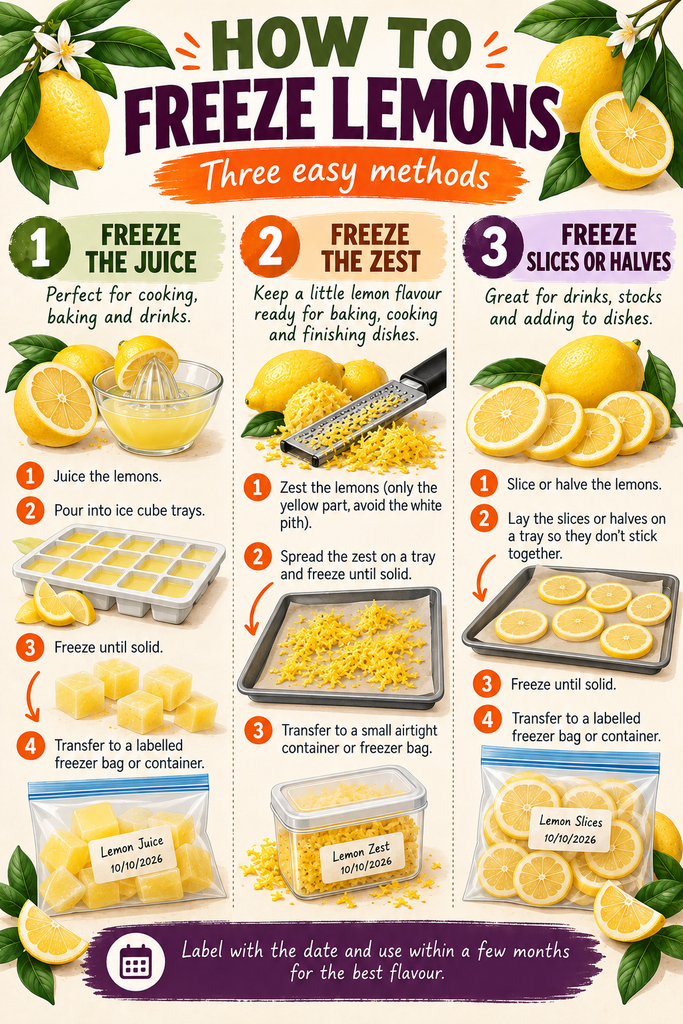
- Juice: Pour it into a silicone ice cube tray, freeze, then transfer the cubes to a freezer bag. Each cube is roughly a tablespoon, which makes it easy to measure.
- Zest: Spread it on a tray, freeze, then pack it into a small container. You can add it straight from frozen.
- Slices: Lay thin slices on a tray, freeze until solid, then bag them. They are best for drinks and for cooking, since the texture softens when thawed.
Use airtight, freezer-safe food storage containers and label them with the date. For the best flavour, use frozen lemon within a few months.
You can also freeze whole lemons. They will be soft once thawed, but they give up lots of juice and are good for zesting if you freeze them first. Our guide to how to store and freeze oranges uses a similar method and is worth a look.
Preserved lemons
Preserved lemons are lemons cured in salt, and they are a staple of North African cooking. The salt softens the rind so that it can be eaten, and the flavour turns mellow, savoury and floral rather than sharp.
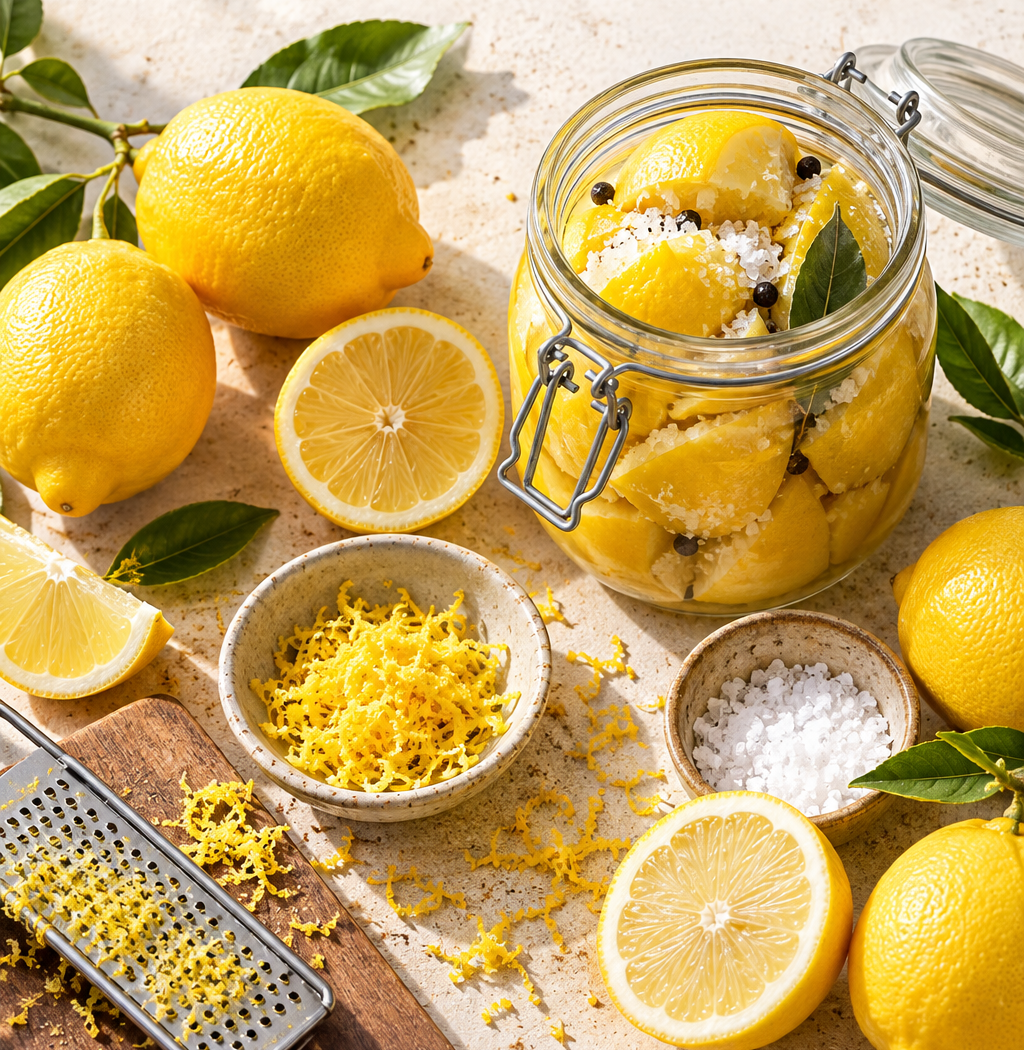
To make them, cut lemons into quarters without cutting all the way through, pack the cuts with coarse salt, and press the fruit tightly into a clean glass storage jar. Add more juice until the lemons are fully covered, seal the jar and leave it at room temperature to cure for several weeks, shaking it now and then.
Plain, unflavoured coarse sea salt works well here. Once the lemons are ready, store the jar in the fridge and keep the fruit submerged in the brine, and always use a clean fork to remove a piece. Throw the jar away if you see fuzzy mould or smell something off.
Rinse a piece, discard the pulp if you like, and finely chop the rind. Stir it into stews, couscous, roast chicken, dressings and yoghurt dips, or add it to a gremolata.
Other ways to preserve
You can also keep lemons by drying thin slices in a low oven until crisp, which makes a pretty garnish for drinks. Lemon-infused olive oil, lemon salt and lemon pepper are other easy options for the pantry, though anything made with fresh fruit and oil should be kept in the fridge and used quickly.
🥄 Quick Pantry Pointer: When You Run Out of Juice
If a recipe calls for lemon juice and you have none, there are sensible alternatives, depending on the dish. Our guide to substitutes for lemon juice shows what to use and how much.
✨ Make the Most of Every Last Lemon
Here is a handy way to think about using a bag of lemons, from the most urgent to the longest-lasting.
- Today: Squeeze a couple for lemonade, a dressing or a tray of roast chicken.
- This week: Bake a loaf or a batch of muffins, or whip up a posset. Zest the lemons first, and freeze the zest if you are not using it right away.
- For later: Freeze juice in cubes, slice and freeze a few lemons, or pack the best ones into a jar of preserved lemons.
- Leftover rinds: Turn them into lemon sugar or candied peel.
If you are sitting on limes as well, our post on things to do with limes has quick ideas for them too.
A lemon is rarely a one-trick fruit, and now you have a plan for every part of it. Next time there is a bag in the fridge, you will know exactly where to start.

