
Types of Vinegar and How to Use Them: A Cook’s Guide
Open most kitchen cupboards and you will find at least two or three bottles of vinegar, each bought for one recipe and then left to gather dust. It is easy to see why. The labels all promise “tangy”, the prices swing wildly, and the recipe that called for rice vinegar never said what to do if you only have white wine vinegar.
As an Amazon Associate I earn from qualifying purchases and sometimes recommend products from other sellers at no extra cost you. For more details see my disclosure policy and privacy policy.
This guide sorts it out by what you are actually cooking. Instead of marching through an alphabetical list, we will look at what each vinegar does in a dressing, a marinade, a pan sauce or a pickle, and why they behave so differently. By the end, you will know which bottle to reach for and what to do when it is not on the shelf.
🥄 What Vinegar Actually Is (and Why It Matters in Cooking)
Vinegar is made by fermenting twice. First, sugars in a base ingredient such as grapes, apples, rice or malted barley turn into alcohol. Then bacteria convert that alcohol into acetic acid, which gives vinegar its sharp smell and bite.
Most vinegars sold for cooking sit at around 5 to 7 percent acidity. That sounds like a small range, but flavour makes the real difference. A vinegar made from grape must tastes rounded and fruity. One made from distilled grain tastes clean and sharp, with nothing else going on.
When you cook, vinegar does three jobs at once:
- It adds acidity, which brightens rich or heavy food the way a squeeze of lemon does.
- It balances sweetness and salt, so a sauce tastes finished rather than flat.
- It changes texture, softening tough proteins in a marinade and keeping vegetables crisp in a pickle.
Understanding those three jobs is the key to choosing well. Ask yourself which one you need, then pick the vinegar that does it with the right flavour.
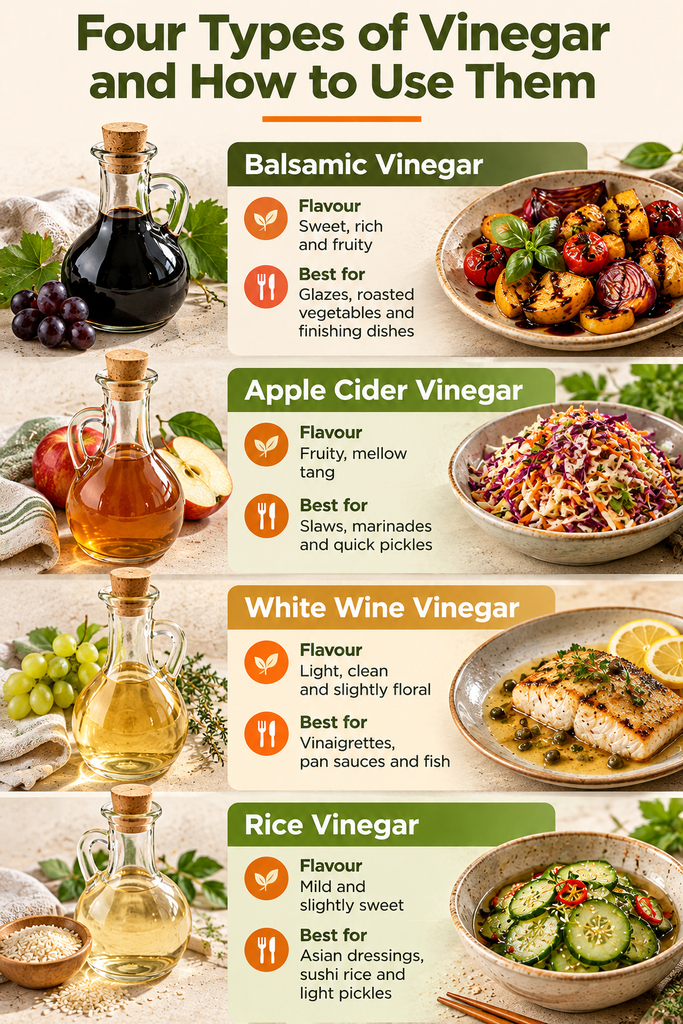
📋 Quick Comparison: The Four Vinegars Most Home Cooks Need
If you only ever own four bottles, make them these.
🍇 Balsamic Vinegar: Sweet, Syrupy and Easy to Get Wrong
Balsamic is the one most people have, and also the one most often misused. The label tells you almost everything about what you are buying, so it is worth understanding the two broad styles.
Supermarket balsamic
Everyday balsamic is usually grape must blended with wine vinegar and sometimes caramel colouring. It is thinner and sharper than the traditional kind, and it is perfectly good for dressings, roasted tomatoes and marinades.
Its main weakness is that it can taste harsh when poured raw over delicate food. Reducing it gently in a small pan until it coats the back of a spoon turns it into a glossy, sweeter glaze that is far more forgiving.
Traditional balsamic
True traditional balsamic is aged for years in wooden barrels, which makes it thick, dark and intensely sweet. It is expensive, and it is meant to be used in drops, not splashes.
Save it for the very end of cooking. A few drops over ripe strawberries, aged cheese or a simple grilled steak will show it off. Cooking it in a pan wastes everything that makes it special.
When to reach for balsamic, and when not to
Reach for it with roasted vegetables, grilled meats, tomatoes, strawberries and rich cheeses. Skip it where you need a pale, clear result, such as a light fish sauce or a white pickle, because the dark colour will stain everything it touches.
If you love the flavour but want a lighter look, white balsamic is milder and almost clear. It gives you the gentle sweetness without the brown tint, and it works nicely in a fruity dressing like the one in this apple walnut salad with white balsamic vinaigrette.
🍎 Apple Cider Vinegar: The Friendly All-Rounder
Apple cider vinegar is made from fermented apple juice, and it has a mellow, fruity tang that most people find easier to love than distilled vinegar. It is a good first bottle if you are building a small collection.
Where it shines
Apple cider vinegar loves anything with a touch of sweetness or fat. It makes slaw dressings taste bright, lifts pulled pork and barbecue sauces, and gives a gentle tang to quick pickled onions.
It also works well in marinades for poultry and pork, where its fruitiness complements the meat rather than fighting it. If you want to see that in action, try it in a marinated grilled chicken breast.
Where it falls short
Because it has a noticeable apple note, it can clash with very delicate dishes. In a simple white wine sauce or a clean Asian broth, the fruitiness can feel out of place.
Judge it on flavour alone, and use it where that fruity note helps the dish.
🍷 White Wine Vinegar: Clean, Light and Endlessly Useful
White wine vinegar is the quiet professional of the shelf. It tastes light and slightly floral, with enough acidity to wake up a dish but not so much personality that it takes over.
It is also the traditional choice for hollandaise and béarnaise, where a clean sharpness cuts through all that butter.
Pan sauces and deglazing
This is where white wine vinegar really earns its keep. After searing chicken, pork or fish, pour a splash into the hot pan and scrape up the browned bits. It sizzles, loosens the flavour from the base of the pan, and gives you the foundation of a sauce in seconds.
Let it bubble for a moment so the sharpest edge cooks off, then add stock or cream and a knob of butter. A teaspoon of mustard turns it into something that tastes like it took far longer than it did.
A note on red wine vinegar
Red wine vinegar is its bolder cousin. It has a deeper, more robust flavour that suits hearty dishes such as lentils, beef stews, tomato sauces and Mediterranean salads. It can usually stand in for white wine vinegar in cooked dishes, though it will add a little colour.
🍚 Rice Vinegar: Gentle and Slightly Sweet
Rice vinegar is the mildest of the four. It has a soft, rounded tang and a hint of sweetness, which makes it brilliant when you want acidity without any harshness.
It is the backbone of many Asian dressings and dipping sauces, and it gives sushi rice its characteristic flavour. It is also lovely in quick pickles, where it lets the vegetable taste shine. This Japanese pickled cucumber is a good example of how light and fresh it can taste.
Seasoned versus unseasoned
This is the detail that catches people out. Seasoned rice vinegar has sugar and salt already added, so it is ready to use as a quick dressing or sushi seasoning. Unseasoned rice vinegar is just the vinegar.
If a recipe calls for plain rice vinegar and you use the seasoned kind, your dish may end up sweeter and saltier than intended. In that case, cut back on any extra sugar or salt in the recipe and taste as you go.
You can use it in a dressing like the one in this Asian cabbage salad with warm spicy peanut dressing, where a gentle acid balances nutty, spicy flavours.
🧪 A Quick Word on the Other Vinegars
You do not need these to cook well, but they turn up in recipes often enough to be worth knowing.
- Distilled white vinegar: Very sharp, colourless and neutral. It is the traditional choice for pickling brines where a clear liquid matters, and it is good where you want pure acidity with no flavour.
- Malt vinegar: Made from malted barley, with a robust, toasty flavour. It is the classic partner for chips and a staple in British pickling.
- Sherry vinegar: Nutty, complex and slightly sweet, with a depth that works beautifully in Spanish-style dishes, dressings and sauces. A little goes a long way.
- Red wine vinegar: Bold and fruity, as above, and a useful stand-in for balsamic when you do not want sweetness.
If your collection ever grows beyond four, sherry vinegar is the one worth adding next. It makes ordinary vinaigrettes taste as if they came from a restaurant.
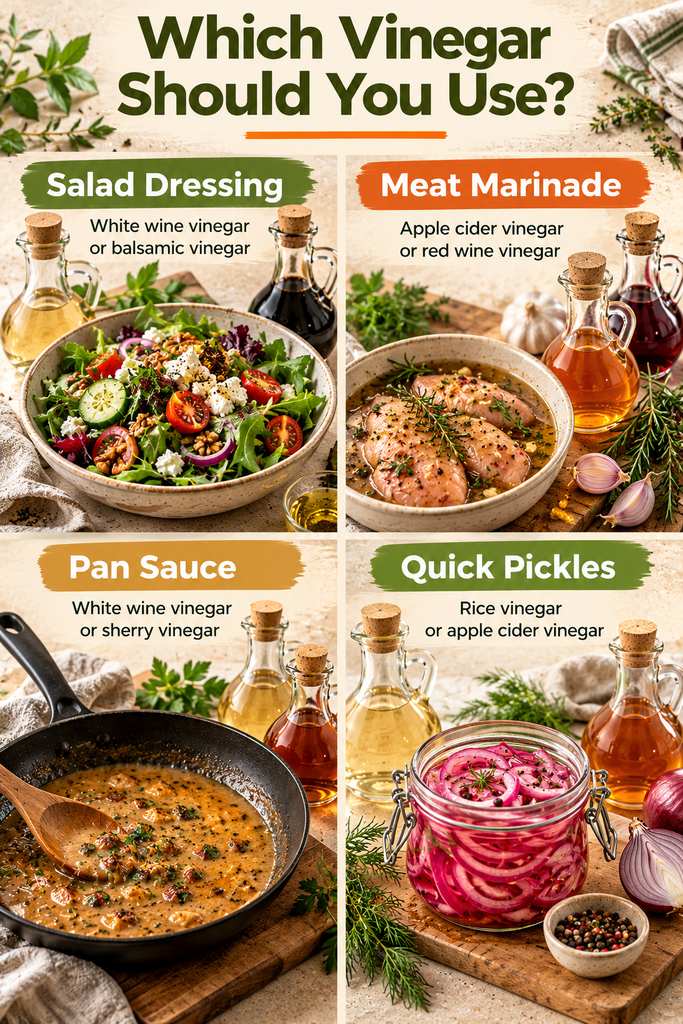
🥗 What to Use When: A Cook’s Decision Guide
The real skill is matching the vinegar to the job. Here is how to decide, step by step, depending on what is on the hob or in the bowl.
For dressings and vinaigrettes
Choose a vinegar that complements the other ingredients. White wine vinegar suits green salads and herbs, balsamic suits bitter leaves and fruit, and rice vinegar suits Asian-style slaws and noodle salads.
The classic starting ratio is three parts oil to one part vinegar. Taste before you commit, because a sharper vinegar or a very peppery oil may need a little more oil to balance, while a mild rice vinegar can handle slightly less.
A pinch of salt, a little mustard and a touch of honey help the dressing emulsify and soften the edges. For more ideas to build on, browse these summer salad dressing recipes.
For marinades
Acid helps flavour travel into food and gives the surface a pleasant tang. Apple cider, red wine and balsamic vinegars all work well in meat marinades, especially alongside oil, garlic and herbs.
There is one rule to remember: do not marinate for too long. Left too long, an acidic marinade turns the outside of meat mushy and chalky. As a guide, aim for 30 minutes to 2 hours for fish and seafood, and up to around 4 to 6 hours for chicken and pork, depending on how strong the acid is.
Vegetables need much less time, and you may find that a short soak is enough. This piece on whether you need vegetable marinades goes deeper on when they help and when they do not.
For pan sauces and deglazing
Reach for white wine vinegar, red wine vinegar or sherry vinegar. Their sharper, cleaner acidity cuts through the richness of seared meat and the buttery base of the sauce.
Add it to a hot pan after removing the meat, scrape the base, and reduce it by about half before adding anything else. That short bubbling step cooks off the harsh edge and leaves a rounded, savoury tang. Vinegar also works in slow braises, as in these pickle-braised chicken thighs.
For pickling
Pickling is the one place where the strength of the vinegar really matters. For preserving vegetables to keep on the shelf, you need a vinegar with at least 5 percent acidity, and it is important to follow a tested recipe for safe storage.
Distilled white vinegar and apple cider vinegar are the usual choices, while rice vinegar suits quick refrigerator pickles that you plan to eat within a couple of weeks. For a simple, safe place to start, try this guide to pickling cabbage.
A standard quick pickle brine uses roughly equal parts vinegar and water, plus salt and a little sugar. Pour it over sliced vegetables, let it cool, and chill. Most are ready in a few hours and keep for a week or two in the fridge.
For finishing
A tiny splash of vinegar at the end of cooking can rescue a dish that tastes dull. Soups, stews, braised greens, beans and roasted vegetables all benefit.
Add it off the heat, a few drops at a time, and taste between each one. You are not trying to make the dish taste of vinegar. You are looking for the point where everything suddenly tastes brighter.
🔄 Vinegar Substitutes: What to Swap and How
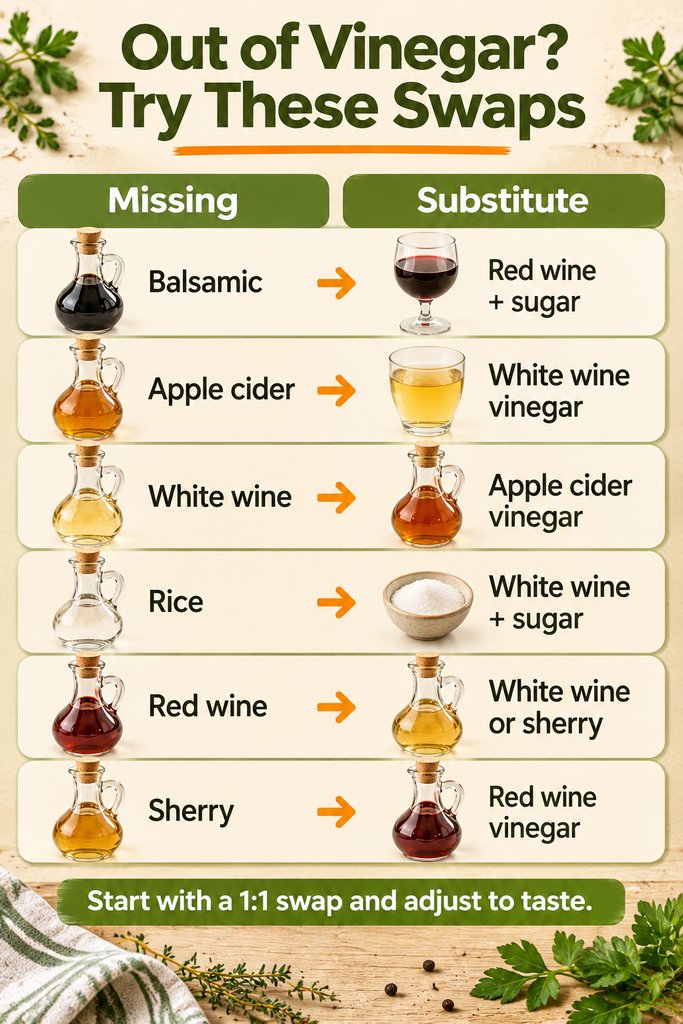
Running out mid-recipe is common, and fortunately most vinegars can stand in for each other with a little thought. The trick is to consider three things: sweetness, strength and colour.
Making sense of the swaps
Sweetness comes first. Balsamic and rice vinegar are naturally gentler, so when you replace them with a sharper vinegar, a pinch of sugar or a drizzle of honey restores the balance.
Strength comes next. If you are swapping a mild vinegar for a sharp one, begin with about three quarters of the amount, taste, and add more if needed. It is much easier to add acidity than to remove it.
Colour matters last. Dark vinegars will tint pale dishes, so avoid balsamic in anything that should stay white or clear.
When you have no vinegar at all
Lemon or lime juice can replace vinegar in dressings and marinades at roughly a 1:1 ratio, though the flavour will be fresher and more citrussy. It is not ideal for pickling, where consistent acidity matters for keeping.
A similar logic applies to other acidic or fermented pantry staples. If you are working on a sauce and need to swap another seasoning, these guides to soy sauce substitutes and Worcestershire sauce substitutes follow the same principle of matching flavour and strength.
🏺 Buying and Storing Vinegar
Vinegar is wonderfully forgiving to store. Its acidity keeps most microbes at bay, so an unopened bottle lasts for years and an opened one lasts a very long time.
Keep it somewhere cool and dark, away from the hob, with the cap screwed on tightly. A cupboard is better than a sunny windowsill. Over time, flavour can fade a little and some colour change is normal, but this is a matter of quality rather than safety.
If you spot a cloudy, stringy blob floating in the bottle, that is usually a harmless “mother” of acetic acid bacteria. You can strain it out with a fine sieve and carry on.
Where it is worth spending more
Not every vinegar needs a premium price tag. For pickling brines, a basic, inexpensive distilled vinegar does the job perfectly well, so there is no need to splash out there.
Spend a little more on the vinegars you taste directly. A good balsamic, sherry vinegar or white wine vinegar used in a raw dressing makes a noticeable difference, because nothing is hiding the flavour.
A sensible shopping list for most kitchens is one good balsamic, one white wine vinegar, one apple cider vinegar and one rice vinegar. Add sherry or malt vinegar later if your cooking calls for them.
❓ Vinegar FAQs
What is the best vinegar for salad dressing?
White wine vinegar is the most versatile, because it is clean and lets other ingredients shine. Balsamic suits bitter leaves and fruit, and rice vinegar suits Asian-style salads.
Can I use apple cider vinegar instead of white vinegar?
In most dressings, marinades and sauces, yes, at a 1:1 ratio. The flavour will be slightly fruitier. For clear pickling brines where colour matters, distilled white vinegar is still the better choice.
Is balsamic vinegar the same as balsamic glaze?
No. Glaze is balsamic vinegar that has been reduced, often with added sugar, until it is thick and syrupy. You can make your own by simmering balsamic until it coats a spoon.
How long does vinegar last once opened?
Properly stored, it lasts for years. Flavour may soften over time, but it remains safe to cook with.
What can I use if a recipe calls for rice vinegar and I have none?
White wine vinegar with a tiny pinch of sugar is the closest swap, though you should start with a little less because it is sharper. Apple cider vinegar also works in a pinch.
🥂 Final Thoughts
Once you stop thinking of vinegar as one ingredient and start thinking of it as a small toolkit, cooking gets easier. Four bottles will cover nearly everything, and a little knowledge about sweetness, strength and colour will help you swap them when you need to.
Start by tasting each one on its own, on a spoon or a piece of bread. That ten-second test teaches you more than any chart.
