Chicken Stock Substitutes: Easy Swaps for Broth
You are halfway through a recipe, the pan is hot, and you have just discovered there is no chicken stock in the cupboard. Do not panic, and do not abandon dinner. There are plenty of chicken stock substitutes that work well, and most of them are already in your kitchen.
As an Amazon Associate I earn from qualifying purchases and sometimes recommend products from other sellers at no extra cost you. For more details see my disclosure policy and privacy policy.
The trick is to match the swap to what your dish needs from the stock. Some dishes want body, some want salt, and some just want a savoury backbone. This guide covers the best substitute for chicken broth in each situation, with ratios and seasoning tips, so you can keep cooking. If you are missing the meat rather than the liquid, our guide to chicken substitutes has you covered.
⚡ Quick Picks: What to Use and How Much
Here is a fast reference for the most common swaps. Ratios assume you are replacing 1 cup (240 ml) of chicken stock or broth, and you should always taste before adding more salt.
| Substitute | How much | Best for | Salt note |
|---|---|---|---|
| Vegetable stock | 1 cup, 1:1 | Soups, rice, risotto, sauces | Varies, taste first |
| Stock cube or bouillon | 1 cube or 1 tsp dissolved in 1 cup hot water (check the pack) | Almost anything | Salty, so go easy on added salt |
| Better Than Bouillon (US) or Oxo/Knorr (UK) | Follow the pack, usually about 1 tsp paste per cup | Soups, stews, gravy | Very salty, season at the end |
| White miso | 1 to 2 tsp stirred into 1 cup hot water | Soups, glazes, grains | Salty, so cut back on soy sauce |
| Soy sauce or tamari | 1 tsp plus 1 cup water | Rice, stir-fries, stews | Very salty, add gradually |
| Mushroom or porcini liquid | 1 cup, 1:1 | Gravy, risotto, hearty soups | Usually unsalted |
| Turkey stock | 1 cup, 1:1 | Almost anything | Check the label |
| Water plus aromatics | 1 cup water, plus a little butter and salt | Last-resort cooking | Season carefully |
🥣 Ready-Made Swaps
These are the easiest options because you simply swap one liquid for another.
Vegetable stock is the closest everyday substitute. It is lighter and a little sweeter than chicken stock, so it works well in soups, rice dishes and risotto. If you need a quick option, a box of ready-made vegetable stock cubes is a pantry staple worth keeping.
Be honest with yourself about the flavour, though. Vegetable stock will not taste identical to chicken stock, and that is fine. It tastes good in its own way, so lean into it rather than trying to imitate chicken.
Bouillon cubes, powder or paste are the standard emergency choice. In the US, many cooks reach for a jar of concentrated base. In the UK, a cube from the usual stock brands does the same job.
Follow the pack instructions for the amount of water. Concentrates are very salty, and they are not a low-sodium option, so hold back on added salt until the dish is nearly done. Season at the end, after the liquid has reduced, and you will avoid the classic over-salted pot.
Turkey stock is a near-perfect swap if you have it, especially after a roast. Use it one-for-one wherever a recipe asks for chicken stock.
Beef stock is stronger and darker, so it is a trickier swap. Dilute it with an equal amount of water and keep it for robust, savoury dishes, not light soups or a delicate risotto where the colour and flavour would take over.
🍄 Pantry Umami Swaps
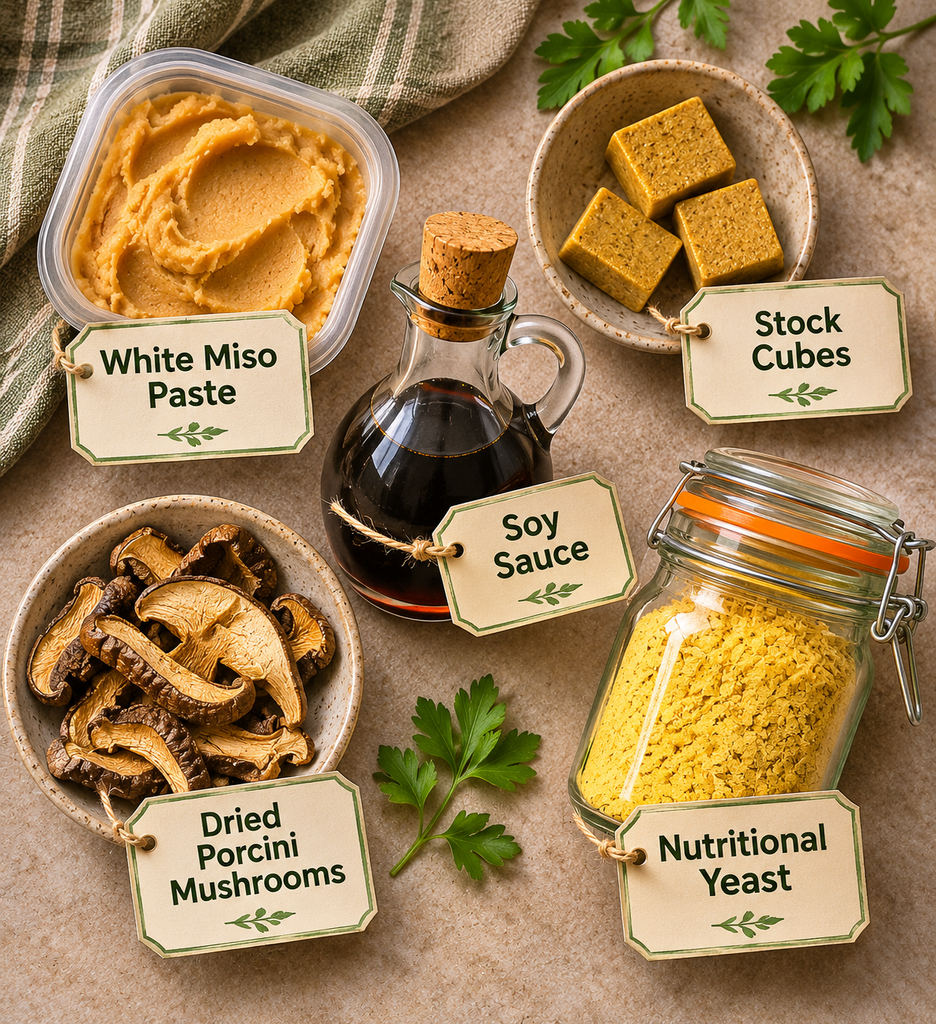
When you have no stock at all, a few pantry staples can build savoury depth in plain water. These work best when you combine them, so do not rely on just one.
- White miso: a spoonful dissolved in hot water gives body and a mellow savoury taste. A tub of white miso paste keeps for ages in the fridge. If you are curious about cooking with it, our easy miso dinners are a good place to start.
- Soy sauce or tamari: it adds salt and depth. Start with a teaspoon per cup of water, and taste before adding more. If you are out of it, see our guide to soy sauce substitutes.
- Nutritional yeast: a teaspoon or two adds a savoury, almost cheesy flavour. It suits vegetarian soups and grains.
- Mushroom stock or dried porcini soaking liquid: this is a quiet powerhouse. Soak dried mushrooms in hot water for 20 minutes, strain through a fine sieve or a coffee filter to remove grit, and use the liquid.
A good combination for a quick stand-in is hot water, a teaspoon of miso, a splash of soy sauce and a pinch of black pepper. Stir, taste and adjust.
🧅 Last-Resort Options
Sometimes the cupboard really is bare, and that is when these swaps earn their keep.
- Water plus aromatics: simmer water with a chopped onion, a smashed garlic clove and a bay leaf for 15 to 20 minutes, then strain. It is light, but far better than plain water.
- Water, butter or oil, and salt: in a pan sauce or a simple rice dish, a knob of butter or a drizzle of oil and a good pinch of salt in the water adds richness and seasoning.
- White wine plus water: for deglazing a pan, use half wine and half water. The wine brings acidity and depth to sauces, and the water stops it tasting too sharp.
None of these will give the savoury weight of real stock, so use a little extra seasoning and finish with something fresh, such as chopped herbs or a squeeze of lemon.
🍲 Match the Swap to the Dish
Not every dish needs the same thing from its stock, so choose accordingly.
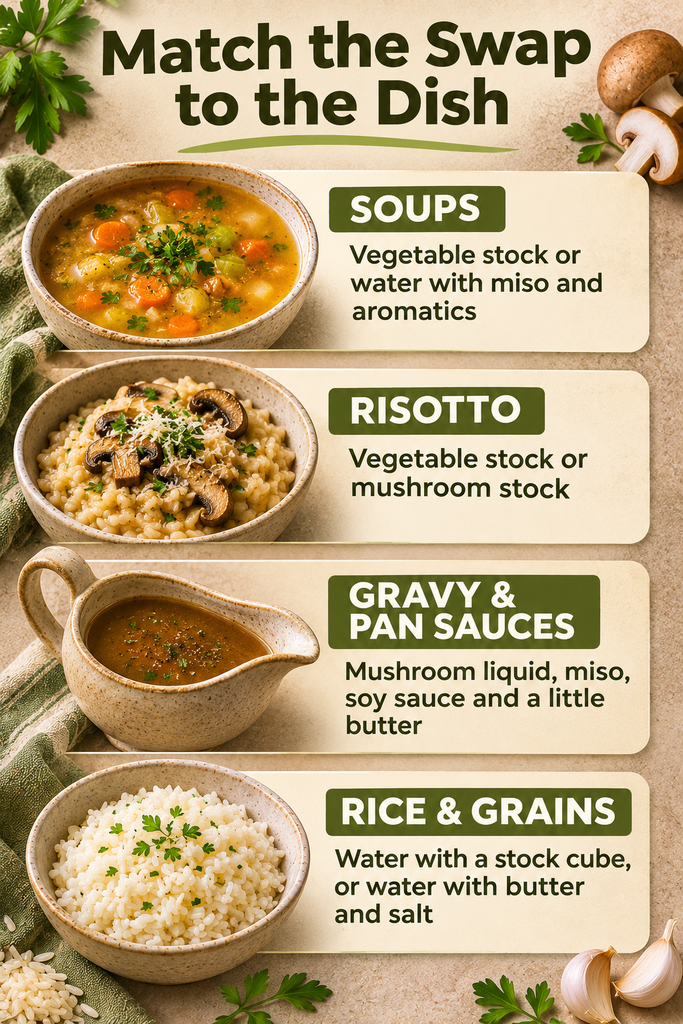
Soups: you need depth, because the liquid is the dish. Vegetable stock, or water with miso and aromatics, works well. Our best homemade soup recipes show how many soups are happy with a vegetable base.
Risotto: the rice absorbs the stock, so flavour matters more than body. Vegetable stock or a mushroom stock suits it beautifully. Keep the liquid hot, and add it a ladle at a time. If you want more ideas, try our easy risotto dinners.
Gravy and pan sauces: these need body and a savoury kick. Mushroom liquid, miso and a splash of soy sauce make a rich base, and a little butter helps it cling.
Rice and grains: these are very forgiving. Water with a stock cube, or plain water with butter and salt, is usually plenty.
Braises and stews: long cooking builds flavour on its own, so you can get away with a lighter swap. Water with a spoonful of miso, a splash of soy sauce and plenty of browned onion is often enough, because the slow simmer does most of the work.
Cooking beans and lentils: a bay leaf, a smashed garlic clove and a stock cube in the cooking water add flavour as the pulses soften. Salt them near the end, once they are tender.
🔥 A Quick 30-Minute Vegetable or Mushroom Stock
If you have time, a fast homemade stock beats most emergency swaps. This is a short method, not a long-simmered stock, so it will taste lighter.
Here is what you need:
- 1 onion, roughly chopped (skin on adds colour)
- 1 carrot, chopped
- 1 stick of celery, chopped, or a substitute
- 2 garlic cloves, smashed
- A handful of mushrooms or mushroom trimmings
- 1 bay leaf and a few peppercorns
- 1 litre (4 cups) of water
Put everything in a pot, bring to a boil, then reduce to a gentle simmer for about 30 minutes. Strain, and season lightly. You can freeze the stock in portions for another day.
If you have no celery, you are not stuck. Our guide to celery substitutes for soups and stocks lists easy swaps, and our post on onion substitutes helps if the onion bowl is empty too. Mushroom stems and trimmings are also ideal here, so see our things to do with mushrooms before you throw any away.
🧂 Seasoning Tips for Any Substitute
Swapping the stock changes the salt level, so a few habits help you stay on track.
- Taste first: always taste the liquid before it goes into the pot.
- Season at the end: concentrates and cubes reduce and concentrate as they cook, so add salt only when the dish is nearly done.
- Balance with acid: a squeeze of lemon or a splash of vinegar lifts a flat dish without adding salt.
- Add fat for richness: a knob of butter or a drizzle of olive oil makes a thinner liquid taste fuller.
If you want to go deeper on the plant-based side, our guide to plant-based chicken alternatives looks at meat-free cooking, and the chicken substitutes for soup post covers the other half of the soup question.
🥄 The Takeaway
You do not need chicken stock to make a good dinner. Choose vegetable stock or a stock cube for the closest everyday swap, reach for miso, soy sauce or mushroom liquid when you want more depth, and keep water with aromatics as your last resort.
Whichever you choose, season gently, taste often and finish with something fresh. Your dinner will be on the table before you know it.